• Welcome to Photrio!
    Registration is fast and free. Join today to unlock search, see fewer ads, and access all forum features.
    Click here to sign up

Interchangeable backs on medium format SLRs - when/what/why do you use them?

Forum statistics

Threads
203,283
Messages
2,852,328
Members
101,760
Latest member
zhao chen
Recent bookmarks
0
I'd argue that the Rolleiflex is a superb camera for portraiture even today and 100 years from now. The sequence of pressing the shutter then winding the very smooth mechanism is very satisfying in the way a Hasselblad can not be.
I am talking about professional photographers.

But sure, for passionate hobbyists, using a 6x6 TLR is a cool thing to do (I owned one for many years).

Personally, I am a bit too modest to be sure what happens in 100 years from now.
 
There is no rule that says you have to finish a roll before removing it. In the end, film is cheap.

I often bracket + and - stops when using my RB67 6x7 with 10 shots per role. That gives me three sets of three and leaves the tenth shot unused when I replace the film or swap the backs. Or I'll shoot the 10th shot unbracketed.
 
not any longer

Ok, lets talk facts.
Here a roll of XP2 120mm is about 12 EUR.
At 6x6, one snap is 1 EUR.
If I decide to give up 3 remaining shots at the end of a roll, I throw away 3 EUR.

Is that really a "thing" to worry about?
 
Ok, lets talk facts.
Here a roll of XP2 120mm is about 12 EUR.
At 6x6, one snap is 1 EUR.
If I decide to give up 3 remaining shots at the end of a roll, I throw away 3 EUR.

Is that really a "thing" to worry about?

Make it a habit.
Do it a thousand times.
 
Ok, lets talk facts.
Here a roll of XP2 120mm is about 12 EUR.
At 6x6, one snap is 1 EUR.
If I decide to give up 3 remaining shots at the end of a roll, I throw away 3 EUR.

Is that really a "thing" to worry about?
It all depends on how patient you are, how important the images already taken may be and how you value your images and your time. I often find that random images taken to finish off the roll are among the best. But if there is an image I have a burning desire to see and print, I will willingly throw away part of a roll of film. Anyone counting pennies and shooting film is on a fool's errand anyway.
 
I'd argue that the Rolleiflex is a superb camera for portraiture even today and 100 years from now. The sequence of pressing the shutter then winding the very smooth mechanism is very satisfying in the way a Hasselblad can not be.

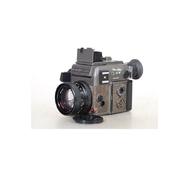
For TLR (sort of) portraits the Konica Omegaflex, 6X7, takes the same backs as the Konica Rapids. The 90mm lens is very good, same lens as used on the Rapid. It is not a true TLR it is direct view but with a 45 degree finder becomes more of true TLR. It is designed for eye level viewing, diffcult to use for a landscape, but ideal for portraits. My parents bought me one when I gaduated from college. As I not shooitng many portratis I sold it for a Mamyia C33.
 
I loved my Rollei 3003 which was a 35mm SLR with interchangeable backs. Used one for color transparency and the other for B&W.
 

Attachments

  • th.jpeg
    th.jpeg
    17.7 KB · Views: 39
Most of my photography is landscapes and scenics, taking on 1 to 2 week trips planned in detail for that purpose. When I started out, using the Zone system, I thought multiple film backs would be a great help, but in practice I find it is not a critical advantage. I tried several systems, ending with the Pentax 67 (non-interchangeable back) in the mid-1980s. Shooting both B&W and color negative, I thought switchable backs would help, but instead I use multiple bodies, as I rarely shoot B&W and color at the same time. So, I guess I rate that need minimally. I do have a nce Koni-Omega Rapid M system with interchangeable backs should a specific need arise.
 
Ok, lets talk facts.
Here a roll of XP2 120mm is about 12 EUR.
At 6x6, one snap is 1 EUR.
If I decide to give up 3 remaining shots at the end of a roll, I throw away 3 EUR.

Is that really a "thing" to worry about?

How deep are your pockets and how do you view it, waste or necessity?
 
Some people try to get 42 photos on a 36-exposure roll of 35mm B/W film and use an eyedropper to measure out their Rodinal.
Others buy 50-sheet boxes 8x10 TMax 400, bracket their exposures, and send their film to a lab for processing and printing.
When considering travel costs, time, gear purchase & maintenance, etc.,... film is the cheapest part of the equation.
 
A Grey card or McBeth checker board in the bag would at least allow those 'extra' shots to be useful in the darkroom and calibrated shots with an on target sample of that partly used roll.

IMO
 
It all depends on how patient you are, how important the images already taken may be and how you value your images and your time. I often find that random images taken to finish off the roll are among the best. But if there is an image I have a burning desire to see and print, I will willingly throw away part of a roll of film. Anyone counting pennies and shooting film is on a fool's errand anyway.

The roll cost is fixed; the only “loss” is efficiency per frame, not absolute spend.

For an average amateur, not using 1–2 frames per roll is financially negligible.

The more relevant question is qualitative, not economic: are the last frames weaker photographs? If yes, the cost efficiency argument becomes secondary.
 
I use a minimum of three in my main bag, plus at least one Instax back, for wandering photography or found images.

The main back houses fast film, iso 200 - 400, the second wears slow or medium films, 50 - 125, the third carrys colour as you never know what will turn up.

The Instax is mainly set for monochrome for 'previews' but colour is always nearby.

Not in the same bag but I have a fun little Instax mini for snaps.

The Instax is not the old Polaroid 100 but that back was comparable a waste, too large, too unwieldy.

Because im a traveling photographic packrat, additional kit includes other backs and films (usually) in the car.

I haven't really gone walk about with a single camera in years, except with my CL loaded with b&w while shopping, etc., but im trying to change that this year.

I also will occasionally carry a Canon G10 for previews but the instax makes that redundant and the Instax back also often serves as a end product but I'm relearning my photography so I hope it'll yield some value as a tool in and of itself.
 
Ansel M - I'd hardly call film the smallest part of the cost equation anymore. Let's see - 8X10 color film at around $50 a sheet with processing. Just two ten sheet boxes equate to a thousand dollars - more than I paid for my 8x10 camera itself. Bracketing ???? - Even with TMY400 X10 ??!!!&*E^(*&(? You can still find good light meters which cost less than that habit.
 
Ansel M - I'd hardly call film the smallest part of the cost equation anymore. Let's see - 8X10 color film at around $50 a sheet with processing. Just two ten sheet boxes equate to a thousand dollars - more than I paid for my 8x10 camera itself. Bracketing ???? - Even with TMY400 X10 ??!!!&*E^(*&(? You can still find good light meters which cost less than that habit.

Or ....
My last box of 10x8 was Fomapan 200 at £150 or less , for a box of 50 .
That's £3 per sheet .
I develop my own film , so that cost is negligible.
£3 per shot is cheap enough to play around with , it's also less than a pint of beer in the pub .

Now if someone knocked my pint over in a pub , I'd be p**sed off , but £3 on a piece of film ? No worries.

7x5 is £72 for 50 sheets and 5x4 is £52 for 50 sheets .
So in 5x4 , that's about £1 per shot , same as the example someone gave for 120 film . Although Kentmerr 200 can be bought at £6 for a roll of 120 , so that's only 50p per shot .

If you can't spare 50p or £1 for a single shot , then maybe films not something you should be looking at , certainly not medium or large format !
 
I thought we are talking MF roll film here. 12 shots in 6x6 are about 1 EUR each. So a 0.5l can of mass market beer then.

Let's go back to the original topic of the thread.
 
Last edited:
I thought we are talking MF roll film here. 12 shots in 6x6 are about 1 EUR each. So a 0.5l can of mass market beer then.

Let's go back to the original topic of the thread.

The original topic is whether or not anyone finds much use for interchangeable backs on a medium format camera - not about film at all. The conversation has moved on.
 
If you use a Mamiya 645 the cost per shot is less, and the image quality is equal to Hasselblad, tack sharp images for less money.
 
I thought we are talking MF roll film here. 12 shots in 6x6 are about 1 EUR each. So a 0.5l can of mass market beer then.

Let's go back to the original topic of the thread.

As above , kentmere 120 is only £6 a roll / 50p per shot in the UK , a euro I think is not much more than a £ , so maybe only 65 cents per shot .

The original topic is whether or not anyone finds much use for interchangeable backs on a medium format camera - not about film at all. The conversation has moved on.

It is about film as well .
I have interchangable backs for some of my MF cameras so I can change film as I wish , B&W , IR , colour etc .
If I use a camera that doesn't allow this I either need 2 bodies if I know I want more than one emulsion, or I have to waste film changing before a roll is used up fully .
If I needed to load colour film in my camera that had b&w loaded and I had a couple of shots left , I might not be bothered by losing £1 of film .
If I had colour film loaded I might not want to lose £10 .

That's why the film type cost is relevant to to thread .

Though cost of sheet film in a MF only topic isn't relevant to the thread.
 
Though cost of sheet film in a MF only topic isn't relevant to the thread.

The conversation has moved on.

My point was the conversation is a free discussion and incidental topics will enter into it.

The advantage and disadvantage of interchangeable backs (along with what people use them for) was answered comprehensively in a few posts.
 
Predictable... There are cameras with interchangeable backs, and cameras without. Both were manufactured through decades of popular professional, amateur and casual use. And dozens (more?) of lovers of each and both.

So we concluded some people like them, some don't, and some do some of the time and some never. 😃

And like whenever there are multiple (value-free) opinions, some have to tell others they are wrong.
If you treat this as accounting, there are business cases for wasting film or not. I prefer not to for purely aesthetic reasons, just as I don't like leaving tasty food on the plate, even when I'm full or have nothing to take pictures of. Not always good for me, but that's the personality I have.

As for backs, I have maybe a dozen functioning backs for my three Kiev 88 bodies. Actually, this morning's activity is to look for signs of light leaks on a couple of these.
Usually one is loaded with B&W 100 or 400 (most often Foma), one with color (I have five rolls of Velvia left in the freezer), and one with IR. Right now one is loaded with Washi ISO 3, waiting for a waterfall or something like that. And there are 70mm and 220 backs too, but they fit into those categories.

And as far as film being cheap, that depends on what else you compare it to in your practice. My gear was paid for 20 years ago (mostly), and CLAs are infrequent. I live where I can drive an hour and see almost any landscape I want to photograph (except oceans!), so film is more expensive than gas or kwh. My time is more expensive than the film, but shooting often goes in the "health maintenance" column too.

 
Photrio.com contains affiliate links to products. We may receive a commission for purchases made through these links.
To read our full affiliate disclosure statement please click Here.

PHOTRIO PARTNERS EQUALLY FUNDING OUR COMMUNITY:


Ilford ADOX Freestyle Photographic Stearman Press Weldon Color Lab Blue Moon Camera & Machine
Top Bottom