• Welcome to Photrio!
    Registration is fast and free. Join today to unlock search, see fewer ads, and access all forum features.
    Click here to sign up

Including the rebate...

Recent Classifieds

Forum statistics

Threads
203,201
Messages
2,851,251
Members
101,720
Latest member
LeahPFL
Recent bookmarks
0
Next I used a different negative carrier which allowed the rebate to be printed. The black border framed the print better in my opinion.
These both are printed on 8x10 paper with about 1" border.

Also, the edges of this particular negative carrier are not that aesthetically pleasing, so the edges are cropped out. I do have some carriers with filed out edges that look nice, but I would have had to change enlargers to see that one. I was pretty happy with the smooth outer border on this print.
This is a great print. It's impressive how you used contrast creatively to make the tree stand out, looking luminous. I've tried to achieve a similar look before and rarely succeeded. I do think that the rebate works very well here, by the way.
 
now Stanley is almost entirely made in China, and is best characterized as a Junk plane instead

I remember when "Chinese junk" just referred to a boat...
 
I saw close up how one after another previously solid US manufacturing corporation essentially committed suicide, one after the other, like mindless lemming following each other off a cliff. All for the sake of just a handful of people at the very top getting obscenely rich without doing any real work. Slash and burn agriculture; a big crop for the stock market the first year or two, mostly involving smoke and mirrors deception, and then nothing worthwhile grows on that soil afterwards. Got to the point where I distributed products only from privately held manufacturers.

I'm not necessarily blaming the Chinese. If useless bottom dollar un-inspected junk is what the marketing people order, that's what gets made. No pride in manufacture or doing a competent job required at their end here, just greed and cynicism. I was told that to my face by the Vice President of Stanly back in the 70's; but it just got worse and worse by the mid-80's onward. Sometimes the most incompetent person in whole corporation was the CEO, followed by the Marketing MBA's. I knew lots of them. There were stunning exceptions to that trend, but those were mainly in privately held corporations, and mainly European. A sober tortoise always wins the marathon over a drunken hare.

As far as nautical junks go, some of the largest ships ever known were of that design back in the Ming Dynasty. Gavin Mendez was full of horse poop when he claimed those trade barges reached the Western hemisphere; but they did travel the circuit of the Indian Ocean. A close friend of mine carefully studied Ming joinery techniques in China; but due to his advanced age, I don't know if he'll finish publishing his book about it. He was featured on a PBS Nova science special. He was actually my gallery rep at one time, but then got heavily involved in grand scale woodworking here, at least two decades for Ellison, building that giant Port Orford cedar home and its furnishing over at Woodside, as well as both his enormous wooden yachts (but not the even bigger carbon fiber yacht later). I equipped all those projects with their tools, machinery, even coatings. Last time I visited him he had just completed a little scale model of a Ming temple all floating tenon style just like the original. No nails or glue.

 
Last edited:
I don't think I have any prints where I've included the rebate, or prints where the presentation would have been improved by doing so. It's getting into pretty loaded "hipster" territory for me, where a lot of current photographers feel the need to scream about how their photos are done on film. Including the rebate seems to serve no other purpose, to the point that I've seen digital photos with fake rebates photoshopped on.
 
He was actually my gallery rep at one time, but then got heavily involved in grand scale woodworking here, at least two decades for Ellison, building that giant Port Orford cedar home and its furnishing over at Woodside, as well as both his enormous wooden yachts (but not the even bigger carbon fiber yacht later). I equipped all those projects with their tools, machinery, even coatings. Last time I visited him he had just completed a little scale model of a Ming temple all floating tenon style just like the original. No nails or glue.

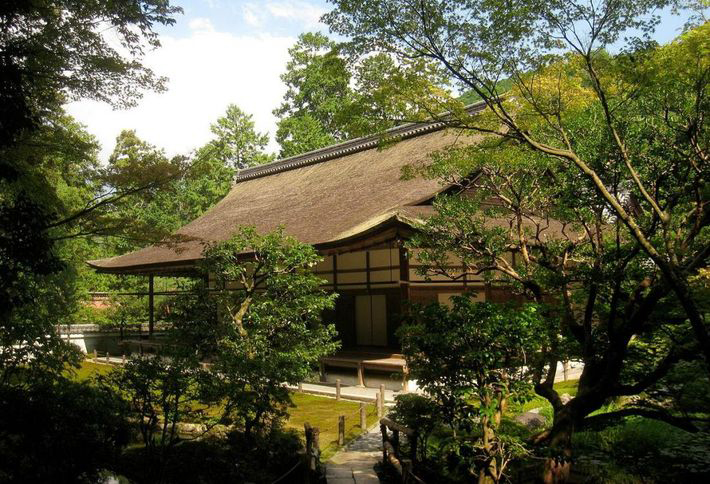
This one?
 
Yes, but that's just the little "garden shack", what they termed the Gazebo. The main house per se is enormous, and consumed half the world's total available supply of Port Orford Cedar. That's a dense resinous wood especially difficult to work with, and was used both indoors and out, even for the outdoor furniture. It's what Northwestern totem poles were made from, being highly decay resistant. And unsealed, it ages a true silver gray, or remains blonde if sealed. The construction crew camped at the beach except weekends. The ones who didn't retire afterwards were relocated to a little new town in New Zealand for sake of the carbon fiber ventures. They still kept coming to me for many supplies however.

Then when Ellison set up an adjunct racing yacht facility here, in advance of the America's Cup, there was quite a bit of interaction again.
But it took quite awhile for some of them to put two and two together why they seemed to have permanent "colds". Port Orford sawdust is especially noxious due to all the resin and tannic acid, way worse than redwood. They didn't convert to clean extraction Euro cutting and sanding systems (Festool) until the carbon fiber yacht phase.
 
Last edited:
Yes, but that's just the little "garden shack", what they termed the Gazebo.

And the buildings in the other two pictures? Also, what are the light-colored things on the roof peaks in the middle picture?
 
One of the pictures does show the general complex. I recall when Ellison didn't like the look of a particular bedroom wall, and didn't even blink when he was told it would take another 3 million dollars to redo it. But those workmen really liked working for him because he allowed them to do the high level of craftsmanship they aspired to. I have no idea what the white plastic caps are doing on the ridges of the Gazebo; but they sure look like an afterthought. All of that has since sold to someone else. Ellison went on to other modest acquisitions, like buying the entire Hawaiian island of Lanai.

Keep in mind I had no involvement in the design of that set of buildings whatsoever. I did see workmen daily and sold them a ridiculous amount of tools and supplies for a single residence, though there were other comparably lavish jobs going on at the same time. Many of these craftsmen had already become close personal friends of mine, and I got invited to crew parties, where I heard even more. There were certain jobs I visited in person to sort out technical details, but never went across the Bay to that particular Ellison project. Nevertheless, I can state that not one of those craftsmen, who were necessarily using a lot of heavy shop equipment as well as delicate Japanese and English hand planes, ever used any term except "rabbet" for a right angle cutout. Nor did any moulding supplier.
 
Last edited:
We have been giving our lead in many industries away to the lowest bidder since World War II, now we have not industrial power and are dependent on every other nation. Stupidity abounds.
 
I don't think I have any prints where I've included the rebate, or prints where the presentation would have been improved by doing so. It's getting into pretty loaded "hipster" territory for me, where a lot of current photographers feel the need to scream about how their photos are done on film. Including the rebate seems to serve no other purpose, to the point that I've seen digital photos with fake rebates photoshopped on.

When shooting film full-frame, I've often included the rebates. The irony is that the "hipsters," as you call them, include the rebates for proof of authenticity. But then it becomes a meme, and suddenly people start photoshopping fake borders into digital images, which looks really ersatz -- not at all authentic.

I've spent the past year printing kallitypes. (With digital negatives -- I admit my apostasy.) Alt process prints usually have borders, simply because of how the processes work. What really gets me is when I see someone pasting alt process borders around digital images -- again, glaringly obvious because the image has far more contrast and detail than the process permits.
 
When shooting film full-frame, I've often included the rebates.
Me too. I like it, because it says (to me anyway), "this is what I saw. Nothing more or less." Usually I have to crop so I don't get to use the rebate all that much.
...printing kallitypes. (With digital negatives -- I admit my apostasy.)
Lol! We can still be friends. 😄
 
Me too. I like it, because it says (to me anyway), "this is what I saw. Nothing more or less." Usually I have to crop so I don't get to use the rebate all that much.

I shoot and print full frame but do not include the rebate. I don't think I have ever been at a photo exhibit where I looked at an image and wondered whether the photographer had cropped it.
 
I shoot and print full frame but do not include the rebate. I don't think I have ever been at a photo exhibit where I looked at an image and wondered whether the photographer had cropped it.

I often shoot full frame with no rebate as well. Including the rebate is an approach that needs to fit the project.
 
I often shoot full frame with no rebate as well. Including the rebate is an approach that needs to fit the project.

Sure, showing the rebate is a perfectly valid approach. Photographers have been doing it at least as far back as the 1960s in 35mm work.
 
When shooting film full-frame, I've often included the rebates. The irony is that the "hipsters," as you call them, include the rebates for proof of authenticity. But then it becomes a meme, and suddenly people start photoshopping fake borders into digital images, which looks really ersatz -- not at all authentic.

I've spent the past year printing kallitypes. (With digital negatives -- I admit my apostasy.) Alt process prints usually have borders, simply because of how the processes work. What really gets me is when I see someone pasting alt process borders around digital images -- again, glaringly obvious because the image has far more contrast and detail than the process permits.

I like the photographs posted on internet with a Tri-X 400 rebate with a color image and an Kodachrome 64 rebate with a black & white image.
 
The now passe fad of including filed borders was just about as corny as it gets in my opinion. I never personally include black and white borders of any kind unless its a paged album presentation. I do leave a little border area on framed color prints vis easel masking blades, being a black border with Cibachrome and white for chromogenic prints, with the overlaying window mat having a slightly wider opening than the image itself. This is correct practice to prevent expansion/contraction burnishing in the image area by due to a window mat. With drymounted FB b&w prints, those are trimmed to exact composition size prior to final mount, with the overmat window again being a little bigger. The intended full image itself is easily distinguished from the somewhat different museum board and texture, even white on white.
 
The now passe fad of including filed borders was just about as corny as it gets in my opinion.

hm, faberryman says including film borders has been done since the 1960s and I can see evidence of that simple truth easily. Is it still a fad if it has lasted sixty years? Maybe it was corny in 1960? I don’t think it was fwiw.
 
hm, faberryman says including film borders has been done since the 1960s and I can see evidence of that simple truth easily. Is it still a fad if it has lasted sixty years? Maybe it was corny in 1960? I don’t think it was fwiw.

Drew said in his opinion showing the rebate is as corny as it gets, and he is certainly entitled to his opinion. It doesn't mean he is right.
 
I've got that fellow on ignore for a reason, so don't know what he posted. If wildly filed carrier borders were corny way back in the 60's, they're even more corny now. That prank is long overdue for a proper funeral. But examples of plain print borders, either masked off or due to a moulding rabbet, probably go back as far as contact printing itself. I have no idea which style he's referring to. The present thread is related to rabbets or rebates or reveals, whichever synonymous term you prefer. A jagged edge is unrelated unless termites or carpenter ants got to your printing frame.
 
Last edited:
I've got that fellow on ignore for a reason, so don't know what he posted. If wildly filed carrier borders were corny way back in the 60's, they're even more corny now. That prank is long overdue for a proper funeral. But examples of plain print borders, either masked off or due to a moulding rabbet, probably go back as far as contact printing itself. I have no idea which style he's referring to. The present thread is related to rabbets or rebates or reveals, whichever synonymous term you prefer. A jagged edge is unrelated unless termites or carpenter ants got to your printing frame.

Oh my. I’ll try to remember that I’m on your ignore list, drew. Cheers.
 
I've got that fellow on ignore for a reason, so don't know what he posted. If wildly filed carrier borders were corny way back in the 60's, they're even more corny now. That prank is long overdue for a proper funeral. But examples of plain print borders, either masked off or due to a moulding rabbet, probably go back as far as contact printing itself. I have no idea which style he's referring to. The present thread is related to rabbets or rebates or reveals, whichever synonymous term you prefer. A jagged edge is unrelated unless termites or carpenter ants got to your printing frame.

One think I do like about seeing the edge of the negative carrier on the print, (even if a mat might cover it on final presentation), no two negative carriers could have identical filing marks. To me, it is as good as the printmaker's signature.
 
The now passe fad of including filed borders was just about as corny as it gets in my opinion. I never personally include black and white borders of any kind unless its a paged album presentation. I do leave a little border area on framed color prints vis easel masking blades, being a black border with Cibachrome and white for chromogenic prints, with the overlaying window mat having a slightly wider opening than the image itself. This is correct practice to prevent expansion/contraction burnishing in the image area by due to a window mat. With drymounted FB b&w prints, those are trimmed to exact composition size prior to final mount, with the overmat window again being a little bigger. The intended full image itself is easily distinguished from the somewhat different museum board and texture, even white on white.

Since you've posted more than ten thousand posts on this board, I suppose one should show a certain deference. And you say you express an opinion and as Mr. Vonnegut said, we all have one. But why do it in a way that is at once ignorant and insulting to a lot of other people? Is this your way of endearing yourself to your fellow enthusiasts?

For what it's worth, people have been printing out their rebates forever. Henri Cartier-Bresson was doing it in the 1930s. Avedon, since the 1950s. It's just a choice about how to present your work. Andreas Feininger no but Arnold Newman yes. If you immerse yourself in the history of our medium, you might find an astonishing array of photographers, past and present, who have indulged in this "corny fad" for nearly a hundred years.

If the look doesn't appeal to you, don't use it. But why disparage others who differ?
 
Last edited:
One think I do like about seeing the edge of the negative carrier on the print, (even if a mat might cover it on final presentation), no two negative carriers could have identical filing marks. To me, it is as good as the printmaker's signature.

That's an interesting take. I've never thought of it that way, but, you're right, such a border would be unique to the negative carrier, and, therefore, the printer. I'm going to have to try it when I set up a darkroom again.
 
Ha ha. Tri-X rebate on a color image, that's perfect. Weren't the Beseler #8302 (for 45 series), and 8055 ( 23 series) specifically made to show some of the rebate? They wouldn't afford one a "fingerprint" edge to an image, but one wouldn't have to mess around with metal filings either.
 
Photrio.com contains affiliate links to products. We may receive a commission for purchases made through these links.
To read our full affiliate disclosure statement please click Here.

PHOTRIO PARTNERS EQUALLY FUNDING OUR COMMUNITY:


Ilford ADOX Freestyle Photographic Stearman Press Weldon Color Lab Blue Moon Camera & Machine
Top Bottom