

• Welcome to Photrio!
    Registration is fast and free. Join today to unlock search, see fewer ads, and access all forum features.
    Click here to sign up

In Praise of Clockwork mechanisms

Procession

A
Procession

  • 3
  • 0
  • 84
Millers Lane

A
Millers Lane

  • 6
  • 3
  • 100

Recent Classifieds

Forum statistics

Threads
202,906
Messages
2,847,328
Members
101,533
Latest member
rkw1786
Recent bookmarks
1
A battery controlled shutter is more accurate than a purely mechanical one. Older clockwork shutters were notoriously bad with fast shutter speeds often by 40% or more. Some cameras provided a default shutter speed usually 1/125 s for when the battery failed.
A small amount of inaccuracy (for example, 1/70 sec instead of 1/60 sec) is usually not a big deal, and the difference is hardly ever noticeable. At least not for negative film. If you're dealing with a 40% or more discrepancy, it is high time for a shutter CLA to get it back to where it should be. From my experience, it has mostly been the slower shutter speeds which are prone to inconsistencies, not so much the faster speeds.
 
I think mechanical camera reliability is a bit overrated.

Some electronic circuits in camera are even more reliable. For example I have never found a Canon AE-1 with bad timing circuits. Or a Nikon F3 with bad timing circuits. Or a Yashica Electro 35.

While on the used market practically 9 out of 10 mechanical cameras I find will need CLA to the clockwork mechanism to work well.

I also think battery-dependence has been overblown. Some of the electronic cameras (again the AE1 as an example, or the Nikon FE) will happily work for a full 1 year with the same battery.

Agree with below:

A simple electrically controlled shutter, such as the one in Pentax 6x7, is quite reliable and straightforward piece of equipment. It's easy to overhaul and calibrate. The electronic circuit consists of a handful of components. If I remember correctly, there's a grand total of five transistors in there. Given the way the circuit works, their specifications are not very critical, so you can use many different off-the-shelf types as replacements without any effect to the operation of the circuit.
 
The inverse snobbery buffs and Luddites have reared their ugly heads again, for Pete's sake it's the 21st century the whole World runs on electronics. Do you guys have clockwork smartphones computers and T.V's ?
I had a wind-up radio but my arm kept getting tired so I got rid of it.
 
the trouble is it all starts off with nice friendly clockwork cameras and the next minute it's all killer robots and rifts in the space-time continuum.
 
Theo Sulphate, you use an RB67 for street photography!?! ...

Earlier this year I used both my RB67 Pro S's (one with 140mm C, one with 90mm C) handheld for shots all around the city and suburbs. I've used them handheld (with WLF) more than I've used them on a tripod. I use smaller cameras, too, like Minox, which are 100% mechanical.

While definitely not clockwork, my Sekonic L-398a is battery free, and accurate. ...

Selenium? From the 1960's I've got this very cheap Sekonic selenium meter (it must've cost a nickel), that's remained accurate all this time.

When not in use, I keep my selenium meters covered (Voigtländer Bessamatic, Rolleiflex 3.5F, Agfa Silette L). Though they don't require a battery, I know that over time they lose sensitivity starting at the low end.
 
I think mechanical camera reliability is a bit overrated.

Some electronic circuits in camera are even more reliable. For example I have never found a Canon AE-1 with bad timing circuits. Or a Nikon F3 with bad timing circuits. Or a Yashica Electro 35.

Not having seen one does not mean they don't exist. In the parts bin I have one Yashica Electro with completely dead electronics and a couple of the same with weird intermittent faults which are very hard to solve without de- and resoldering everything, and while at it, replacing all the internal wiring, which is a bit much work for such a camera. I've also seen a couple of dead AE-1's, but on those it's much more common to either have the mirror cough or fastest speed being more than 50% off. F3's are pretty reliable, but again fastest speed may or may not be there. Also, having all manual speeds work on F3 is just 50% there - the automatic side is a completely separate circuit which must be tested separately. I've seen units where either works, but not both.

There are better and worse mechanical cameras, too. Some designs are horribly fragile, others are not. After a proper CLA using modern lubricants in right places the better ones tend to just work.
 
I think mechanical camera reliability is a bit overrated.

Some electronic circuits in camera are even more reliable. For example I have never found a Canon AE-1 with bad timing circuits. Or a Nikon F3 with bad timing circuits. Or a Yashica Electro 35.

While on the used market practically 9 out of 10 mechanical cameras I find will need CLA to the clockwork mechanism to work well.

I also think battery-dependence has been overblown. Some of the electronic cameras (again the AE1 as an example, or the Nikon FE) will happily work for a full 1 year with the same battery.

Agree with below:

The problems start when the replacement electronic boards are no longer available and the stock pile of available replacement cameras has diminished.

Additionally, camera that use batteries for more than powering a light meter suffer in cold weather. I have had problems with them while snow skiing.
 
Last edited:
You know where you are with clockwork.
 
I know where I am with batteries. which is usually in a very long queue at Poundland.
 
But if you have two mechanical cameras you'll never know which one has the accurate shutter speeds!

All my shutters are mechanical( OM-1, Zeiss Nettar, half dozen LF lens/shutter combos), all are consistent with each other. They may well all be off, but they all coincide with each other, and exposures match what my meter calls for(when I use one).
 
(As benjiboy wrote yesterday) "The inverse snobbery buffs and Luddites have reared their ugly heads again, for Pete's sake it's the 21st century the whole World runs on electronics. Do you guys have clockwork smartphones computers and T.V's ?"

Are they available? If so, where? Links,please. We may be able to negotiate APUG member discounts.

That rather arch post really made my day. Otherwise, I have to say I agree with much of what else everyone has written in this thread. Rarely do so many of us agree with and complement one another on a topic...
 
There is a simple elegance in purely mechanical design. It is no more reliable than electronic in my (considerable due to work) experience. I have devices that use both and have no overall preference. I do wear mechanical watches though and don't like battery powered watches. That's not absolute though 'cause I love the Seiko Spring Drive hybrids for their simple elegance that blends the two opposites into a fine little engine.
 
The choice between all mechanical and battery operated is not quite so clear cut. Some batteries do last a very long time. For example, that in my Hassy fcm. Other cameras seem to eat batteries. When traveling, it depends on where. If the camera takes an aa or aaa battery is one thing but to search for some other less common batteries in a strange city can be a nightmare. Sometimes an electronic camera makes sense and at other times an all mechanical camera is a better choice. When a modern digital camera malfunctions it is usually permanently dead and can cot be resuscitated.
 
Are batteries in cameras really necessary? when clockwork mechanisms will do the job.

As far as I know, batteries are not needed for clockwork timed shutter speeds up to 1/4000 used in the Nikon FM2&3. But beyond that, batteries are needed.
 
It's not about "inverse snobbery", or being a Ludite, I enjoy modern electronics as much as anyone. However, I enjoy making photographs utilizing "little mechanical marvels". I can't wear watches that aren't battery powered, they die for no reason, and even my battery powered ones seem to have issues on my wrist, and stop for no reason. I don't care what anyone else prefers, I like what I like.
 
Modern computer technology makes possible this forum and many other things we take for granted. For the most part the folks who, like myself, get a kick out of messing about with old mechanical cameras (or pinhole, or lo-fi plastic cameras, or instant photography) are not looking down our noses at anyone else who prefer and use more modern photographic tools. Little over a year ago I obtained, for a very good price, a Minox IIIs. It is a little mechanical jewel. It is also a lot of work. I've had to;
Build a film slitter.
Obtain film cartridges.
Modify in the extreme a Yankee developing reel.
Sew up 120 Clear File neg holders to take the developed film strips.
Slit and load cartridges from 35mm bulk.
Fortunately I already had a Mamiya 16mm Enla head for my enlarger.
Why do I go to all this trouble? Because I enjoy it, it's a hobby, there is no deeper meaning to it than that.
It is certainly a lot easier to whip out my I-phone 6, take pictures like mad, and edit later.
Why would anyone on this forum give a rats hind end why or how I or anyone else have fun with old cameras much less presume "inverse snobbery" or because we are "Luddites". Photography is a big house with room for all.
 
But if you have two mechanical cameras you'll never know which one has the accurate shutter speeds!

You can put it on a very good shutter tester and find out. If you can't test them then if you have 2 electronic cameras you wouldn't know which one is accurate either.
 
But can you get a clockwork shutter tester?
 
I like my technology, but sometimes I prefer to fly on manual with an all mechanical camera. I learned on a Zeiss-Ikon 520/16 and am happy to use a mechanical camera. It's fun.

The disadvantage to battery operated cameras is precisely because the batteries last a long time. I don't always keep a spare, because it might go beyond it's expiry date before the battery in the camera dies. You cannot take some spare batteries on aeroplanes now - at least not without difficulty. So finding one's self with a dead electronic camera does happen. Also, in the recent past when one could not use electronic devices during takeoff and landing of planes, aerial photography from a passenger airliner was fun with mechanical cameras and clockwork cine cameras.
 
But if you have two mechanical cameras you'll never know which one has the accurate shutter speeds!

They are accurate enough to provide the correct exposures. You are posting excuses. Try posting reasons.
 
You can put it on a very good shutter tester and find out. If you can't test them then if you have 2 electronic cameras you wouldn't know which one is accurate either.
EXACTLY!
 
But if you have two mechanical cameras you'll never know which one has the accurate shutter speeds!

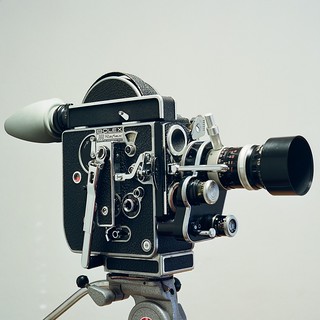
I don't care how accurate they are, as they are usually near enough. I'm more interested in the music of the whirrr, clicking and clack, clack clack. In fact, if I could afford to do so, I would start a museum of abstract clockwork objects and encourage designers of clockwork mechanism to make and submit their own designs, even if some had no end use or purpose, but just had interesting design, sound, tactility and function. Visitors could pick them up, wind them up and then watch and listen as they release their energy.
 
Photrio.com contains affiliate links to products. We may receive a commission for purchases made through these links.
To read our full affiliate disclosure statement please click Here.

PHOTRIO PARTNERS EQUALLY FUNDING OUR COMMUNITY:


Ilford ADOX Freestyle Photographic Stearman Press Weldon Color Lab Blue Moon Camera & Machine
Top Bottom