• Welcome to Photrio!
    Registration is fast and free. Join today to unlock search, see fewer ads, and access all forum features.
    Click here to sign up

Image cropping, Yes or No?

Tompkins Square Park

A
Tompkins Square Park

  • 2
  • 0
  • 0
Siesta Time

A
Siesta Time

  • 1
  • 0
  • 18

Recent Classifieds

Forum statistics

Threads
202,856
Messages
2,846,648
Members
101,572
Latest member
apltd
Recent bookmarks
0
It's extremely rare that I crop an image during printing. If I do I've almost always made that decision at the time of shooting not later in the darkroom.

Ian

Good point, Ian!
It happens to me that I have with me one of my square cameras and looking at the groundglass/screen I thik "Now that would look so good in panoramic format." So I try printing it thus in the darkroom and continue wishing I had an xpan or a 6x14camera (this aspect ratio somehow suits me best - for me is a sweet spot between 6x12 and 6x17..

Sent from my i9300 using Tapatalk
 
Good point, Ian!
It happens to me that I have with me one of my square cameras and looking at the groundglass/screen I thik "Now that would look so good in panoramic format." So I try printing it thus in the darkroom and continue wishing I had an xpan or a 6x14camera (this aspect ratio somehow suits me best - for me is a sweet spot between 6x12 and 6x17..

Sent from my i9300 using Tapatalk

You highlight something else worth mentioning.

I work predominantly with large format (since 1986) and used to carry a Leica as well but found I wasn't using any of the images/negatives. Now I carry a TLR instead and found I love the square format, and also have a 6x17 camera. At times I carry all three when I think I may want to shoot Panoramic images.

Here's examples where formats are important, all shot at Aphrodisias in the Stadium.

aprodisas_04a.jpg


aprodisas_05.jpg


aprodisas_03.jpg


All full frame.

Ian
 
Nice examples, Ian.
When I go to photgraph in earnest I usually bring the 18x24 and a 6x6 MF - I make then prints from both formats - Kallitypes from LF an mostly lith prints from MF. But often I think that it might work better if I used only one format/system. But for that I'd need to find and buy a 13x18 enlarger.

Sent from my i9300 using Tapatalk
 
I try to get the framing right in the camera. Sometimes I succeed. Sometimes not. Actually I enjoy fine-tuning the crop afterwards. It allows a perspective I may have not seen when shooting.

But here is a thought. What if the crop in the camera does not meet what you see? You're limited to the cameras format. What if the camera allowed you to format in the camera? Would you use it to get a better shot? If so, then what's wrong with cropping after the fact if the camera does not meet what you like to frame with it originally?

Here's another issue. What if the print format does not meet the negative or chromes format? What if you have the fortune to get it printed on a magazine cover? So you have to crop anyway.
 
As I use a 6x7 camera that I do not ever turn sideways, I almost always crop a bit or more off the long ends if need be. Once I learned to cut my own mats, I was no longer a slave to the dimensions of pre-cut windows, and found that very liberating in terms of print size. I try to put the edges where they need to be regardless of where the film rebate begins. Making a photograph is an ongoing process, and, for me at least, continues well into the printing phase with decisions sometimes coming at the very last moment. Obviously for Polaroid or contact prints, I'd have to do things differently, but that's probably why I have zero interest in Polaroids or contact prints...too restrictive!
 
Depends on whether you're trying to be the perfect photographer or deliver your message perfectly.

Yes, indeed. Also, I never know at the moment of image capture all the possible uses for that image in the future. For you young photographers, the future may include many decades with major technological changes.
 
Whatever makes the image work.

I scan all my negatives and wet-print a very very small number. I've never printed a scanned image.
When I use the scans for sharing on Flickr, for instance, I will often "tidy up" an image by cropping; I have noticed, however, for the few images I actually do print, they are almost exclusively from the full frame whatever format I've used. So the implication is that for me getting it "right" in-camera works best.

Jim Jones' point is rather a good one, certainly one for the dogmatists to keep in mind.
 
"I try, but fail most of the time. I'm not Bresson"

LOL; what makes you think that Cartier-Bresson didn't crop?
 
Another issue I've run into. I often make slide shows then burn to a DVD to show on an HDTV. If the camera is shooting let's say 4:3, I'll crop but make sure all my pictures are cropped to 4:3. That ways the show won't have different formats popping up on the screen. However, it adds the burden of forcing the crop which sometimes makes picking the best one out more difficult than if I could crop to any format.
 
I usually use a 6 X 6 camera, but don't really like square prints so, of course, I crop. I have vertical and horizontal outlines on an overlay on the focussing screens of my cameras and normally intentionally compose for a vertical or horizontal, but appreciate the opportunity to change my mind later. I'll also crop further when I think it improves the photograph.
 
I try to use as much of the negative's real estate as possible. Sometimes it's all of it, sometimes it's not. I don't consider cropping a failure. It's just one of the options we have in order to make a better finished photograph.
 
Composing to the viewfinder is a silly and artificial constraint. It is in the same class of declasse affectations as rough borders produced by filed carrier edges. The eye does not see that way. I crop or not depending upon what is required by the subject. I eliminate what is not germane to the image.
 
Last edited by a moderator:
I try seriously to work with whatever format I'm using. But if at some point along the way I decide losing a bit off one side or another -- or several -- seems interesting, off it comes; and no sleep lost!
 
Another issue I've run into. I often make slide shows then burn to a DVD to show on an HDTV. If the camera is shooting let's say 4:3, I'll crop but make sure all my pictures are cropped to 4:3. That ways the show won't have different formats popping up on the screen. However, it adds the burden of forcing the crop which sometimes makes picking the best one out more difficult than if I could crop to any format.

Why would it matter if different formats pop up? I do this too, but happily crop to suit, some vertical some horizontal etc.
 
Composing to the viewfinder is a silly and artificial constraint. It is in the same class of declasse affectations as rough borders produced by filed carrier edges. The eye does not see that way. I crop or not depending upon what is required by the subject. I eliminate what is not germane to the image.

My approach and opinion too, though I try to get it the best I can in the viewfinder. Sometimes that works fine and I print nearly full frame (no filed out carriers though.) Sometimes it doesn't because the photo wasn't shaped the same as the film format or I couldn't get exactly the right distance or focal length. Use the most I can and frame the best I can in the viewfinder, happily crop more later if it improves the image.

And to also disagree with something I've read a lot here, very often I'll see one image in the viewfinder then later decide after proofing, or sometimes after looking at a full sized print, that it would be better cropped in which case I print it again and crop. I'm not a slave to my original vision. Often enough the brain will churn these things around and come to a different conclusion given more time, seeing it on paper or whatever. I create the best print I can and will change it at will at any stage to get there.
 
Composing to the viewfinder is a silly and artificial constraint. It is in the same class of declasse affectations as rough borders produced by filed carrier edges. The eye does not see that way. I crop or not depending upon what is required by the subject. I eliminate what is not germane to the image.

I don't agree with this and although as stated in my OP I'm not against cropping, to say it is a silly and artificial constraint is analogous to my students doing studio photography and saying "oh that doesn't matter, as I can correct it in Photoshop".
 
It might make sense to make that comparison with studio photography where one can control all elements of the photo. It doesn't make sense to me in other photography where the world is found as it is. There are distractions we'd rather not include, the scene may look best not conforming to the shape of the film format etc.
 
I don't agree with this and although as stated in my OP I'm not against cropping, to say it is a silly and artificial constraint

There are some photographers that simply refuse to crop any image and insist that only a full frame print is an honest representation of the image. That is what I find silly and this idea limits what you can express. The rough borders are intended to show that the image is full frame. I find the whole concept a bit out of date.
 
It might make sense to make that comparison with studio photography where one can control all elements of the photo. It doesn't make sense to me in other photography where the world is found as it is. There are distractions we'd rather not include, the scene may look best not conforming to the shape of the film format etc.

Precisely!
 
Sometimes cropping does not hurt anything at all. I hated cutting the print, but I'll do anything to get a print displayed...

As printed...

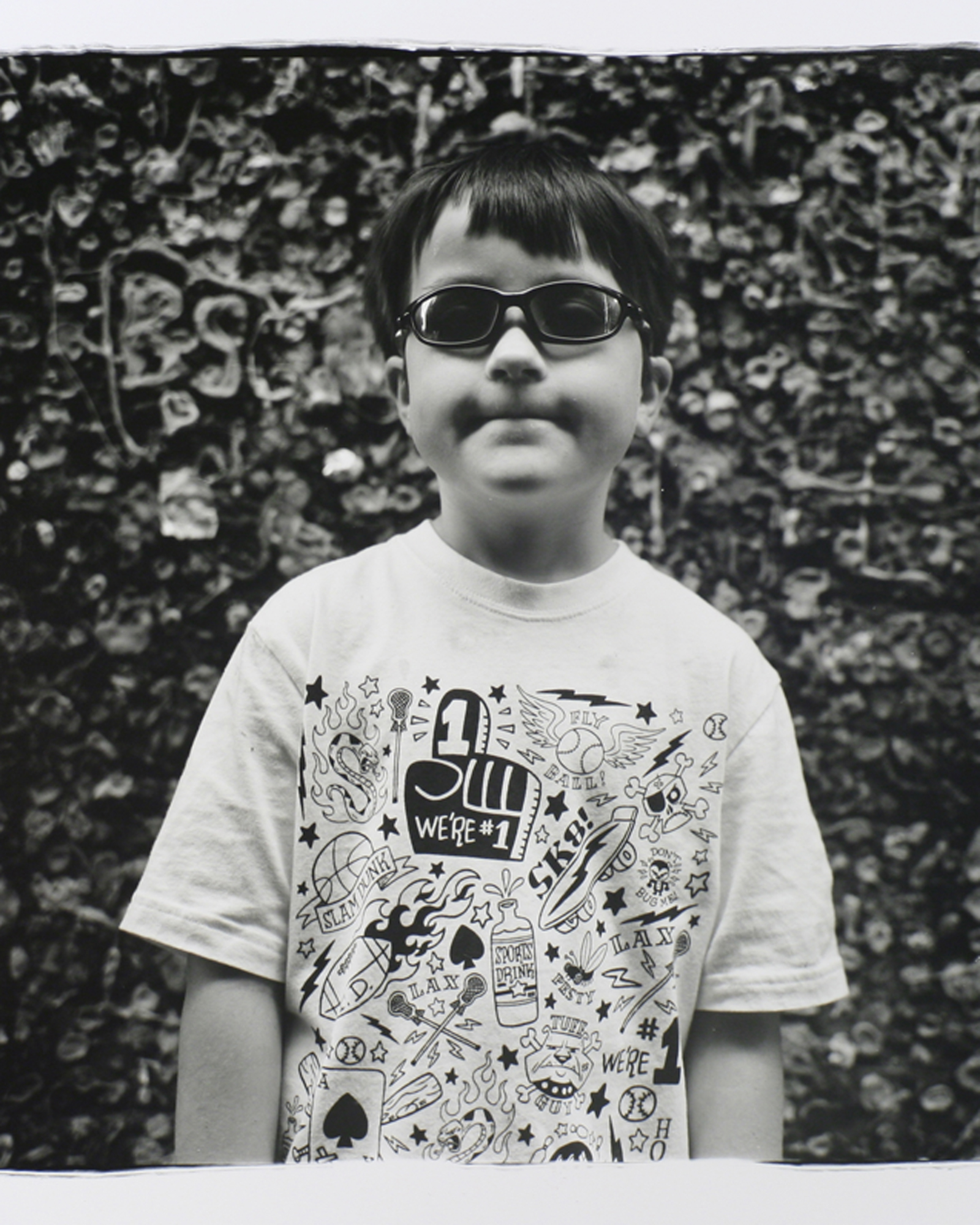
bubblegum.jpg


Scissors crop. Print was cut to fit 8x10 frame in our hallway. Notice that the "skull on a stick," a rather unique part of the original image, is lost in the crop.

bubblegum_crop.jpg


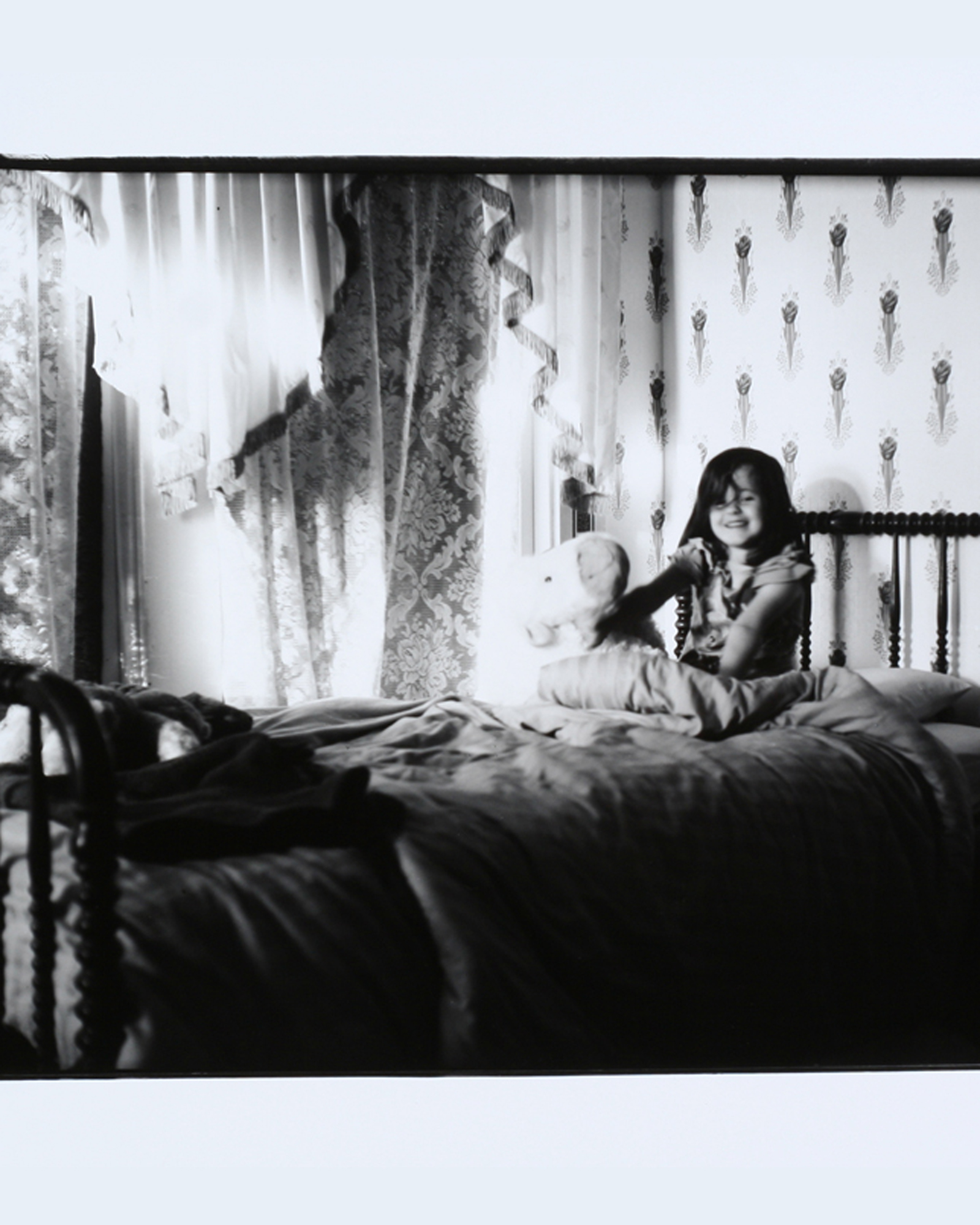
Same scissors treatment could be applied to Ava, Mendocino without hurting it.

IMG_8324s_crop.jpg


Gerald, I don't want to get into a stalemate discussing the filed carrier look, so I hope you can see it my way. Black borders are my current print standard and I don't plan to change. I don't want followers or detractors, compliments or criticism regarding borders. I print full frame, every time. It's one of the methods I use to maintain consistency. I don't say it's necessary for the integrity of the image. But mine very often fit the format I happen to be shooting, and when it does, I want to see it all.

There are some very specific lost opportunities associated with black borders, and I am open to discussing them. For example, slight edge flashing. Say I planned to mat the print for display, or cut the print to dry mount. After matting or cutting, I might see where flashing would improve the print, but by that point it will be too late.

 
In medium format I shoot 6X45, 6X6, 6X7 and 24X54mm. When I get a motorized back for my RB67 Pro S I will also be able to shoot 6X8. I can only enlarge up to 6X7 with my own enlargers so 6X8 would have to be scanned. The nice thing about the formats larger than 35mm is that cropping still leaves you a nice size image area. I try to estimate the type of shooting I will be doing and then pick a format. Last summer I shot train photos at a local museum. I was shooting outdoors in good light, hand held. The camera was a Bronica GS-1 and most images were made with the 50/4.5. This was a good subject for an oblong format. For more general medium format picture taking I would use 6X6 and either go for good square compositions or crop later. For faster shooting I might use an ETRS with a Speed Grip or a Mamiya M645 1000S with the right hand motor atachment. The RB is better used with a tripod.
 
Sometimes cropping does not hurt anything at all. I hated cutting the print, but I'll do anything to get a print displayed...

As printed...

bubblegum.jpg


Scissors crop. Print was cut to fit 8x10 frame in our hallway. Notice that the "skull on a stick," a rather unique part of the original image, is lost in the crop.

bubblegum_crop.jpg


Same scissors treatment could be applied to Ava, Mendocino without hurting it.

IMG_8324s_crop.jpg


Gerald, I don't want to get into a stalemate discussing the filed carrier look, so I hope you can see it my way. Black borders are my current print standard and I don't plan to change. I don't want followers or detractors, compliments or criticism regarding borders. I print full frame, every time. It's one of the methods I use to maintain consistency. I don't say it's necessary for the integrity of the image. But mine very often fit the format I happen to be shooting, and when it does, I want to see it all.

There are some very specific lost opportunities associated with black borders, and I am open to discussing them. For example, slight edge flashing. Say I planned to mat the print for display, or cut the print to dry mount. After matting or cutting, I might see where flashing would improve the print, but by that point it will be too late.

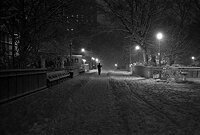
Bill, so why didn't you turn the camera to portrait when you took the shot?
 
Cropping? It depends.

My latest exhibition features full frame 8x10 contacts including the film rebate as a black border. The proposition here, whether the viewer buys it or not, is ultimate conceptual integrity. The 8x10 is seen, exposed, processed, finished, mounted, and displayed without changing its original size or its original vision. I'm claiming full responsibility for the content right to the edges and corners. The viewer knows they are not short-changed. The absence of cropping is part of the art-spiel.

Apart from SLRs with 100% viewing (Nikon F etc) cameras with viewfinders do not afford precise framing so the presentation of full frame pictures with a black "verification border" is a technical affectation. That doesn't negate the right of the photographer to claim responsibility for the content. It does however undo fantasy claims that the photographer composed right to the edges.

Most of my photographs are cropped because of the difference between "framing" and "composition". Composition is getting all the components of the subject matter, side to side and front to back, in the right relationship to each other. Framing comes next. If all the things I want to include from the chosen camera position don't fit in the picture I can't step back. That would change the composition. So I use a wider angle lens to get "everything in" and complete the framing by cropping the final photograph. This happens more often than not.
 
Bill, so why didn't you turn the camera to portrait when you took the shot?

I have no idea. Looks like I didn't give composition much thought in this shot. I remember I couldn't get any closer and I was working fast.
 
Cropping? It depends.

My latest exhibition features full frame 8x10 contacts including the film rebate as a black border. The proposition here, whether the viewer buys it or not, is ultimate conceptual integrity. The 8x10 is seen, exposed, processed, finished, mounted, and displayed without changing its original size or its original vision. I'm claiming full responsibility for the content right to the edges and corners. The viewer knows they are not short-changed. The absence of cropping is part of the art-spiel.

Apart from SLRs with 100% viewing (Nikon F etc) cameras with viewfinders do not afford precise framing so the presentation of full frame pictures with a black "verification border" is a technical affectation. That doesn't negate the right of the photographer to claim responsibility for the content. It does however undo fantasy claims that the photographer composed right to the edges.

Most of my photographs are cropped because of the difference between "framing" and "composition". Composition is getting all the components of the subject matter, side to side and front to back, in the right relationship to each other. Framing comes next. If all the things I want to include from the chosen camera position don't fit in the picture I can't step back. That would change the composition. So I use a wider angle lens to get "everything in" and complete the framing by cropping the final photograph. This happens more often than not.

As you state that most of your photographs are cropped, but your latest exhibition features full frame, does this mean you are changing your style and approach to photography?
 
Photrio.com contains affiliate links to products. We may receive a commission for purchases made through these links.
To read our full affiliate disclosure statement please click Here.

PHOTRIO PARTNERS EQUALLY FUNDING OUR COMMUNITY:


Ilford ADOX Freestyle Photographic Stearman Press Weldon Color Lab Blue Moon Camera & Machine
Top Bottom