
• Welcome to Photrio!
    Registration is fast and free. Join today to unlock search, see fewer ads, and access all forum features.
    Click here to sign up

Ilford PanF50 in HC-110

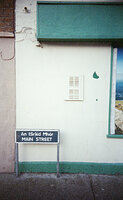
An tSráid Mhór

A
An tSráid Mhór

  • 1
  • 0
  • 39
IMG_1285.jpeg

D
IMG_1285.jpeg

  • 0
  • 0
  • 37

Forum statistics

Threads
203,125
Messages
2,850,218
Members
101,690
Latest member
nisherii
Recent bookmarks
0

/dev/null

Member
Allowing Ads
Joined
Nov 3, 2011
Messages
103
Location
The Netherla
Format
Medium Format
I seem to have messed up a Panf50 film in Tetenal Ultrafin. Did 1:20 for 8.00min, like described on Tetenal box.

Can someone help me with a PanF50 in HC-110? Can't seem to find it in the Mas Dev Chart. Dilution b.

Thanks.
 
A few tips and not so much tips (like "use my sort of super-brew instead") in this thread:

(there was a url link here which no longer exists)

and some more here: http://www.jasonbrunner.com/hc110.html
 
That's the problem with most of these threads. Some asks for recommendations for film X and dev Y, and learns he should be using films A and B together with dev C and/or D instead. Sure, HC110 is loved by casual users for its ease of use and its long shelf life, but I refuse to believe that it is a bad developer.
 
That's the problem with most of these threads. Some asks for recommendations for film X and dev Y, and learns he should be using films A and B together with dev C and/or D instead. Sure, HC110 is loved by casual users for its ease of use and its long shelf life, but I refuse to believe that it is a bad developer.

I don't think that anyone has said that HC110 is a bad developer, but there may be more suitable developers for Pan F.

Maybe a Google of HC110 will turn up some info. or go to Kodak or Ilford photo.

Regards,
John
 
The times I have are:

ISO 50 dil. B 4:00
ISO 50 dil. E 5:30
ISO 50 dil. F 9:30

I'm not sure where I got these, but probably from the PanF+ data sheet.
 
Looks like you developed a tad long with ultrafine, massive dev chart states 5.5 minutes with that film for 1:20.

http://www.digitaltruth.com/devchart.php?Film=Pan+F&Developer=Ultrafin&mdc=Search

Make sure you make your dev correctly (use a syringe) and measure the temp correctly as well (digital thermometer, it doesn't have to be very expensive) .
For 500ml total dev, you need 500/20 +1 => 23.8 ml ...say 24ml of tetenal ultrafin for 1 + 20 dilution, this is hard to measure without a proper syringe. For these short dev times, a little off here and there can create pretty drastic shifts I would suppose.

I have hc 110, but I haven't tried it yet, as I am currently trying out one dev on a few selected film types, to see how they look. :smile:
My experience so far with ultrafin and contrasty films, is that if you overdevelop by a few percent, your highlights to bye-bye in a flash, panf+ is pretty contrasty afaik.

Edit: Found a thread on flicker concerning Panf and hc110: http://www.flickr.com/groups/72078851@N00/discuss/72157607470544788/

And if al else fails, there's always Rodinal :smile:
 
Last edited by a moderator:
Well, I usually stick to one developer for all my films and at the moment it is HC-110. I tried this Tetenal Ultrafine, cause I couldn't find the correct values for Panf50 and HC-110 on the dev charts, maybe I wasn't looking in the right place.

Anyways, I think I have enough info now to do the next roll with HC-110 with correct measurements. I use temp and all that stuff, so I stick to quite a steady and scientific ;-) workflow.

I have some Rodinal here too, maybe I try one of the rolls with that too and I have something to compare.

Anyways, on the Tetenal Ultrafine bottle its says: 1+20 for 8:00 minutes, I am pretty sure I read it correctly, but it didn't turn out like it should. Temp was 20c, etc, did the whole shake and agitation ritual like I always do, but this one got messed up a bit. Better luck next time :smile:
 
How did it get messed up?

Often times, problems with film developing is due to user error, and not the materials.

Please describe exactly what went wrong with your film.
 
Thomas, I was testing a Rodenstock Trinar f6.3 / 105mm, it's a classic 1920 camera. Technically it is in good shape, at least, I did not see any light leaks.

I was shooting night pics in the city here in The Netherlands. It is a low light environment with little shops everywhere, just the old center of the city. It has normal city lighting and lighting from the shops.

When I scan the negatives it looks like it has an extreme light trace all over them. The result looks like if you would have a b/w image in say Photoshop and then pull the mid grays to the left, so make everything lighter. Not sure if I can link an image here, but I put one of the scans (not editted) here:

http://i42.tinypic.com/10y4evo.jpg

Maybe it could also be the light surrounding giving this effect, I worked with long shutter speeds. f16 for about 30 seconds on this one. It's like fog or oil on the lens....Around me (where I was standing) there where city lights.
 
Looks like light going trough the film and being reflected back again, I just red a thread on here about this effect with long exposures.

I was thinking about that as well being the issue. Some negatives have bulbed exposures up to two minutes and the effect seems worse. So negatives from this same roll.

There were surrounding lights were I was taking the pics. Maybe I should've go for the smallest aperture on this camera (f6.3) and higher ISO to have less (correct word?) diffuse light? SO the light surrounding me from all over.
 
If it's not lens fog, my guess is that your film is underfixed, due to the fact that there is more density in the middle. Does it look a little milky or perhaps light brown?

I fixed with Amaloco X89 for 2,5 minutes. That should be enough for ISO50 film, right? The density in the middle could be explained by the fact that the middle has more light hitting the camera, the light from the shops where you can see the dummies in the window.
 
I fixed with Amaloco X89 for 2,5 minutes. That should be enough for ISO50 film, right? The density in the middle could be explained by the fact that the middle has more light hitting the camera, the light from the shops where you can see the dummies in the window.

The underfixing would be my guess also, but I haven't encountered this exact phenomenon before. 2.5 minutes might be enough, assuming the fixer was fresh. Do you test your fixer before you use it?
A fresh rapid fixer should clear a piece of Pan-F in about 30 seconds. I use small pieces of 35mm 'waste' for this. Or old and expired sheet film that is useless.
If the film rebate around the picture area clear? Or does it appear 'milky'. If yes, re-fix in fresh fixer after soaking in water for a few minutes.

Also, if you didn't expose the film enough and the midtones slid too far down towards the shadows, and you try to bring them back then that could look like fog.

I'm not familiar with long exposures causing what you see. I sincerely doubt it was the developer, however, because HC-110 is a developer that I used a lot in the past to process expired film, because it gave such a nice clean result with minimal base fog.

I hope that helps a little bit.
 
The underfixing would be my guess also, but I haven't encountered this exact phenomenon before. 2.5 minutes might be enough, assuming the fixer was fresh. Do you test your fixer before you use it?
A fresh rapid fixer should clear a piece of Pan-F in about 30 seconds. I use small pieces of 35mm 'waste' for this. Or old and expired sheet film that is useless.
If the film rebate around the picture area clear? Or does it appear 'milky'. If yes, re-fix in fresh fixer after soaking in water for a few minutes.

That part looks fine, so maybe it wasn't a developer issue at all. I developed film in the past with 'wrong' times and temperatures, but never saw any results like this.

I'm not familiar with long exposures causing what you see. I sincerely doubt it was the developer, however, because HC-110 is a developer that I used a lot in the past to process expired film, because it gave such a nice clean result with minimal base fog.

I hope that helps a little bit.

Thanks. I think what I need to do is shoot another roll with the Rodenstock (this was the first roll I shot with this camera) and develop in HC-110 and see what the results are. I think what happened is, like explained before is due to the long exposure times (some 2 minutes) the diffused light caused this. So, now I learned to watch for this next time I do night shots and use a lower f value for faster shutters speeds....
 
Last edited by a moderator:
Hmm I've only shot one roll of PanF, I metered at ISO 50 and developed 7 minutes in HC 110 1+63 and got decent results. But my PanF testing went on back burner and I don't have much of a working knowledge for it.

The effect seen above strikes me a bit as lens flare (or was it misty?) but that's a guess. Speaking of scientific method, have you shot any normal daylight scenes with this camera? Long night exposures could be a tedious way to verify other parts of the process. :D

My two cents,
DaveT
 
/dev/null said:
I think what I need to do is shoot another roll with the Rodenstock (this was the first roll I shot with this camera) and develop in HC-110 and see what the results are. I think what happened is, like explained before is due to the long exposure times (some 2 minutes) the diffused light caused this. So, now I learned to watch for this next time I do night shots and use a lower f value for faster shutters speeds....

That sounds like the best thing to do.

The more I think about lens flare, the more interested I become in that option. It really is something you have to watch out for in night time photography. If you're using an old uncoated lens, then that could be a very strong contender. Thanks to others who pointed that out.

A roll of film in daylight at f/11 and normal shutter speeds should tell you a lot.
 
I last shot 120 Pan F rated at ISO 32. I developed in HC-110 1:79 for 7 minutes at 68 degrees. Good results. I rated it at 32 so I could use fill flash with the Pentax 645's 1/60 sync speed.
 
Photrio.com contains affiliate links to products. We may receive a commission for purchases made through these links.
To read our full affiliate disclosure statement please click Here.

PHOTRIO PARTNERS EQUALLY FUNDING OUR COMMUNITY:


Ilford ADOX Freestyle Photographic Stearman Press Weldon Color Lab Blue Moon Camera & Machine
Top Bottom
