
• Welcome to Photrio!
    Registration is fast and free. Join today to unlock search, see fewer ads, and access all forum features.
    Click here to sign up

Ilford Pan-F+ - Why don't more people use/recommend DDX?

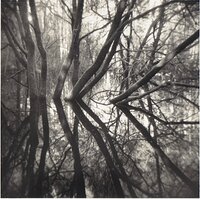
Flooded woodland

Flooded woodland

  • 15
  • 2
  • 111
Babylon

D
Babylon

  • 3
  • 1
  • 94

Recent Classifieds

Forum statistics

Threads
202,843
Messages
2,846,374
Members
101,561
Latest member
SBurns28804
Recent bookmarks
0
That seems like you would wind up with compression of highlights that needed some kind of gymnastics to show the separation.

Two more things on this idea.

A distinct advantage of compensation (in theory) is that it affects the highlights almost exclusively and does not affect the mid and low tones. This theoretically allows scenes with a long scale subjects to retain snappy, well separated shadows and mid-tones and allows straight printing, no burn and dodge. Worthwhile goals. Highlight separation is sacrificed/compressed purposefully (whether the users admit it or not). In exchange for "better" mid and low tone separation and easy printing they are willing to give up some detail/separation in the highlights. (I need more coffee, there is probably an easier way to say that with less redundancy.)

A distinct limitation of compensation is that in the real world it doesn't always work as advertised. What I mean by that is that the toe of our film curve is very well defined in terms of its relationship to what our light meters tell us, but in my years here at APUG I can't remember seeing any numerical x,y data defining where a compensated shoulder starts or ends with various or any developer/film/time/temp combos that would allow anyone else to truly duplicate the effect, let alone a comparison to the standard curve to be able to tell us how big the effect is. That begs for me the question; how would I shoot to purposefully take advantage of that compensated curve and what E.I. would actually works best? I'm not saying the compensation does not work, or that it's not real; the theory actually makes sense. What I'm saying is that without hard data it's like grandma passing down one of her recipes over the phone and saying add a little salt, a few eggs, a couple handfuls of flour, add water until it has a good consistency… the details are pretty sketchy, my result is probably going to be of lower quality than grandma's.
 
Okay, I just remembered one place I saw this theory shown. (there was a url link here which no longer exists)

Good article, it does ask that we think differently about subject placement/E.I. to be able to use the various curve shapes.
 
I develop my Pan-F Plus in PMK 1:2:100. I don't get a lot of staining which was, at first, disappointing, but when I printed the negs I found they printed beautifully.
 
In the short time I've been here (and a much longer time lurking), it seems that DDX is rarely recommended as a developer for Pan-F. I only note it because I believe the Ilford data sheet notes that, among liquid developers, it is the "best" for overall image quality, grain, sharpness.
Pan F Plus and DDX are a fine combination.

http://www.philpankov.com/-/philpankov/article.asp?ID=1420

However, I found D-76 diluted 1+1 is also very good for Pan F Plus.
 
I just finished toning two prints of old negatives. One from a Pan-F+/Rodinal 1+50, and another Efke KB50/Rodinal. Great films. The Efke has less grain, but isn't as sharp to the eye.
They are just 6x9" prints, so pretty small.

I'm sure a neg processed in DDX would have been equally nice, but probably with slightly more highlight contrast.
 
It all comes down to the print. As I have remarked before when looking at a print it is impossible to determine which developer was used. Indeed even guessing what film was used is all but impossible. Which is as it should be. There are no magic bullets.
 
It all comes down to the print. As I have remarked before when looking at a print it is impossible to determine which developer was used. Indeed even guessing what film was used is all but impossible. Which is as it should be. There are no magic bullets.

And, even if a person could tell a difference immediately, it isn't actually very important to the success of the photograph. :smile:
 
Just a thanks for the education in this thread. Particularly Mark & Thomas. 'Appreciate your excellent help.
 
Regarding the price of DDX - I haven't used it extensively, but doing very controlled tests, I found the recommended 1+4 produced identical negs at 1+7 with longer time. By "identical" I mean I printed my test negs of a studio-lit still life with a full range of zones, designed so my highlight texture, highlight detail, and so on fell on exact stops (I use a few black nets and so on) with a #3 printing filter, printing time determined by a blank film frame with a test strip for max blacks, and dialed in development times until I got a match. So in my experience, it seems safe to say you can get twice the use from a bottle of DDX than what Ilford recommends.

I'll also say it's a great developer for getting a useful 1200 speed (or so) neg (HP5+ or Delta). It really does bring more shadow detail.

If I didn't hate that mush-grain of Delta, I'd buy a lot more of it, but it does bring the speed with Ilford films and if I ever need to shoot around 800-1200, it would be my choice to use DDX with HP5+ (my choice being limited to the few developers I've really gone to town testing).
 
DDX and Pan F are an amazing combination. The negatives come out razor sharp and are a viewing experience in their own right. I have some Pan F developed in another developer (don't recall the type) and when placed side by side there is a world of difference. Same camera, same lighting, same subject matter and the non-DDX negatives are bland and muddy. If those were the best that B&W could do, I wouldn't bother shooting it.

As for the comments on price, I bought a liter locally for right at 20 bucks (Adorama lists it for just under $18). I figure that should develop at least 200 rolls of film for a grand total of 10 cents a roll. Now, I remember when a dime would let you ride the trolley down to Coney Island, take in a show at the nickelodeon, and still have enough left over for an ice cream. But I can't imagine any circumstances where 10 cents/roll would be "expensive".
 
> I like Rodinal with Pan F in 35mm.

Me too. 40 ASA, Rodinal 1+40 (slightly stronger than normal), 13 mins. Wonderful film.
 
Photrio.com contains affiliate links to products. We may receive a commission for purchases made through these links.
To read our full affiliate disclosure statement please click Here.

PHOTRIO PARTNERS EQUALLY FUNDING OUR COMMUNITY:


Ilford ADOX Freestyle Photographic Stearman Press Weldon Color Lab Blue Moon Camera & Machine
Top Bottom
