• Welcome to Photrio!
    Registration is fast and free. Join today to unlock search, see fewer ads, and access all forum features.
    Click here to sign up

Ilford Pan F: using it to best advantage

Recent Classifieds

Forum statistics

Threads
201,771
Messages
2,829,879
Members
100,938
Latest member
agambedi
Recent bookmarks
0
OP
OP
Svenedin

Svenedin

Member
Allowing Ads
Joined
Mar 19, 2016
Messages
1,191
Location
Surrey, United Kingdom
Format
Med. Format RF
Well, Svenedin, the dog pic on APX25 has the most "snap" in my view :D While the park benches might be a little light in the foreground and in a sense the opposite of what I always think of as a contrasty print, I don't think I'd have made any comments at all, had I seen all three as separate pics in the gallery other than to the effect that all three are OK pics.

Other than high summer and high noon by the sand and sea on the few contrasty shadow days we have in the U.K. I wonder if Pan F's contrasty nature is a problem at latitude 53N On the other hand I can appreciate that 33N is another story.

pentaxuser .

Thanks. Yes she did snap. She had been playing with the water sprinkler! I think I'll give it another go. Maybe I'll try Rodinal for a change. I'll do some bracketing so that I get EI 25 and 50. Such slow films are difficult in the UK. For landscapes with the camera on a tripod they're OK but for handheld there is often not enough light. When TMax 400 came out I could get small grain and good speed so slow films no longer had quite the attraction but nonetheless I've always wanted to be able to take decent shots on Pan F. It's irritated me that it is the one film that has defeated me.
 

voceumana

Member
Allowing Ads
Joined
Aug 4, 2004
Messages
896
Location
USA (Utah)
Format
Multi Format
DK-50 supposedly has good midtone contrast, but isn't recommended for 35mm nor for contrasty scenes. PMK is recommended for mid-tone contrast as well as for contrasty scenes. You might try it.
 

DF

Member
Allowing Ads
Joined
Nov 10, 2012
Messages
622
This is all why I gave up On PanF+, and now shoot only FP4. It's perfect for the 'sunny F-16' rule.
'Shot so much of it all Summer long in mid - late afternoon sun/skies, F16/125 second without any bracketting, just
one of each shot. Good middle grey tones as well as contrast when & where you want it.
Though sometimes I'm tempted to give PanF a try again. You cannot overexpose this film the slightest bit
the way you can with others.
 

randyB

Member
Allowing Ads
Joined
Sep 7, 2005
Messages
548
Location
SE Mid-Tennessee, USA
Format
Multi Format
I am able to accurately gauge correct exposure so I am at a loss as to my poor (in my eyes) results.
What do you mean when you say you can "accurately gauge correct exposure" ? You are using a meter to get your exposures aren't you. Slow speed films have a very narrow latitude for correct exposure, in some lighting situations even 1/2 stop over or under can make the image fail your expectations. I find that studying the Zone System and using a 1* spot meter have helped master the nuisances of each type of film.
 

Kuby

Member
Allowing Ads
Joined
Aug 25, 2017
Messages
66
Location
Toronto, Ontario
Format
Medium Format
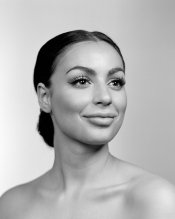
I have been shooting it at 50 iso in rebranded rodinal (called adox) and I enjoy the results. Mostly studio work so I can dial in exposure.
 

Attachments

  • Beauty 002.jpg
    Beauty 002.jpg
    363 KB · Views: 240
  • Beauty 005.jpg
    Beauty 005.jpg
    384.4 KB · Views: 226

BAC1967

Subscriber
Joined
Oct 30, 2014
Messages
1,456
Location
Bothell, WA
Format
Medium Format
Yes Kuby, you have it dialed in, great work! I just bought a bulk roll so hopefully I figure it out before I get through it all.
 
OP
OP
Svenedin

Svenedin

Member
Allowing Ads
Joined
Mar 19, 2016
Messages
1,191
Location
Surrey, United Kingdom
Format
Med. Format RF
What do you mean when you say you can "accurately gauge correct exposure" ? You are using a meter to get your exposures aren't you. Slow speed films have a very narrow latitude for correct exposure, in some lighting situations even 1/2 stop over or under can make the image fail your expectations. I find that studying the Zone System and using a 1* spot meter have helped master the nuisances of each type of film.

Yes what I mean is I am using a meter, not a guesstimate. For MF I would usually use a handheld Weston or Sekonic light meter. For 35mm I use the spot meter in my Olympus OM4-Ti. I don't use the zone system explicitly but I do sometimes take multiple spot readings to assess the brightness range. I cannot do 1/2 stops, my cameras don't have this facility.
 

bsdunek

Member
Allowing Ads
Joined
Jul 27, 2006
Messages
1,611
Location
Michigan
Format
Multi Format
Glad to know I'm not alone. I've never been very happy with Pan F either, for all the above reasons. That's why I stick with FP4, even though it may not have such fine grain.
 

randyB

Member
Allowing Ads
Joined
Sep 7, 2005
Messages
548
Location
SE Mid-Tennessee, USA
Format
Multi Format
Yes what I mean is I am using a meter, not a guesstimate. For MF I would usually use a handheld Weston or Sekonic light meter. For 35mm I use the spot meter in my Olympus OM4-Ti. I don't use the zone system explicitly but I do sometimes take multiple spot readings to assess the brightness range. I cannot do 1/2 stops, my cameras don't have this facility.
You certainly are on the right track. The next step is to ask yourself " Is the film I'm using best suited for the lighting and the subject contrast of what I'm photographing. As you know PanF has a very short contrast scale. It is best suited for short scale subjects and flat diffused lighting (IMO 4 stops from darkest to brightest tones) anything outside that 4 stop range will either be dark blank or white blank. I find that in photography if something fails in one area it can have spectacular results elsewhere, it is just a matter of using the tools for the specific job. I rarely use PanF in bright sunlight unless I DO want a high contrast look.
 

Craig75

Member
Allowing Ads
Joined
May 9, 2016
Messages
1,234
Location
Uk
Format
35mm
Ilford's characteristic curve is showing about 8 or 9 stops
 

randyB

Member
Allowing Ads
Joined
Sep 7, 2005
Messages
548
Location
SE Mid-Tennessee, USA
Format
Multi Format
Ilford's characteristic curve is showing about 8 or 9 stops
Please show everyone YOUR photos made on PanF that have detail in both shadows and highlights of a 8 stop scene brightness range. Please include all info used to make the photo: camera, lens, filter, developer, dev. time/temp, agitation routine, paper, paper developer. Maybe I've missed something these past 50 years of photographing/developing/printing.
 

Craig75

Member
Allowing Ads
Joined
May 9, 2016
Messages
1,234
Location
Uk
Format
35mm
Please show everyone YOUR photos made on PanF that have detail in both shadows and highlights of a 8 stop scene brightness range. Please include all info used to make the photo: camera, lens, filter, developer, dev. time/temp, agitation routine, paper, paper developer. Maybe I've missed something these past 50 years of photographing/developing/printing.

take a chill - im just saying their curve shows that
 
OP
OP
Svenedin

Svenedin

Member
Allowing Ads
Joined
Mar 19, 2016
Messages
1,191
Location
Surrey, United Kingdom
Format
Med. Format RF
You certainly are on the right track. The next step is to ask yourself " Is the film I'm using best suited for the lighting and the subject contrast of what I'm photographing. As you know PanF has a very short contrast scale. It is best suited for short scale subjects and flat diffused lighting (IMO 4 stops from darkest to brightest tones) anything outside that 4 stop range will either be dark blank or white blank. I find that in photography if something fails in one area it can have spectacular results elsewhere, it is just a matter of using the tools for the specific job. I rarely use PanF in bright sunlight unless I DO want a high contrast look.

Well in that case Pan F may not be a a sensible choice for me. The weather in the UK changes so quickly that it is rarely possible to predict what the lighting will be. It may be overcast and flat and then half an hour later bright sunshine and then raining! Having said that there may be circumstances when I can use up the few rolls I have at home but I'll have to give it some thought.
 

randyB

Member
Allowing Ads
Joined
Sep 7, 2005
Messages
548
Location
SE Mid-Tennessee, USA
Format
Multi Format
Well in that case Pan F may not be a a sensible choice for me. The weather in the UK changes so quickly that it is rarely possible to predict what the lighting will be. It may be overcast and flat and then half an hour later bright sunshine and then raining! Having said that there may be circumstances when I can use up the few rolls I have at home but I'll have to give it some thought.
Your weather situation is cause for frustration when using only 1 film, at times I've had that same problem here in the Southern U.S. Lately (the last 10 yrs) I try to use 2 35mm bodies, 1 for slow speed film and the other for med/high speed film. I only load the slow speed body when I find a subject that fits the film. Some days are great, some are bust. Don't give up on PanF, it is a great film but not a great everyday/everything film.
 

M Carter

Member
Allowing Ads
Joined
Jan 23, 2013
Messages
2,149
Location
Dallas, TX
Format
Medium Format
I've used it for copying B&W prints - like, photograph a bromoil print to make more copies in the darkroom. I was able to dial it in to reduce contrast to the point I had excellent control of the copy printing, without adding visible grain.

What was really cool was using it as a contact-duping film to make enlarger masks. The negs had the exact tonality of my fiber prints, pretty astounding. But really tough to work with as a roll film, I wish I could get it in 4x5. It was just remarkable to see those "positive B&W slides" it's capable of.
 
OP
OP
Svenedin

Svenedin

Member
Allowing Ads
Joined
Mar 19, 2016
Messages
1,191
Location
Surrey, United Kingdom
Format
Med. Format RF
Your weather situation is cause for frustration when using only 1 film, at times I've had that same problem here in the Southern U.S. Lately (the last 10 yrs) I try to use 2 35mm bodies, 1 for slow speed film and the other for med/high speed film. I only load the slow speed body when I find a subject that fits the film. Some days are great, some are bust. Don't give up on PanF, it is a great film but not a great everyday/everything film.

I do sometimes use 2 x 35mm bodies (OM4-Ti cameras). Usually I'd have an ISO 400 in one and something slower in the other (probably FP4). What might concern me is that the Pan-F could hang around for too long in those circumstances. If I load my 6x7 with Pan-F it's more likely I can shoot all 10 shots and process quickly.

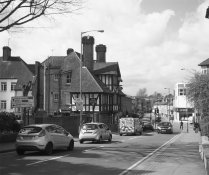
I dug this Pan-F photo out. Only because it is a fairly contrasty scene but it seems OK (even if it is a boring photo)

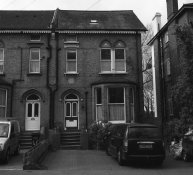
but then 10 minutes later (in dull flat lighting) I took the second picture (the former home of Alfred Russel Wallace) and it is dull and dreary.
 

Attachments

  • Photo501 small.jpg
    Photo501 small.jpg
    447.5 KB · Views: 186
  • Photo499.jpg
    Photo499.jpg
    525 KB · Views: 201
Last edited:

Poisson Du Jour

Member
Allowing Ads
Joined
Jul 1, 2008
Messages
5,462
Location
.
Format
Digital
Yes what I mean is I am using a meter, not a guesstimate. For MF I would usually use a handheld Weston or Sekonic light meter. For 35mm I use the spot meter in my Olympus OM4-Ti. I don't use the zone system explicitly but I do sometimes take multiple spot readings to assess the brightness range. I cannot do 1/2 stops, my cameras don't have this facility.

I do not see the OM4Ti as the be all and end all of spot meters; it is good for what it is, but still rudimentary and requires judgement. Is it additive, subtractive, either with, or without averaging? Averaging means up to a certain number of spots (multispotting) reading highights (but not the brightest parts) and shadows (but not the darkest parts) then averaging against a known midtone. A single spot meter reading will not provide a correct exposure unless you are absolutely sure you know the value of the area you are reading from and how you want that area to appear.

My experience with Pan F+ 50 is when using it in the Canon EOS 1N, rate at 50 with brackets at EI32 and 25 in scenes where contrast can be an issue (uncommonly in diffuse light, except for longer exposure where contrast and reciprocity both come into play), in 0.5 steps. I noticed you said your cameras have only full stops metering. Higher steps are not advisable as you are either a bit too high or a bit too low, and Pan F does require a degree of precise metering. In the Pentax 67, it is multispot additive-averaged metered at box speed. Reciprocal correction is required (x1.33) for either format.
 
OP
OP
Svenedin

Svenedin

Member
Allowing Ads
Joined
Mar 19, 2016
Messages
1,191
Location
Surrey, United Kingdom
Format
Med. Format RF
I do not see the OM4Ti as the be all and end all of spot meters; it is good for what it is, but still rudimentary and requires judgement. Is it additive, subtractive, either with, or without averaging? Averaging means up to a certain number of spots (multispotting) reading highights (but not the brightest parts) and shadows (but not the darkest parts) then averaging against a known midtone. A single spot meter reading will not provide a correct exposure unless you are absolutely sure you know the value of the area you are reading from and how you want that area to appear.

My experience with Pan F+ 50 is when using it in the Canon EOS 1N, rate at 50 with brackets at EI32 and 25 in scenes where contrast can be an issue (uncommonly in diffuse light, except for longer exposure where contrast and reciprocity both come into play), in 0.5 steps. I noticed you said your cameras have only full stops metering. Higher steps are not advisable as you are either a bit too high or a bit too low, and Pan F does require a degree of precise metering. In the Pentax 67, it is multispot additive-averaged metered at box speed. Reciprocal correction is required (x1.33) for either format.

I'm not holding up the OM4-Ti multi-spot metering ability as some kind of "be all and end all" but just saying what equipment I have. In auto mode (aperture priority) the calculated shutter speed is an average of the spot readings taken. In manual mode the spot readings are displayed in the viewfinder so the user can choose whether to bias towards the shadows or highlights or to expose for some critical part of the scene. Up to 8 spot readings are possible. My 6x7 camera can do half stop aperture values but my other cameras cannot.
 

chriscrawfordphoto

Member
Allowing Ads
Joined
Mar 12, 2007
Messages
1,893
Location
Fort Wayne, Indiana, USA
Format
Medium Format
I have a similar problem. I love what I see other people get with Pan F but I've never liked what I've gotten with it.

I suspect it's particular to certain developers. I've only used it with D-76, and found it to be too contrasty, again without the tone separation I was looking for.

Chris: I'm assuming those examples were done with Rodinal?


Yep, all Rodinal. I exposed the film at EI-50 and developed it in Rodinal 1+50 for 11 minutes at 68 degrees.
 

pentaxuser

Member
Joined
May 9, 2005
Messages
20,335
Location
Daventry, No
Format
35mm
Only because it is a fairly contrasty scene but it seems OK (even if it is a boring photo)

but then 10 minutes later (in dull flat lighting) I took the second picture (the former home of Alfred Russel Wallace) and it is dull and dreary.

It looks to me that the sunny scene is typical of the soft Summer sun we get in the U.K. It's a lovely pic but the shadows are fairly soft. What is contrasty to us Brits is, I suspect, a relatively dull day to those in the U.S and this "low contrast" scene is fine for Pan F.

The second one is what might be termed a very low SBR. Here again Pan F gives what is probably a good reflection of the real light conditions. I might be wrong but a lower grade print with a very carefully controlled exposure under the enlarger will brighten this one - as much as such a thing is possible with the dull light conditions that are there

pentaxuser
 
OP
OP
Svenedin

Svenedin

Member
Allowing Ads
Joined
Mar 19, 2016
Messages
1,191
Location
Surrey, United Kingdom
Format
Med. Format RF
It looks to me that the sunny scene is typical of the soft Summer sun we get in the U.K. It's a lovely pic but the shadows are fairly soft. What is contrasty to us Brits is, I suspect, a relatively dull day to those in the U.S and this "low contrast" scene is fine for Pan F.

The second one is what might be termed a very low SBR. Here again Pan F gives what is probably a good reflection of the real light conditions. I might be wrong but a lower grade print with a very carefully controlled exposure under the enlarger will brighten this one - as much as such a thing is possible with the dull light conditions that are there

pentaxuser

Thank you for taking the time to offer advice. The street scene was April (no leaves on trees). I will give the photo of the house a go at a softer grade as you suggest. I have a whole Winter's worth of printing to do. If the weather at the moment is anything to go by we are in for a dire Winter. I don't remember having to light fires so early in the year. Brrr.
 

craigclu

Subscriber
Allowing Ads
Joined
Sep 8, 2002
Messages
1,326
Location
Rice Lake, Wisconsin
Format
Multi Format
It's been awhile but I recall needing to expose at 25-32 to get any usable shadow detail with virtually any developer. I've got a lot of it in the freezer somewhere and should make myself get back to it.
 

Werewolfman

Member
Allowing Ads
Joined
Nov 18, 2014
Messages
55
Format
Multi Format
DK-50 supposedly has good midtone contrast, but isn't recommended for 35mm nor for contrasty scenes. PMK is recommended for mid-tone contrast as well as for contrasty scenes. You might try it.
Use DK-50 diluted 1:1. Follow times for Kodak Tmax Developer at the 1:4 dilution. You'll get superb results every time! I use DK-50 1:1 all the time since I'm running out of Polydol.:wink: You can process 10 rolls of film with the 1:1 dilution of DK-50 instead of using it as a one shot developer.

BTW, the grain was NEVER an issue. It is very fine grain. With Ilford Pan F, you won't even notice the grain.
 

Gerald C Koch

Member
Allowing Ads
Joined
Jul 12, 2010
Messages
8,131
Location
Southern USA
Format
Multi Format
To tame the contrast I over expose a bit EI = 32 and develop in D-23 1+1.
 
Photrio.com contains affiliate links to products. We may receive a commission for purchases made through these links.
To read our full affiliate disclosure statement please click Here.

PHOTRIO PARTNERS EQUALLY FUNDING OUR COMMUNITY:


Ilford ADOX Freestyle Photographic Stearman Press Weldon Color Lab Blue Moon Camera & Machine
Top Bottom