• Welcome to Photrio!
    Registration is fast and free. Join today to unlock search, see fewer ads, and access all forum features.
    Click here to sign up

Ilford Multigrade & Selenium

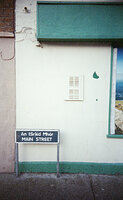
An tSráid Mhór

A
An tSráid Mhór

  • 1
  • 0
  • 36
IMG_1285.jpeg

D
IMG_1285.jpeg

  • 0
  • 0
  • 33

Forum statistics

Threads
203,125
Messages
2,850,212
Members
101,690
Latest member
nisherii
Recent bookmarks
0
Going back to the original question, I find MGFB developed in a warm tone dev (I use Fotospeed WT10 at 1=29 for about 3 mins) then toned gives a slightly more 'plummy' selenium tone - still very sublte, but noticable.

Another technique I use is to bleach the print in very dilute Ferricyanide (about 1/10th as recomended for sepia or less) before toning. About 30 seconds seems to work well. There is no apparent lightening of the highlights, but It tones to a lovely reddish tone - again very subtle.

Not very scientific I'm afraid as I'm not disciplined enough to take notes!

Rob
 
Last edited by a moderator:
Another technique I use is to bleach the print in very dilute Ferricyanide (about 1/10th as recomended for sepia or less) before toning. About 30 seconds seems to work well. There is no apparent lightening of the highlights, but It tones to a lovely reddish tone - again very subtle.

Rob - I've heard this somewhere before and will try this, as although I quite like the 'aubergine' colour you get with MGFB I would appreciate some flexibility.

Dietmar - As for shelf life of Kodak Rapid Selenium - I've recently started toning again with sealed bottles of KRST that have been stored for around 12 years. Although the contents have contracted, distorting the bottles considerably, the toner still works as I remember - and still smells of ammonia quite strongly. There is no precipitate in the bottles in my case.
 
Following on from some of the earlier discussion of the effect of bleaching a print before toning, I have uploaded a couple of prints showing the range of effects.

The first print is a straight print. The second a straight print toned in Fotospeed Se toner, 1+8, for ten minutes. The third a straight print, bleached to completion with a standard ferri bleach containing added NaCl, and re-developed using the soft Beers formulation, finally selenium toned as for the second print. And finally, a straight print, given a brief bath in dilute ferri (10% stock diluted 1+39) containing added NaCl, this print was bleached for 60 seconds to demonstrate how quickly the highlights lose density, I would normally bleach for 30 to 40 seconds, and then toned as for the second print.

(there was a url link here which no longer exists)
 
I'm also an advocate for bleaching back then selenium toning for interesting colour shifts with MGIV FB. My practice is to use split grade printing and, for the final print give between an extra three quarters to one whole stop in the soft grade exposure, then once all fixed and fully washed, bleach back until the lightest tones just disappear (bearing in mind the slight continuation of the bleaching action for a short time in the wash), thorough wash again, and finally re-develop in a mid-strength selenium (about 1:10 in maco selenia or 1:7 ish in Harman selenium toner) this gives a lovely split of almost yellow highlights against the cooler shadows - or give 1/2- 1 whole stop extra exposure to both soft and hard grades, bleach back almost completely then re-develop in the selenium - a livery brown can be achieved. Another way to get a colour shift with MGiV FB is to leave the print in the toner for 24 hours or so - some interesting things happen - i tried both bleaching and long toning once and got an almost peachy colour to the print.

 
I'm also an advocate for bleaching back then selenium toning for interesting colour shifts with MGIV FB. My practice is to use split grade printing and, for the final print give between an extra three quarters to one whole stop in the soft grade exposure, then once all fixed and fully washed, bleach back until the lightest tones just disappear (bearing in mind the slight continuation of the bleaching action for a short time in the wash), thorough wash again, and finally re-develop in a mid-strength selenium (about 1:10 in maco selenia or 1:7 ish in Harman selenium toner) this gives a lovely split of almost yellow highlights against the cooler shadows - or give 1/2- 1 whole stop extra exposure to both soft and hard grades, bleach back almost completely then re-develop in the selenium - a livery brown can be achieved. Another way to get a colour shift with MGiV FB is to leave the print in the toner for 24 hours or so - some interesting things happen - i tried both bleaching and long toning once and got an almost peachy colour to the print.


.Leon,

Did you fix after the bleaching and selenium (I know that Kodak selenium toner contains ammnium thiosulphate, don't know about the others, I myself use a home brewn selenium toner, T55, which does not contain fixer)


Oh you have this option called I believe China prints, first you tone verry intensive with selenium, than you bleach back all non toned silver, you get these peachy colours if I remember this correctly..


Thanks,

Best,

Cor
 
.Leon,

Did you fix after the bleaching and selenium (I know that Kodak selenium toner contains ammnium thiosulphate ....

no I don't for that very reason
 
.Leon,

Did you fix after the bleaching and selenium (I know that Kodak selenium toner contains ammnium thiosulphate, don't know about the others, I myself use a home brewn selenium toner, T55, which does not contain fixer)

It would be prudent to refix after bleaching/toning using your homebrew, to ensure there is no silver halide left to print out.

Oh you have this option called I believe China prints, first you tone verry intensive with selenium, than you bleach back all non toned silver, you get these peachy colours if I remember this correctly..

That's correct. 'Chinese' prints use an Iodine bleach (as much Iodine as will dissolve in methylated spirit, then diluted 1+10 with water for use). Full bleaching of the toned print removes any metallic silver, exposing the orange-red silver selenide. Tim Rudman describes the technique in his book on toning.
 
I've been subscribed to this thread reading some very interesting stuff especially about bleaching. It's a fascinating technique and we have asked Tim Rudman to come over to Dublin to run a bleaching workshop with us.

If any of you guys would like to do it, please get in touch or read more here;

Dead Link Removed

Fintan
 
Last edited by a moderator:
Photrio.com contains affiliate links to products. We may receive a commission for purchases made through these links.
To read our full affiliate disclosure statement please click Here.

PHOTRIO PARTNERS EQUALLY FUNDING OUR COMMUNITY:


Ilford ADOX Freestyle Photographic Stearman Press Weldon Color Lab Blue Moon Camera & Machine
Top Bottom