• Welcome to Photrio!
    Registration is fast and free. Join today to unlock search, see fewer ads, and access all forum features.
    Click here to sign up

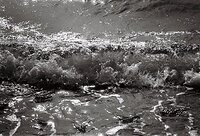
Ilford HP5+ At 800 ISO

Recent Classifieds

Forum statistics

Threads
202,825
Messages
2,846,005
Members
101,547
Latest member
Monsieur N
Recent bookmarks
0
Ah, ok, so that’s a multi-point metering system, yes? I understand now where you are coming from.

I did spot on the portrait half a stop over exposed.
Very white guy.
The rest was with the help of the matrix. I love the Minolta matrix.
 
It’s difficult to evaluate the photos you posted above, without knowing how you metered them. The shadow areas in all three are relatively unimportant, so if you rated the film at 1600 ISO (ie under-exposed by two stops relative to box speed) and metered for the dominant mid-tones, one would expect the film (in fact any decent film) to have coped with the situation easily.

Not to mention my digital cameras “that I use for video” keep falling in price.
Literally every camera I ever purchased is at least double more expansive now. So I probably made $10000. $15000 buying and using film cameras.
 
These are meaningless terms. As I move my spot meter across the scene, "shot as 800 ISO" means absolutely nothing. And you control contrast during development and scanning.

[EDIT] Here's a full-sized scan of HP5+ pushed one stop to boost contrast. I used Xtol 1+1 datasheet time.

Scanning? Wait! I thought this was an analog forum!! ;-)
if you're using 400 ASA film, 800 asa means Plus 1 development. You expose for the shadow values and adjust develop to get the highlites where you want them. That's the zone system approach.
 
And if you want to push, HP5 rules.

I agree. I have little use for a 400 film, preferring shooting at 100 or 125 outdoors. I jump to 1600 or 3200 with HP5+ in low light situations. Looks great in DD-X, and I will be experimenting same film with same high ISO in Ilfotec-HC in the coming weeks.
 
To the contrary. If you underexpose, you are pushing the shadow tones into the toe, where contrast is less.

Yes, but that's just true for the deep shadows. Most of the deep tones end up just behind the toll on a fairly high conference line.
 
Avedon's negatives were so dense, a retoucher said he used to shave the highlights with a razor blade. I've always been fascinated by the fact that shaving emulsion to thin it out is possible.

Wasn't he just joking?
Pete
 
What is the theoretical basis here? By increasing ISO (ie giving less exposure), you are presumably shunting shadow values down into the toe of the characteristic curve, where they will be more compressed. At the same time, you fit all or most of the mid and light tones onto the straight-line section, whose slope/contrast you increase by longer development. Is that right?

I wonder whether @aparat could oblige us with comparable curves of Tri-X and HP5+ in the same developer, so we might see what the difference is?

Amen.
 
Photrio.com contains affiliate links to products. We may receive a commission for purchases made through these links.
To read our full affiliate disclosure statement please click Here.

PHOTRIO PARTNERS EQUALLY FUNDING OUR COMMUNITY:



Ilford ADOX Freestyle Photographic Stearman Press Weldon Color Lab Blue Moon Camera & Machine
Top Bottom