
• Welcome to Photrio!
    Registration is fast and free. Join today to unlock search, see fewer ads, and access all forum features.
    Click here to sign up

If you suddenly had no darkroom.

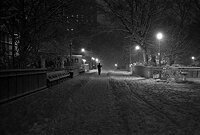
Tompkins Square Park

A
Tompkins Square Park

  • 5
  • 0
  • 68
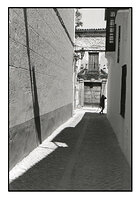
Siesta Time

A
Siesta Time

  • 2
  • 0
  • 52

Recent Classifieds

Forum statistics

Threads
202,859
Messages
2,846,679
Members
101,573
Latest member
IanSeehorn
Recent bookmarks
1

rayonline_nz

Member
Allowing Ads
Joined
Mar 20, 2010
Messages
658
Location
Wellington,
Format
Multi Format
Would it change how you approach your film photography if you had no darkroom.

I am beginning to think whether I should consolidate my film photography just to b/w film.

Situation - I don't now or ever expect to have a darkroom. As a side note I do not have a quality scanner for color film. Just a flatbed. For the last 2 maybe 3 years I have been developing my b/w film with a Paterson tank in the laundry room. Ie - get the equipment out of the garage process the min 2 or preferably 4 rolls and after 2 days air drying on the bath I pack away back to the garage.


:smile:
 
i'd become a member of DPUG as well as APUG.
i'd not be shy about processing film and developing them thin enough
that i would be able to duplicate the negatives using modern technology...
then i would go to a xerox shop and have either paper or clear film printed on with images you
picked from a proof sheet ... and either make cyanotypes or sun prints. again using one of those devices
they talk about on DPUG i'd save the images if they are sun prints/ ephemeral, and if printed
cyanotypes they are about as archival as it gets.
 
Remember all you need to have a Darkroom is to have a dark room. All you need to make contact prints is a piece of glass a light bulb and 1 tray.

You would be amazed what you can get from a high resolution scan from a contact sheet even of 35mm. There is a book about President John F Kennedy that was produced using nothing but black and white contact sheets. The original negatives were lost in the 9/11 attacks when the World Trade Center was destroyed.

Like jnanian say's above making large negatives and using these for salt prints, alt. processes is very rewarding.
 
Remember all you need to have a Darkroom is to have a dark room. All you need to make contact prints is a piece of glass a light bulb and 1 tray.

You would be amazed what you can get from a high resolution scan from a contact sheet even of 35mm. There is a book about President John F Kennedy that was produced using nothing but black and white contact sheets. The original negatives were lost in the 9/11 attacks when the World Trade Center was destroyed.

Like jnanian say's above making large negatives and using these for salt prints, alt. processes is very rewarding.

So how is it if you don't do any dodge and burning. A straight optical print (whatever that is called). Acceptable as a print?

To develop do you need a tray with access to water taps right? Or a rather large paterson tank?

Kid you not every room here has a window, every bathroom and toilet. I'll have to place in a an enlarger also right?
 
I too would join the "other" brigade. Even 'tho B&W imagery for me will always remain entirely film.

You have many options open to you. Even if you don't print, you can easily and quite inexpensively process B&W film in your kitchen (I get claustrophobic in bathrooms and most laundries smell of icky cleaning chemicals). The only relatively expensive items you will need are a changing bag, a film processing tank, and developer, stop bath (or water), and fixer. For the rest, a visit to your nearest $2 shop will supply everything you need.

Your local library may have good and well illustrated books on film processing and printing. If you ever decide to acquire an enlarger, Ebay will be your best friend. Many many are available at prices low enough to make us old timers cry with rage. When I think of what I paid for my Leitz Focomat I... but I bought it 20+ years ago, and in that time I've had more than my money's worth of use out of it. So fair's fair.

Another option would be a better scanner (think Plustek for 35mm) which will be much cheaper and better value in the long run than an enlarger. I bought a 7600i in 2009, and still use it regularly. Beaut results. Many available on Ebay.

At almost 70 I am slowly but steadily edging myself out of film processing and printing, having spent too much of my life in one darkroom or another. I'm still shooting film, however, and my stash of collected negatives will most likely see me scanning almost daily 'til I'm well over 90.
 
I would be really sad.
I've been working out of temporary darkrooms for decades. It isn't hard, just less convenient.
 
If I suddenly had no darkroom, I would task myself with making another one.
 
So how is it if you don't do any dodge and burning. A straight optical print (whatever that is called). Acceptable as a print?

To develop do you need a tray with access to water taps right? Or a rather large paterson tank?

Kid you not every room here has a window, every bathroom and toilet. I'll have to place in a an enlarger also right?

Many years ago I worked on the floor of a closet using trays and buckets of water. It worked just fine.
As far as the windows, plywood is a wonderful thing. A bath tub makes a great water bath for trays. A suspended bare lightbulb will produce a fine contact print. Read Edward Westons's Daybooks from Mexico, he worked with virtually nothing.
It is true in this case, where there is a will there is a way.
 
No darkroom? No problem! Back in the 70s I made and exhibited thousands of photographs equipped with a changing bag, developing tank, reversal chemistry, slide mounts, projector, screen, and a variety of B/W and colour films in 35mm and 120 formats.
 
I printed in a small half-bath with an exhaust fan.
  • Enlarger (Durst M600) on a small table over the toilet.
  • Processing in a 8x10 Honeywell rocking print tray, so I only used that one tray. Bathroom sink counter top is less than 3 feet wide, so very little counter space.
  • Washing was done in the kitchen.
I could do up to 8x10, with that setup. I could do 11x14, but never tried.
 
I've never had a darkroom, just a bathroom that I temporarily use. I too use a Paterson tank for developing, and I carry my Beseler 23C II enlarger into the bathroom when I want to print. It works out surprisingly well.
 
I've never had a darkroom, just a bathroom that I temporarily use. I too use a Paterson tank for developing, and I carry my Beseler 23C II enlarger into the bathroom when I want to print. It works out surprisingly well.

That's still a darkroom.

The definition of a darkroom is a room that is dark, not one specifically and solely designated for processing film and paper images.
 
I have no darkroom. I'm stubborn - I want to use film, so I use film. I might have to collect it before I have the chance to develop, but I don't let it affect how often I use my camera, or how I fill my albums with prints. Having a darkroom might mean a quicker turn-around for me.

There is no room in the house without a window. I use a changing bag and daylight tanks to develop in the bathroom. I recently started doing color, too, which I previously had taken to pro-shops or drugstore minilabs.

It might change my approach if I HAD a darkroom, but I'm not sure how. I might make a few prints larger than 4x6 - but I just take snapshots, so it would not be too many. My best friend is interested in trying her hand at coloring B&W prints, so larger fiber prints might be another occasional difference. However, I could get both of these mailed to me if I wished.

I see no reason to not do what I want simply because I don't have a darkroom. I just find ways around it. At the moment it's flatbed-scanning film and getting RA-4 prints in the mail, but I am gearing up to do my own printing without a proper darkroom - I will make a room dark instead.

I've collected most of what I need to wet-print in the bathroom, have purchased an exhaust fan to mount in wood that will cover and seal the window light-tight, and I'll cover one bathroom door with blackout cloth. The other door will remain open, and an old spare door (now in the garage) will simply be put in place when using the bathroom for printing - the edges will be light-sealed with blackout cloth and either velcro or some sort of spring-clip over the woodwork, and I will put light-tight louvers in it for ventilation. After everything is fabricated, it will probably take about 10 minutes at most to deal with the doors and window. The enlarger will be on a rolling cart. A plastic shelving unit will be cut to make a working surface in the bathtub.

I anticipate setup will take a total of 15-20 minutes (not including mixing chemicals); a small price to pay to be able to wet-print.
 
old school vs new age. I am old school and with no darkroom I would stop doing photography. Every bit of value for me personally is in making prints. Digital prints hold no interest for me.
That said, I have had a few darkrooms that were spare room or bathrooms with the windows covered and no running water.
That is the bottom line. The most important thing to me now is my darkroom. Otherwise I guess it is ceramics at a rental studio.
 
I too would join the "other" brigade. Even 'tho B&W imagery for me will always remain entirely film.

You have many options open to you. Even if you don't print, you can easily and quite inexpensively process B&W film in your kitchen (I get claustrophobic in bathrooms and most laundries smell of icky cleaning chemicals). The only relatively expensive items you will need are a changing bag, a film processing tank, and developer, stop bath (or water), and fixer. For the rest, a visit to your nearest $2 shop will supply everything you need.

Your local library may have good and well illustrated books on film processing and printing. If you ever decide to acquire an enlarger, Ebay will be your best friend. Many many are available at prices low enough to make us old timers cry with rage. When I think of what I paid for my Leitz Focomat I... but I bought it 20+ years ago, and in that time I've had more than my money's worth of use out of it. So fair's fair.

Another option would be a better scanner (think Plustek for 35mm) which will be much cheaper and better value in the long run than an enlarger. I bought a 7600i in 2009, and still use it regularly. Beaut results. Many available on Ebay.

At almost 70 I am slowly but steadily edging myself out of film processing and printing, having spent too much of my life in one darkroom or another. I'm still shooting film, however, and my stash of collected negatives will most likely see me scanning almost daily 'til I'm well over 90.

I was given some measuring cylinders and a developing tank by an old timer at the camera club. Yes, I develop the film only then I have to flatbed scan it. My Nikon Coolscan broke down, bought it used off a pro, prob been used a lot, broke after 1yr, I travel to Japan, have friends there also, rang them no parts available. Unit doesn't get noticed with Windows. Once you plug it in the LED lights switch off.

Plustek for medium formats cost $2k min. $3-4k for a Coolscan 8000 or 9000. There is one guy here locally where I am in New Zealand selling a Coolscan IV and wants $1,200US (35mm format). Then it is outsourced to scan places. Our local pro lab got bought over I think, so maybe no scanning, have to send them away 600 miles to have them done at $30-40US a pop.

Bathroom and toilet no power socket other than for shavers. Laundry yes but only (walking) space available is to fit 2 more laundry machines in it. So do I bring in a table and an enlarger every time .....
 
Last edited:
Acceptable as a print?

acceptable to whom?

we need to be confident and able to make our own judgements about what is a good enough print.
 
. So do I bring in a table and an enlarger every time .....

I do that.
Lots of people do that.
Really, there are two or three long threads about temporary/small darkrooms already on APUG, jammed with posts by resourceful and imaginative people who are sharing how they have made the best of limited space.
 
Loads of people don't have running water in their darkroom either. Its a question I have actually as to how many RC prints can one have sloshing about in a tray and for how long until they have to be taken to be washed properly.
 
Would it change how you approach your film photography if you had no darkroom.

I am beginning to think whether I should consolidate my film photography just to b/w film.

:smile:

Until very recently, the last time I really used a darkroom was at the university 20 years ago. As I was getting more into BW photography in the recent years, I decided to build my first darkroom which I only completed a few weeks ago. My number 1 photographic source of enjoyment is projecting slides, even more so since I've been doing medium format. I am getting a similar level of fun doing prints, but if I didn't have the darkroom, I guess I would concentrate on exposing (and projecting!) the 100+ rolls of E-6 which I have in my freezer.

DFC_6864.jpg


:D
 
Would it change how you approach your film photography if you had no darkroom.

I am beginning to think whether I should consolidate my film photography just to b/w film.

Situation - I don't now or ever expect to have a darkroom. As a side note I do not have a quality scanner for color film. Just a flatbed. For the last 2 maybe 3 years I have been developing my b/w film with a Paterson tank in the laundry room. Ie - get the equipment out of the garage process the min 2 or preferably 4 rolls and after 2 days air drying on the bath I pack away back to the garage.


:smile:


My partner would be happy,'cos we would have another spare bedroom!
 
Until very recently, the last time I really used a darkroom was at the university 20 years ago. As I was getting more into BW photography in the recent years, I decided to build my first darkroom which I only completed a few weeks ago. My number 1 photographic source of enjoyment is projecting slides, even more so since I've been doing medium format. I am getting a similar level of fun doing prints, but if I didn't have the darkroom, I guess I would concentrate on exposing (and projecting!) the 100+ rolls of E-6 which I have in my freezer.

View attachment 169343

:D
E-6, Slide Area. Good Show! Where there's a will there's a way. Think of all the magazine photographers who shot nothing but reversal film. Get a nice used film scanner. "Slide Area" :laugh:
Best Mike
 
I went from having 3 darkrooms at work to a 6ft x 6ft darkroom , then a larger darkroom, to none.

I used the bathroom to load film (large format) and develop them and then intense darkroom sessions printing when back in the UK.

You can hire a darkroom to make prints, I would typically produce 6 or 7 exhibition prints per session. Ilford's Local Darkroom scheme is one way.

Ian
 
when i was a kid (16) i used the kitchen, n a small B22 omega enlarger, after everyone went to sleep.

Its a light weight enlarger n very portable. It all fit into my closet when I wasn't using it n not such a big deal blocking windows with towels or cardboard which I later customized to fit perfectly.

My B22 did up to 6x6 n trays fit on my counter by the sink, just had to move the dish rack.
 
I will never be without a darkroom. It may be a wardrobe with no running water but there will always be one. Hybrid is not an option for me.
 
Photrio.com contains affiliate links to products. We may receive a commission for purchases made through these links.
To read our full affiliate disclosure statement please click Here.

PHOTRIO PARTNERS EQUALLY FUNDING OUR COMMUNITY:


Ilford ADOX Freestyle Photographic Stearman Press Weldon Color Lab Blue Moon Camera & Machine
Top Bottom
