
• Welcome to Photrio!
    Registration is fast and free. Join today to unlock search, see fewer ads, and access all forum features.
    Click here to sign up

If you could have infinite film speed choices, what would you actually use?

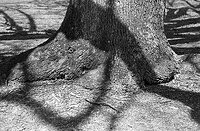
Tree with Big Shadows

Tree with Big Shadows

  • 2
  • 0
  • 65
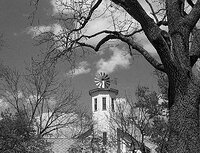
Everal Barn

A
Everal Barn

  • 3
  • 1
  • 73

Forum statistics

Threads
203,455
Messages
2,855,012
Members
101,851
Latest member
Si_Voltage
Recent bookmarks
0

BetterSense

Member
Allowing Ads
Joined
Aug 16, 2008
Messages
3,151
Location
North Caroli
Format
35mm
I'm not sure if it's just me, but I have a need for speed. If there was an infinity speed film, I would probably use it. Of course in the real world TANSSAAFL, so I typically use medium speed films like everyone else. But if there was no technical limitation on film speed and I could buy all speeds of film even up to ISO 6400 or 25000 film that gave good grain and contrast, I would probably use whatever let me shoot at f/11 or so in dim indoor lighting, and stack ND filters for outdoors. I'm a fan of DOF and I'm not a fan of flash.

If film was available in arbitrarily high speeds without any adverse effects that usually come with high-speed film, what speed do you think you would use?
 
nope i wouldn't use it
i shoot most everything
at 1/15th of a second wide open
fast or slow film ... i usually use
either 400 or 100 and i don't really
pay much attention to which it is that i use ...
 
400 ASA/ISO. At 800, the lenses tend to run out of small enough openings at 1/500th of a second for left shutters on medium format equipment. I have similar problems with focal plan shutters at 1/1000th of a second.

In fact sometimes I want 100 ASA/ISO for daylight photography.

800, 1600, and 3200 ASA/ISO are good for low level available light photography but not for daylight photography.

Steve
 
Wirelessly posted (BlackBerry9000/4.6.0.167 Profile/MIDP-2.0 Configuration/CLDC-1.1 VendorID/102 UP.Link/6.3.0.0.0)

If I could choose only one it would have to be ISO400. Can push it and pull it a little. That would most of what I do.
 
500, just to be contrary :smile:.

Matt
 
I'd want an ISO 12,500 B&W or C-41 in sheet film for available light night-time photography using LF gear. At the opposite end, I'd like an ISO 25 or 50 colour film, particularly in 120 for use with my old folder.
 
I've posted before that the theoretical limit to a photographic film is about 25,000. Beyond that, the keeping becomes an issue. I have posted the R&D work on the Kodak 25,000 speed film, and a scan of one of the tests. That is about the max and beyond that you just get a fugitive image that vanishes rather quickly into fog.

Most current 800 speed color films can be used at 1600 or can be pushed (gently) to 3200 to give usable images, but not super images. There are also processing tricks that can be used to amplify the image to give even higher speeds, but at the sacrifice of overall quality.

Some of these can be applied only to color or can work for both color and B&W.

The bottom line though is that a true 800 is about the best that can be done, and is best done using negative working films.

PE
 
Way to rain on our film fantasy wet dreams Ron! :D

So I can't make an ISO 50,000 Kodachrome type sheet film in my basement with stuff I bought at the grocery store and Home Depot? There goes my evening...
 
Justin;

Paul Gilman promised to teach me how to make his 25,000 speed film. I have lunch with him this Wednesday and I'll twist his arm just for you all! How is that? :wink:

PE
 
If I could have an infinite number of film speed choices I would keep on using 64, 100, 200 and if I needed too I would push the 200. I have been working with these film speed and learning what they can handle and I would not like to relearn.
 
I shoot a ton in low (or no) light. Based on my shooting, I would say that a true ISO 8,000 film (pushable, of course) would probably be enough to do most of what I needed to do. I would want black and white and color neg. tungsten-balanced. That being said, I would get a whole lot of use out of ISO 16,000 and 32,000 films as well.
 
Last edited by a moderator:
2F;

No light? Well, if you insist. No Light = No Exposure at any speed! :smile:

As for all of the pushing, realize that negative films respond to push better than reversal films due to the way the push works.

PE
 
It shows that there is also no reciprocal relation between light levels and the film speed needed.
Below a certain threshold, any film speed will do; ISO 12 will produce the same results as ISO 12,000, given the same exposure or not.
The same (though with more conditions) at the other end: above a certain threshold, it again does not matter what ISO speed the film.
 
400

other speeds exist so i may experience these occasional peaks of weary homecoming bliss, when going back to 400

:cool:
 
It shows that there is also no reciprocal relation between light levels and the film speed needed.
Below a certain threshold, any film speed will do; ISO 12 will produce the same results as ISO 12,000, given the same exposure or not.
The same (though with more conditions) at the other end: above a certain threshold, it again does not matter what ISO speed the film.

Although this is true in dark conditions as I said above, at the other end of the gamut of light intensity your comments do not apply due to solarization and re-reversal phenomena.

Kodak even made a product to take advantage of this many years ago. It gave a negative image under low light and a positive image under very bright light with a mixed positive and negative at medium light levels.

I remember an ad for the film from the 50s that showed a normally lit light bulb with a black filament.

PE
 
2F;

No light? Well, if you insist. No Light = No Exposure at any speed! :smile:

As for all of the pushing, realize that negative films respond to push better than reversal films due to the way the push works.

PE

It is just a figure of speech that I use to talk about frustrating lighting conditions.

What do you mean by "better"?
 
Last edited by a moderator:
Although this is true in dark conditions as I said above, at the other end of the gamut of light intensity your comments do not apply due to solarization and re-reversal phenomena.

Depends on how much energy you let loose at the film.
I'd say you are not showering it with enough. :wink:
 
I'd have the same effective film speed (and dynamic range, and adaptability) as the human eyes.
 
Well, I have what I'd like: Rollei R3 in 8x10 with the RHS developer - shoot 6400+ easy... grain ? what grain ?
 
I'd have the same effective film speed (and dynamic range, and adaptability) as the human eyes.

Not to be super technical or anything like that, but the purpose of the human eye is correlated to the lens, in that the pupil(aperture diaphragm) changes the opening of the iris(f/stop) to account for the amount of light. the brain is more similar to film, with a light meter thrown in set to aperture priority. :smile:

having said that, if I had to shoot one film forever and ever, I would be shopping for Tri-X. Lovely exposure latitude, beautiful film, and it can be pushed or pulled to ridiculous ranges. couple it with semi-matte Ilford Warmtone FB and I'm set for life.
 
I'd like a nice ASA 5 or 10 film. It would make my life easier shooting with barrel lenses in places like Yosemite and the desert. According to the "Sunny 16 "rule, with a ASA 8 film, I would be able to use f90 at about 4 seconds. Using 400 ASA film and a barrel lens in Yosemite is a SOB...from personal experience last week. I should have had some Efke 25. Barrel lenses are no problem under the Redwoods where I usually photograph.

Vaughn
 
I'd like a nice ASA 5 or 10 film. It would make my life easier shooting with barrel lenses in places like Yosemite and the desert. According to the "Sunny 16 "rule, with a ASA 8 film, I would be able to use f90 at about 4 seconds. Using 400 ASA film and a barrel lens in Yosemite is a SOB...from personal experience last week. I should have had some Efke 25. Barrel lenses are no problem under the Redwoods where I usually photograph.

Vaughn

Indeed; This is a good point. Especially when you consider diffraction, a super-slow film would be very useful for those of us with shutterless cameras who desire shutter speeds of at least a second or two. I hate shooting my 5x7 at f/64, but it is the only thing I can do with my current setup. I'd like to shoot at f/16 - f/32 most of the time, but carrying a few densities of ND filters with me is the only way to do this. To use f/22 in sunny 16 conditions with Efke 25 and a two second actual exposure (a one second calculated exposure, because of reciprocity failure), I would need a four stop ND filter. I have a one stop ND and a two stop ND, neither of which fit my lens; I have to tape them on. One more thing to buy, forget, lose, break, get fingerprints, scratches, dust, etc. I would much rather just use an approximately ISO 3 film in the 5x7.
 
I would use ISO ∞ and take high key portraits of black cats in coal cellars at night.

More seriously, I tend to use just 100 and 400 (400 film sometimes rated at 200) and I think I would stick to that range.

During my nine months in 2003 when I thought I was a digital photographer (sorry) I was limited to a slowest speed of 200 but wished it was 100 for no logical reason other than convention. I hardly ever took it off the ISO 200 setting and never ventured into the high ISO territory.


Steve.
 
Photrio.com contains affiliate links to products. We may receive a commission for purchases made through these links.
To read our full affiliate disclosure statement please click Here.

PHOTRIO PARTNERS EQUALLY FUNDING OUR COMMUNITY:


Ilford ADOX Freestyle Photographic Stearman Press Weldon Color Lab Blue Moon Camera & Machine
Top Bottom
