• Welcome to Photrio!
    Registration is fast and free. Join today to unlock search, see fewer ads, and access all forum features.
    Click here to sign up

I would like to shoot some Macro with my 500 C/M . . .

Lowlight freestyle

A
Lowlight freestyle

  • 1
  • 1
  • 62
man arguing 1972

A
man arguing 1972

  • 7
  • 4
  • 123

Recent Classifieds

Forum statistics

Threads
203,026
Messages
2,848,783
Members
101,605
Latest member
Bburall33
Recent bookmarks
0

Ozark Wolverine

Subscriber
Allowing Ads
Joined
Feb 17, 2022
Messages
88
Location
Mountain Grove, MO
Format
Medium Format
Looking for advice . . should I go with extension tubes or a bellows and why? The lenses I have in my kit are:

Zeiss Distagon 5.6 60mm, 1959 vintage, my favorite 😍
Zeiss Planar 2.8 80mm
Zeiss Sonnar 4 150mm T*
Zeiss Sonnar 5.6 250mm T*

I am inclined to go with a couple of extension tubes . . . I am a hobbyist photographer not a pro. I wanted to see what advice the extensive knowledge base here has to offer.
 
Looking for advice . . should I go with extension tubes or a bellows and why? The lenses I have in my kit are:

Zeiss Distagon 5.6 60mm, 1959 vintage, my favorite 😍
Zeiss Planar 2.8 80mm
Zeiss Sonnar 4 150mm T*
Zeiss Sonnar 5.6 250mm T*

I am inclined to go with a couple of extension tubes . . . I am a hobbyist photographer not a pro. I wanted to see what advice the extensive knowledge base here has to offer.

I believe the bellows give you more flexibility, but if I'm not mistaken, you'll need a Hasselblad double cable release for that.
 
What do you wish to photograph? If this is a case of mostly wanting to focus closer than you're able to now, one of the shorter extension tubes may be all you need.
 
All depends what kind of macro you are in to. The rings works fine to some extent limiting magnification by their size.
There is 100 and 120 mm mentioned before optimised for close up but you can achieve pleasant results with any of your lens and macro rings / bellows.
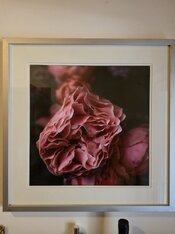
Here is a rose bud taken with 80mm and 10mm ring on Velvia.
 

Attachments

  • 20260329_183646.jpg
    20260329_183646.jpg
    192.8 KB · Views: 35
All depends what kind of macro you are in to. The rings works fine to some extent limiting magnification by their size.
There is 100 and 120 mm mentioned before optimised for close up but you can achieve pleasant results with any of your lens and macro rings / bellows.
Here is a rose bud taken with 80mm and 10mm ring on Velvia.

Yes, this is what I had in mind . . . 🙂
 
Looking for advice . . should I go with extension tubes or a bellows and why? The lenses I have in my kit are:

Zeiss Distagon 5.6 60mm, 1959 vintage, my favorite 😍
Zeiss Planar 2.8 80mm
Zeiss Sonnar 4 150mm T*
Zeiss Sonnar 5.6 250mm T*

I am inclined to go with a couple of extension tubes . . . I am a hobbyist photographer not a pro. I wanted to see what advice the extensive knowledge base here has to offer.

With extension cubes, you have a very few, narrow depth of field, range of in focus to work with, for each lens.

With the bellows, you have much greater fields of view to work with, have to move the tripod much less often and can use it together with Proxtar filters, extension tubes, and most, if not all, the lenses.

I have both and only bought the bellows lately because I could not afford it till recently.

I've had both extension tubes and bellows before the last few years and promise you, the bellows gives the best results and range of shootability of the two.

Do get the Proxtar lenses for your kit but make the commitment to the bellows ASAP, you won't be sorry, photographically speaking and remember, you'll be able to pick up extension cubes and use them

Two cables will work as well as the duel cable release, it just a matter of getting use to them.
 
Yep just a single short tube and standard 80mm will work fine for flowers and such. Keeping it simple !

Thanks! 🙃
But your lenses are not suited for macro. Only 150 and 250 you may use with the field curvature issue. Also 250 will be too dark for that.

The Zeiss Makro Planar 4 120 T* is my next Hasselblad purchase . . gotta start saving for it.
 
I am getting back to Analog after about a 5 year hiatus (moved halfway across the country from the North East to the Missouri Ozarks). Prices have skyrocketed in that time . . A nice clean Zeiss Makro Planar 4 120 T* costs what I paid for my first kit . . .

My first kit I bought from a lady in Camden Maine about 17 years ago or so. I consisted of a 500 C, Zeiss Planar 80mm, 2 x A12 magazines, prism finder, chimney finder, Gossen Luna Pro SBC and a frozen bag of 20 or 30 rolls of various films. I still dip into that bag once in awhile. There are a dozen or so rolls of Panatomic X still in that bag. All for $500. Those days are gone 😞
 
I am getting back to Analog after about a 5 year hiatus (moved halfway across the country from the North East to the Missouri Ozarks). Prices have skyrocketed in that time . . A nice clean Zeiss Makro Planar 4 120 T* costs what I paid for my first kit . . .

My first kit I bought from a lady in Camden Maine about 17 years ago or so. I consisted of a 500 C, Zeiss Planar 80mm, 2 x A12 magazines, prism finder, chimney finder, Gossen Luna Pro SBC and a frozen bag of 20 or 30 rolls of various films. I still dip into that bag once in awhile. There are a dozen or so rolls of Panatomic X still in that bag. All for $500. Those days are gone 😞

I have a family reunion today but let me check I have duplicate sets, you can have. I'll check remind me tomorrow.
 
Yep just a single short tube and standard 80mm will work fine for flowers and such. Keeping it simple !

Correct.
The lenses designated as Macro will give you flat field performance, so are necessary for use with flat subjects like postage stamps or coins.
If you are photographing flowers, your subjects aren't flat, so flat field performance isn't nearly as important.
 
With extension cubes, you have a very few, narrow depth of field, range of in focus to work with, for each lens.

With the bellows, you have much greater fields of view to work with, have to move the tripod much less often and can use it together with Proxtar filters, extension tubes, and most, if not all, the lenses.

I have both and only bought the bellows lately because I could not afford it till recently.

I've had both extension tubes and bellows before the last few years and promise you, the bellows gives the best results and range of shootability of the two.

Do get the Proxtar lenses for your kit but make the commitment to the bellows ASAP, you won't be sorry, photographically speaking and remember, you'll be able to pick up extension cubes and use them

Two cables will work as well as the duel cable release, it just a matter of getting use to them.

Thanks Eli, some good info there.
 
Thanks! 🙃


The Zeiss Makro Planar 4 120 T* is my next Hasselblad purchase . . gotta start saving for it.

I would be interested to see your final choice of lens. Macro is always my ‘first’ thought when buying a camera system. I always thought Hasselblad was the ideal camera for the job.
 
I would be interested to see your final choice of lens. Macro is always my ‘first’ thought when buying a camera system. I always thought Hasselblad was the ideal camera for the job.

I always assumed 35mm was better suited for macro because the smaller equipment is easier to handle and name-brand equipment, such as Nikon, is of high quality for much less money.
 
I always assumed 35mm was better suited for macro because the smaller equipment is easier to handle and name-brand equipment, such as Nikon, is of high quality for much less money.

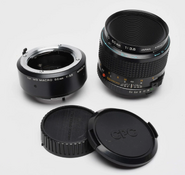
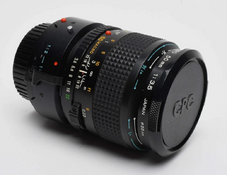
Your point is well taken Ralph. I have a couple nice 35mm kits . . . a Minolta X-370 and Pentax KX. I recently acquired the MD 50mm F3.5 Macro with 1:1 extension tube for the Minolta . . . Have not tried it out yet because I am awaiting replacement Light Seals for the X-370.
 

Attachments

  • Screenshot 2026-03-30 070220.png
    Screenshot 2026-03-30 070220.png
    381.5 KB · Views: 2
  • Screenshot 2026-03-30 070146.png
    Screenshot 2026-03-30 070146.png
    423.7 KB · Views: 1
I always assumed 35mm was better suited for macro because the smaller equipment is easier to handle and name-brand equipment, such as Nikon, is of high quality for much less money.

As I mentioned in another thread: A friend of mine used a Micro Nikkor lens with his Leica R for many years. After comparing Nikon with Makro Planar, he immediately purchased a Zeiss lens. He is a jeweller, and he says that his creations became sharper (it could be also microcontrast) and have more natural colors if shot with Makro Planar.
 
With extension cubes, you have a very few, narrow depth of field, range of in focus to work with, for each lens.

With the bellows, you have much greater fields of view to work with
The main distinction is that with the bellows you can manipulate the focal plane using Scheimpflug movements. The actual depth of field for the same lens, same magnification and same aperture will actually be the same. This is a hard rule of physics. Very simply put: there's distance between the lens and the film and it matters not one whit whether the thing that spaces them is a ring, a bellows or a cardboard box.

Note furthermore that manipulating the focal plane can work if the desired focal plane is not parallel to the film plane, but also only for that purpose. E.g. it will not help (and in practice, even the opposite) to accommodate increased sharpness of a 3D-object - i.e. it will not make the depth of field larger.

Bellows = more flexible, that's for sure. Whether the nature of the flexibility they afford is relevant, depends on the situation.
 
The main distinction is that with the bellows you can manipulate the focal plane using Scheimpflug movements. The actual depth of field for the same lens, same magnification and same aperture will actually be the same. This is a hard rule of physics. Very simply put: there's distance between the lens and the film and it matters not one whit whether the thing that spaces them is a ring, a bellows or a cardboard box.

Note furthermore that manipulating the focal plane can work if the desired focal plane is not parallel to the film plane, but also only for that purpose. E.g. it will not help (and in practice, even the opposite) to accommodate increased sharpness of a 3D-object - i.e. it will not make the depth of field larger.

Bellows = more flexible, that's for sure. Whether the nature of the flexibility they afford is relevant, depends on the situation.

I took @eli griggs to be referring to the fact that with the bellows, you can work with a wide range of magnifications/working distances without having to frequently switch between several tubes or close up filters.
So with a bellows, it is far easier and quicker to evaluate several different magnifications/working distances, including the depth of field realities imposed by each of them.
 
OK, if it doesn't tilt (or swing), then it won't affect DoF at all. I wasn't clear on that. Shift (or rise/fall) doesn't affect it anyway.
If the bellows offers no movements, it's really the same as variable-length extension tube.
 
Photrio.com contains affiliate links to products. We may receive a commission for purchases made through these links.
To read our full affiliate disclosure statement please click Here.

PHOTRIO PARTNERS EQUALLY FUNDING OUR COMMUNITY:


Ilford ADOX Freestyle Photographic Stearman Press Weldon Color Lab Blue Moon Camera & Machine
Top Bottom