Fact is that the more you print the more intuitive it becomes and your judgement of what will be about right becomes far better at which point you wou won't bother test strips so much. So trust your instincts ...
I don't know... I've been printing for more than 30 years. I think I'm a pretty good printer.
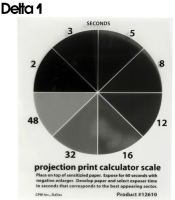
I use test strips every print, often several in different areas to determine a basic trial exposure complete with preliminary dodging and burning. I then make a full-sheet print, dry it down and then, with notepad and pencil in hand, make sketches and notes about how I want to change the print. My years of experience help me to arrive at an amount to change (e.g., 20% more exposure, dodge more here, etc.). But, as I hone in on a fine print, I outflank. I make a print too dark, one too light, one too contrasty, one too flat. Usually this happens organically during the refining process. All these prints get tacked up on a viewing board (with approximate gallery lighting) and evaluated together after having dried (simple drydown compensation just doesn't work).
Often, I like several of the options, but, by having made prints at the outside of my tolerance, I know what bandwidth I wish to stay in. I was going to say "having made prints at the extremes," but that's not really correct. The differences between just right and too much are often very, very subtle: 15 seconds more in the print developer, a fraction of a contrast grade, a second more or less exposure. The point is, you need to get to the point where you don't like the result and then move back toward center. This is really all there is to outflanking.
Of course, we all work differently. It's the end result that counts.
Best,
Doremus