
• Welcome to Photrio!
    Registration is fast and free. Join today to unlock search, see fewer ads, and access all forum features.
    Click here to sign up

I need some metering help.

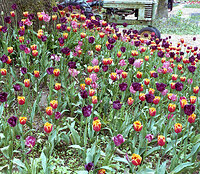
Tractor & Tulips

A
Tractor & Tulips

  • 1
  • 1
  • 34
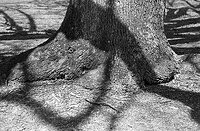
Tree with Big Shadows

Tree with Big Shadows

  • 3
  • 0
  • 82

Forum statistics

Threads
203,458
Messages
2,855,079
Members
101,853
Latest member
DJFOX
Recent bookmarks
0

Ektagraphic

Member
Allowing Ads
Joined
Feb 3, 2009
Messages
2,928
Location
Massachusetts
Format
Medium Format
Hi Guys-
Back in December I bought myself a Sekonic L-208. I feel like I am always second guessing myself on where to aim the meter when shooting a landscape shot for example shooting photos of a beach. Do I need to get myself a grey card? Before I bought this meter I have always used the in camera meter. Thanks.
 
Hi: :smile:

According to the manual, the measuring angle in reflected mode is about 33 degrees, and corresponds approximately to the angle shown on the scale plate on the top of the meter.

With that in mind, if you are using reflected mode, you can at least estimate the area seen by the meter, and then use your judgment about whether that area is will average out to being lighter, darker or about equal to a medium grey (as in a grey card).

Alternatively, you can move closer to a representative tone, so that it fills the reading angle of the meter, and as long as it receives the same light as the rest of your scene, you can base your judgment on the readings taken from there.

Finally you can do what I do whenever possible - take an incident light reading of the light falling on your subject.

The tough challenge is to learn how to interpret the results of your reflected light readings. That requires a sense of what constitutes one, one and one-half, two or more stops (or zones) away from an average grey (Zone V). That comes with care, and experience.

Matt
 
It is my understanding the palm of the human hand reflects about 36%. A grey card, 18%. So meter the palm of your hand in the same light as the subject, assume one stop more exposure, and make your judgments from there.
 
Wirelessly posted (BBBold: BlackBerry9000/4.6.0.167 Profile/MIDP-2.0 Configuration/CLDC-1.1 VendorID/102 UP.Link/6.3.0.0.0)

Right on, John. Meter the palm of your hand and assign that setting for Zone VI. Then meter as best you can the important portions of the subject.
 
Last edited by a moderator:
It is my understanding the palm of the human hand reflects about 36%. A grey card, 18%. So meter the palm of your hand in the same light as the subject, assume one stop more exposure, and make your judgments from there.

exactly!
 
Metering the palm of you hand might work, if you know the exact reflectance value. But why bother?
There is no need to bounce the light first off the palm of your hand, putting it into the equation. No need to assume anything.
Just use the lumisphere and take an incident reading.
 
I can't really take incident if I can go to my subject can I?
 
How can I adjust my exposure to "add one stop". I understand what it means but I don't exactly know how to go about doing it.
 
I can't really take incident if I can go to my subject can I?

When you and your subject are both in the same light you take the incident reading by pointing the meter to the general direction where the light (sun usually) is coming from.
 
How can I adjust my exposure to "add one stop". I understand what it means but I don't exactly know how to go about doing it.

set the asa to either double or half the film speed you are shooting
it should give you the reading without having to remember to
change the fstop in your head.
the c2 (L-28 ) manual suggests for distant landscapes to
point the meter to and away from the sun and take an average incident reading.

i usually hold the my meter above my head holding it as the subject
gets the "sun" for my first reading and shade the meter for the second reading.
and just move the dial between the two for the average.

while it seems complicated, it is not complicated at all, to either
make the "average calculation" or adjust your asa to "fool"
the meter ...


good luck!
 
So one stop would be the next film speed on my meter?
 
How can I adjust my exposure to "add one stop". I understand what it means but I don't exactly know how to go about doing it.

I would not adjust ASA or ISO on your meter, seeing as you might forget to turn it back.

If you meter your hand, you will need to take the reading and either:
open the fstop up by on stop (ie, 4 to 5.6, 8 to 11, 45 to 64 etc.)
or, double the exposure time.
 
So one stop would be the next film speed on my meter?


that would depend on what you have it set at now :smile:
half or double what you have now ... and you will add or subtract a stop

for example
if you have it set to iso 200 and you want to add a stop you
would put the iso setting to 100, if you want to underexpose by one stop
you would set the iso on the meter to 400 ...

just remember to turn it back or you will always be over / under exposing your film ...
 
"Incident" metering is done AT the subject, to measure the amount of light falling on the subject, irregardless of subject reflectivity. Readings with a predominantly "dark" subject will be the same with a predominatley "light" subject. I "point" the meter (not really relevant - it is difficult to "point" a sphere) toward the camera, although there should not be much of a difference.
 
Last edited by a moderator:
If I should walk to my back yard to take a picture right now on somewhat cloudy day the meter should be pointed a little twards the sky?
 
If I should walk to my back yard to take a picture right now on somewhat cloudy day the meter should be pointed a little twards the sky?


It all depends on how much of the sky you care to hold on to. Most of the time the sky can be brought down. Most people expose for the subject or shadows.

You should note that metering the palm of your hand and then calculating the reflectance value is in effect a long way around to achieving what is more or less an incident reading. I do this myself on occasion, because I only use a spot meter, and sometimes I want an incident reading. I personally find non-spot reflected reading to be the least useful because it is neither wholly representative of the average of a scene, nor OTO exact. It can be likened to an incident meter that can be aimed, because the large angle of acceptance provides an average similar to the sphere of an incident meter unless the meter is very close to the subject. In practice it is about the same as an incident reading with the added misfortune of being skewed by dark or light things. Fine if the dark or light thing is important, but requires footwork or guesswork if it isn't. If the only meter I had was the L208 I would use it as for incident readings and buy a proper spot meter. The reflected readings you are getting are a shotgun type reading, and it's difficult to know exactly what you are reading, and the way you are trying to apply the reflected readings tells me you are looking more for spot reading ability, as in where is the sky, where is that rock, where is that face.

My advice is to consider getting a spot meter.
 
Last edited by a moderator:
I can't really take incident if I can go to my subject can I?

Of course you can.
You are measuring light. Not your subject.

And if you can't, you can't take a reading off your hand either.

So stop making life harder than it needs to be (just look back: how many posts again, just to figure out how much to compensate when using the palm of your hand and about how to set that compensation? - absolutely superfluous), forget about that substitute grey card + compensation, or about a grey card.
Just use the lumisphere and take an incident reading.
 
ektagraphic -

just experiment with a roll of film and bracket what your hand held meter
says so you understand what is going one between the light and meter and subject.

the only difference between the meter in your camera and the one you are holding
in your hand, is that ... you are holding it in your hand.


Only AT your subject IF your subject is in different light and you can't find (or recreate) the same light near you.

EXACTLY!
 
the only difference between the meter in your camera and the one you are holding
in your hand, is that ... you are holding it in your hand.

That's not the only difference.
The meter in Ekta's hand will do incident light metering. The one in the camera will not.
:wink:
 
Maybe we should ask Ektagraphic what camera he is using and how he is using it?

Matt
 
I have a few camera that I use. I mainly use my AE-1 Program, Nikkormat FTn, and my Kodak Retina IIIF.
 
Okay. I will meter into my hand. Then I will move the ISO dial back one speed/stop. I think I have it.
 
I would not adjust ASA or ISO on your meter, seeing as you might forget to turn it back.

If you meter your hand, you will need to take the reading and either:
open the fstop up by on stop (ie, 4 to 5.6, 8 to 11, 45 to 64 etc.)
or, double the exposure time.

You mean 5.6 to 4 and so on, right?
 
Okay. I will meter into my hand. Then I will move the ISO dial back one speed/stop. I think I have it.

Ektagraphic:

I asked (indirectly) about your camera and how you are using it to make sure that we weren't having problems with something like an auto-exposure camera that is difficult to over-ride.

With your Sekonic, don't use your hand - use the meter in incident mode, and you won't have to adjust the ISO.

Using your hand only makes sense for a meter that won't work as an incident meter - e.g. if you wanted to use the meter in your AE1 to measure incident light.

If you find yourself in a position where you cannot use an incident reading the usual way (you cannot get the meter to a location where the same light is falling on both your subject and the meter) then there are some other useful hints in this thread that you can use.

Matt
 
Photrio.com contains affiliate links to products. We may receive a commission for purchases made through these links.
To read our full affiliate disclosure statement please click Here.

PHOTRIO PARTNERS EQUALLY FUNDING OUR COMMUNITY:


Ilford ADOX Freestyle Photographic Stearman Press Weldon Color Lab Blue Moon Camera & Machine
Top Bottom
