
• Welcome to Photrio!
    Registration is fast and free. Join today to unlock search, see fewer ads, and access all forum features.
    Click here to sign up

I HATE HAVING TO MAKE CONTACT SHEETS!

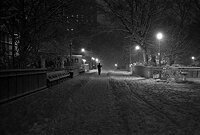
Tompkins Square Park

A
Tompkins Square Park

  • 8
  • 0
  • 81
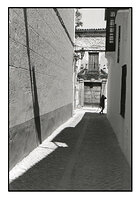
Siesta Time

A
Siesta Time

  • 2
  • 1
  • 63

Recent Classifieds

Forum statistics

Threads
202,860
Messages
2,846,709
Members
101,574
Latest member
JRSCollection
Recent bookmarks
0

DF

Member
Allowing Ads
Joined
Nov 10, 2012
Messages
629
I like to just look at a negative frame and if I believe it's printworthy, take it from there, but the group supervisor INSISTS it's not the proper procedure. My 6 rows of negatives in their sleeves, more than often, because their of varying exposures and subjects, make terrible contact sheets lacking in any uniformity. It wastes what little darkroom time I get & paper. Anyone else do the same?
 
Last contacts sheets from rollfilm I made were for a class while in graduate school in the 1980s. A good loupe and a light table are the way to go.
 
That's what I like to do...but...she doesn't.
 
Hate contact sheets too...
 
IMO, there's no reason to do contact sheets if one can recognize a good negative. Those with experience can recognize a good neg without needing to do contact sheets.
 
If you have to make contacts to keep people happy, then make them. Use a slightly softer or harder grade of paper if necessary to best fit the majority of the frames. You can also get clever and mask thin negatives for a portion of the exposure while you pull in the dense ones. As your exposure skills improve the contacts will become more homogenous.

Contacts are one of those things some people swear by, and others swear at!
 
Contact sheets are a great way to review one's negative collection. I wish I had a proof of every negative I have -- neatly referenced to the location of the negative in my files. Much easier flipping thru proofs than handling negatives (esp sheet film which may not be in protective plastic sleeves).

A good proof is one that is low in general contrast and exposed to just be able to detect the sprocket holes and/or film rebate. They should not be uniform -- that is how you can learn to judge the negative via the proof...both exposure and contrast. Which in turn leads you to easy choose which negatives to take a closer look at. Too much exposure and/or contrast with your proofs and you will not be able to judge shadow detail of the negative via the proof.

Do I make them? Hell no. Not since going with primarily alt processes in 1992 ( and a little time before that). No sense making proofs of negatives for my carbon printing on silver gelatin paper -- the silver paper can't handle the DR of my negatives.

But in the end, the only thing better that a negative on a light table is a perfectly made print...and some times not even that!

An aside: I took a 5 month bicycle trip with my 4x5 (eons ago when I was still silver printing). In a 4x5 film box, I carried 20 or so 4x5 contact prints of my work (primarily of the redwoods) to share as I was on the road in New Zealand. A minnie portfolio that people could handle anywhere any time. Kinda neat.
 
I like to store the contact sheet next to the page of negatives. It's much quicker to look at a contact sheet to see what's on a film than peering at negatives. I find it very tempting to dive in and print the negs I think are good but sometimes I spot others on a contact sheet I would not have given another glance to. Maybe I'm just not good at judging negatives. They will rarely all look good on a single contact sheet but it's still useful especially if you come across a film years from now. Sometimes I print 2 contact sheets with different exposures to allow for varying scenes. I agree it can be a bore though but I'm sure you'll get faster.
 
I like making contact sheets.
Creating those little collections of tiny prints tells me much more than looking at single negatives.
I'm also much better at finding particular negatives if they are filed with contact sheets.
Your supervisor might just know a bit about how to manage a large collection of negatives.
And you might gain some benefit from evaluating your contact sheets.
FWIW, I don't think there is any shame in printing a dark contact sheet and a light contact sheet, to enable review of a wide variety of exposures on the same roll.
 
I stopped doing them. I photograph them on my daylight balanced light-table digitally, reverse the values in the computer and
then edit, and wet print. I know it's not kosher around here, but you said you hate doing them...there are other options. :surprised:
Most of the time, I can tell a good neg/shot from the neg alone. That's how Robert Frank did it.
 
For color 6x6cm and larger formats, I'll have contact sheets made (commercially), since large color prints are expensive and I can't judge color from a negative.
 
I like to just look at a negative frame and if I believe it's printworthy, take it from there, but the group supervisor INSISTS it's not the proper procedure. My 6 rows of negatives in their sleeves, more than often, because their of varying exposures and subjects, make terrible contact sheets lacking in any uniformity. It wastes what little darkroom time I get & paper. Anyone else do the same?
If she is your teacher, she has a reason and your grade depends on doing it her way.
If she is your boss, she has a reason and your pay depends on doing it her way.
 
Where is it engraved in stone that "Thou shalt make contact sheets." I too look at the negatives with a loupe and anything promising is made into a 4x5 or 5X7 print for more detailed evaluation. Contact sheets from 35mm negatives are pretty worthless. They can be useful for larger size negatives.

After almost 70 years taking photographs I have no 35mm contacts and only a few dozen 6x6 ones from decades ago. I wonder how anyone can judge detail such as facial expressions in a 35mm contacts. Even with a magnifier the resolution of paper is not that good.

Sadly it has been my experience that unimaginative instructors go by the book. In an extreme case I have experienced the instructor sitting before the class and reading room the text book in a monotone. No comments, no interesting asides, no color.
 
Last edited:
For color ... I can't judge color from a negative.

Interersting to note: I have an image on color 120 neg (Kodak 160 VC) of a friend taking a photograpgh with her 4x5 and Polaroid Type 55 film -- the Polaroid blue box on the ground next to her. In the negative that box is the exact Kodak yellow!
 
I always make contact sheets, especially when there are a lot of portraits or people shots. There are subtleties of expression that don't reveal themselves very well in a negative. A contact sheet is easy to make and takes very little time. I can see not making one if you have a lot of different lighting situations on one roll. This is especially true of 35mm, but I only shoot MF in roll film now, so it is only 10 frames.
 
When I taught, all of my students learned how to make a proper proof. Same enlarger height, same f-stop, same exposure, same development time. Once learned to do correctly, a contact sheet can alert you to sloppiness/changes in your development technique, poor metering, as well as problems with your camera/lens. (I'm not quite as religious about it for myself, unless I have a ton of new negatives. :redface:)
 
I'm sure I will stir up the crowd on this. If you would use a gray card with a reflectance light meter or simply use an incident meter your exposures would be correct and all the contacts would look good.
When I was a kid and shot a Nikon F2, and didn't know how to use the built in light meter, my exposures were all over the place. It got worse when I got an F3 and tried using auto exposure with slide film. When I finally got a medium format camera I learned to use an incident light meter and it was a revelation. Sunny sixteen in the sun, when in open shade open up 4 stops. When in doubt I use a Minolta incident meter.
I love contact sheets, but I must admit that I'm usually in too big of a hurry.
Maybe I should take teacher's advice myself and contact every roll, I do think it helps to hone your skills
Best Regards Mike
 
I'm sure I will stir up the crowd on this. If you would use a gray card with a reflectance light meter or simply use an incident meter your exposures would be correct and all the contacts would look good.
...
Best Regards Mike

This does not work for the majority of my images -- as I tend to work in not-normal light conditions, such as under the redwoods. There I find that the areas where I want detail in the deep shadows might vary up to 3 stops from image to image while in the same area (and same time), while the "average" lighting may not vary as much. Spot meter does the job nicely there! (Large format)

But I am always surprised when I am walking around out in the open with my little camera (Rolleicord) and Luna Pro SBC -- the lighting is so consistant! Every once in a while I might meter my palm again (a Zone VI graycard?) just to check if the light was lessen as the day goes on.
 
There is a reason to do contact sheets. Don't do it if you don't want to. There was a time when I didn't. But as my collection grew there came a time when I spent days doing contacts of a few of years worth, just so I could make sense of things. I use RC paper for my contact sheets - outdated, on-sale RC if I can find it. FB paper is for enlarging.
I have decades worth of shooting - shelves full of books of negs grouped by year and format. If it wasn't for contact sheets filed with every roll, I'd never be able to find anything. Rough estimate - 20-50 rolls a year times 40 years - that's somewhere over a thousand rolls - and then there's the LF negs, too.

As Matt and Svendin pointed out - it can also pull your attention to a sleeper of a neg that didn't catch your eye on the light table. Do it digitally if that suites you better, but if you plan to keep with film for more than a couple of years, you'll be glad of the record and the reference.
 
I'm sure I will stir up the crowd on this. If you would use a gray card with a reflectance light meter or simply use an incident meter your exposures would be correct and all the contacts would look good.
When I was a kid and shot a Nikon F2, and didn't know how to use the built in light meter, my exposures were all over the place. It got worse when I got an F3 and tried using auto exposure with slide film. When I finally got a medium format camera I learned to use an incident light meter and it was a revelation. Sunny sixteen in the sun, when in open shade open up 4 stops. When in doubt I use a Minolta incident meter.
I love contact sheets, but I must admit that I'm usually in too big of a hurry.
Maybe I should take teacher's advice myself and contact every roll, I do think it helps to hone your skills
Best Regards Mike

Hi Mike, Your experience pretty much mirrors my own, with regards to metering. When I was younger, I also shot with an SLR using the built in meter. Like yours, my exposures were all over the place. I once took a class where the instructor made us use an incident meter, rather than our built in meter, and I noticed that my exposures were much consistent and accurate. I was so impressed with this that I immediately bought my own incident meter. To this day, my preferred metering method is the incident meter. I even use it for my non film camera, since I use it with ALL the automatic features turned off. I just pretend it has film in it. Incident metering is a great way to go as long as the light doesn't change quickly and allows me to concentrate more fully on what's in front of my lens. None of my old film SLR's have batteries in them any more, and I don't know, or care, if the built in meters even work! It certainly makes it easier for me to go through my contact sheets when the exposures aren't all over the map.

Mike Sullivan
 
I have decades worth of shooting - shelves full of books of negs grouped by year and format. If it wasn't for contact sheets filed with every roll, I'd never be able to find anything. Rough estimate - 20-50 rolls a year times 40 years - that's somewhere over a thousand rolls - and then there's the LF negs, too.

I'm tempted to say something about sly having to have started when she was about 8 years old ....

Which was when I started. And really got into it after I turned 11.

There was one really productive period about 40 years ago where I shot a whole bunch of 35mm film which has not been contacted, and which resides in glassine negative holder sheets. It is almost impossible to find specific shots here:

negatives.jpg


And trust me, my negatives are certainly not perfectly consistent.
 
I haven't made contacts in the darkroom for several years now... but this isn't the place to talk about what I do in place of wet contact prints, if you catch my drift. :D
 
I haven't made contacts in the darkroom for several years now... but this isn't the place to talk about what I do in place of wet contact prints, if you catch my drift. :D

I have to admit to be doing the same.
 
Photrio.com contains affiliate links to products. We may receive a commission for purchases made through these links.
To read our full affiliate disclosure statement please click Here.

PHOTRIO PARTNERS EQUALLY FUNDING OUR COMMUNITY:


Ilford ADOX Freestyle Photographic Stearman Press Weldon Color Lab Blue Moon Camera & Machine
Top Bottom
