
• Welcome to Photrio!
    Registration is fast and free. Join today to unlock search, see fewer ads, and access all forum features.
    Click here to sign up

I found a roll of exposed 130 film.

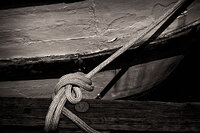
Tied to the dock

D
Tied to the dock

  • 2
  • 0
  • 39
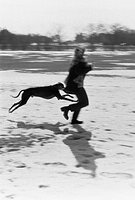
Running in the Snow

H
Running in the Snow

  • 0
  • 1
  • 51

Recent Classifieds

Forum statistics

Threads
203,080
Messages
2,849,561
Members
101,647
Latest member
jamess
Recent bookmarks
0

dehk

Member
Allowing Ads
Joined
Aug 4, 2010
Messages
881
Location
W Michigan
Format
Multi Format
I bought a camera for 2 dollars at a yard sale. Already spotted it had film in it. After I got it home I tired to wind it (really slow, you can hear the paper crackling) to the next frame, found out #6 is the last shot. So i took it out, and it's a roll of 130 Kodak Verichrome Pan, which they discontinued 130 back in 1961. So the photos on there are roughly about 50+ years old for sure. And I am going to develop it.

Question 1: This ain't no 127 or 620 I can easily do it with my tank which I did before. Where can I find a spool that will fit 130, or anyone want to loan me one?

Question 2: How many stop should I push that film, for how old it is. Last time i did a roll of old 620 i roughly pushed 2 stops and it worked out, but another roll of 620 simply didn't turn out using the same method, probably the difference in terms of storage. But I'm thinking about checking the development here and there under a very dim safe light this time. Any comments or ideas?
 
Use a tray and cut film and develop in sections,one at a time.
Right, but how do i know where to cut it? By looking at the back paper correct? Now if i do that, that means it will have prolonged exposure to my safe light (antique), which is 25w in an amber shell, fairly dim compare to the newer safe lights I've seen. Is that gonna be bad with the safe light for a long time?
 
First of all, this could very well be a panchromatic film which means you can't use a safelight at all. If it's really old Verichrome (not Pan) you'll need a dark RED safelight. Amber won't do and will immediately fog the film. Forget about cutting it into sections too. If there are any usable frames, you'll likely cut through them. The numbers on the paper backing DO NOT line up with the inter frame spacing, so you can't even use that as a guide.

Many years ago, I had a few rolls of 616 film which is another oddball size for which I had no reel. To develop the film, I simply held one end of the film in each hand and see-sawed it through a bowl of developer. The action must be continuous for the length of the development time. Short of finding or fabricating a reel for 1 roll of film, this is the only practical option.
 
I hope this works out and I hope you'll be posting some results :smile: :smile:
 
Well I meant just cut enough to get half a frame,you will probably lose one frame but have a better chance of saving the rest.
 
First of all, this could very well be a panchromatic film which means you can't use a safelight at all.

I checked, Indeed it is panchromatic film. Some say i might get away with it with a green safe light filter half way through the development, don't know if i want to try that. That requires money.

But the method you mentioned sounded great and I must consider.
 
I hope this works out and I hope you'll be posting some results :smile: :smile:

Good to know I'm not the only one get excited over old film in old cameras! I sure hope it works out. Its always hit and miss. The first roll of 620 I did worked pretty great, it showed photos from the 50s. And the 2nd roll of old film I did, all i got was a slight mist of random grain. Hopefully this roll will work out because its the oldest of them all!
 
Well I meant just cut enough to get half a frame,you will probably lose one frame but have a better chance of saving the rest.

Yeah I see what you mean but I don't really want to do that. However, I will remember if I am running out of options. Thanks.
 
Run it through straight D-76 for about 7 to 8 minutes at 68F. If you like, run it in HC-110 Dilution B for 5 to 6 minutes at the same temperature. Fact is, it doesn't matter all that much. With film this old, you're lucky to get something, anything. It's not going to be a quality image no matter what you do. If you do that, you'll get an image if there's anything to be had.
 
I found a roll of 616 film in an old Brownie #2 camera my sister has had since the late 70's.

To develop it I broke apart a Patterson-type reel (AP in my case) and glued the center spool to another one with some 'goop' type glue - to make a double-wide. Inside the dark bag I cut a length of backing paper from the roll and wrapped the film in aluminum foil to keep it light-tight.

Then used that backing paper to determine the width for my reel and glued the reel into place on the double-wide spool. After all was good and dry I took that mess into the dark bag and spooled the film onto it. Happily it worked.

I developed the film in the tank and after all was done, broke my custom rig apart, scraped the 'goop' glue off and put everything back together. My two reels cleaned up fine and are now back in service for 35mm, 127 and 120.

Maybe something like this will work for you.
 
Use HC-110 dilution B, and use the times in the last Verichrome Pan data sheet as a starting point. Sure, push a stop or two.

Traditional way to develop such large film was to put a film clip on each end (ideally a wide one), and form it into a draped U, and see-saw it through a large tank of developer. Raise one end as you lower the other. Yeah, this is a LOT easier with orthochromatic film, where you can see by red safelight.

While Nikor Products made 122 and 118 reels, they never (to my knowledge) made a 130 reel.
 
By the way, that 616 was at least 45-50 years old and I got 5 good pictures from the 8 possible.

I found a roll of 616 film in an old Brownie #2 camera my sister has had since the late 70's.
 
I found a roll of 616 film in an old Brownie #2 camera my sister has had since the late 70's.

To develop it I broke apart a Patterson-type reel (AP in my case) and glued the center spool to another one with some 'goop' type glue


Yeah I thought about doing something like that. Maybe I will find some scrap reels people doesn't want on here.
 
Thanks John for describing the draped U in the tank, all make sense now.
 
I have a Kodak Brownie 3A which takes 122 film. I still have four rolls of film, the last one I did develop by the see-saw method. It works, but it is somewhat messy. Good luck.
 
The draped "U" method is much easier to do than it sounds. Take an exposed and developed roll which has not been cut and practice with the light on. If done is a plastic tray the film will hug the bottom and it simply becomes a matter of coordinating the hands. There is no need for a safelight. I originally learned to develop with this method in the 1930's and still use it when I have only a single roll to process.
 
I just did some 620 Verichrome Pan that expired in June of 1969 last month, but I had exposed it that day, I had to push it like two and a half stops but it worked out fine.

As for holding the film in the tank so you can process it, good luck, if you think the size of the film is a problem you have no idea how crazy the curl is going to make you.

You might try putting the film on a Hair Pick (like a comb, but with long straight tines) and deal with the bad processing where the tines touch the film, either that, or make a reel yourself.
 
If you have somewhere which you can completely darken then a pair of nitrile gloves and the see-saw method is pretty much how most people originally developed this stuff. You can find tanks by cutting down gallon drink containers or anything like that, or maybe you already have deep-ish paper-trays. In any case if/when you try that method, sacrifice a roll of 120 and practice in the light first ! Good luck :smile:
 
This is the first I've ever heard of 130. I'll be very interested to hear how this turns out.
 
Thanks for the comment everyone. Might have to bust out my tray and try that with a roll of 120 first. Or alternatively i am thinking about taping 2 spools together and put it in my 2x120 metal tank. But, why not do it the traditional way right?
 
I started with the see-saw method and it's pretty easy. It was the standard amateur technique from the first days of roll film until the 50's.

A round bottom kitchen bowl makes the best 'tray' for this, IMO. The round bottom keeps the film in the right place, you don't need a large volume of developer and the smooth round bottom prevents scratches. A large bowl for the developer minimizes drips and splashes. Put a film clip on each end and hold the film with the clips.

HC110 has been found to be the best developer for old film, though most any developer will work about as well. HC110's advantage here is that developing times are short: see-sawing a film through a bowl for 18 minutes isn't anybody's idea of a good time.
 
Photrio.com contains affiliate links to products. We may receive a commission for purchases made through these links.
To read our full affiliate disclosure statement please click Here.

PHOTRIO PARTNERS EQUALLY FUNDING OUR COMMUNITY:


Ilford ADOX Freestyle Photographic Stearman Press Weldon Color Lab Blue Moon Camera & Machine
Top Bottom
