• Welcome to Photrio!
    Registration is fast and free. Join today to unlock search, see fewer ads, and access all forum features.
    Click here to sign up

I do not believe what I have read...

Somewhere...

D
Somewhere...

  • 5
  • 2
  • 116
Iriana

H
Iriana

  • 8
  • 2
  • 188

Forum statistics

Threads
202,755
Messages
2,845,170
Members
101,508
Latest member
Shelagh
Recent bookmarks
1
I value this post, as I have had the same experience without a camera many times.

As a beginner in the photography , I have a general question, Is it possible to imprint your emotions(only photographic sense for that matter) on others? General question....
 
Last edited by a moderator:
Yes it is! And words certainly aren't necessary to do that.

And.... contrary to what some people seem to believe, in certain galleries that I've visited, pricetags on matted prints don't really show people how to find value in your photography. Recently I asked someone why a certain print cost so much, and he said, well, it was shot on this fancy camera in that enormous format, printed on this kind of paper, with that fancy developer, and I just had a good chuckle. I badly wanted to say that I could buy the camera and the paper and the developer and put them on my mantle for less than the cost of the print....
 
Last edited by a moderator:
I was an ignorant(even now on unknown reasons), I can now bravely take a photography and worry nothing about its outcome...I seldom care about the format.
 
I do not know, what my virtual mentor "Thomas Bertilsson" will say about it.
 
I really hope that I can one day be so successful that I can have a master printer print for me!

Personally, I would rather make the photo and have someone with more experience and expertise in printing convey my ideas into the final product. And I don't think that makes me any less of an artist.
 
Processing one's own film and prints is a unique talent. One of the reasons the likes of Adams, Weston, Strand, etc. are held in great respect by myself and others.
 
Mr. Cliveh,

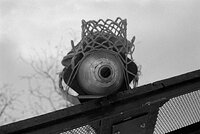
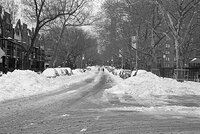
I as a beginner in photography, see the above examples as geometries. If consciousness played an important role then an emotion, a photo like above can be made with ease(I did not do it yet how abyss is my ignorance).
 
Can any memember of APUG produce a picture like this?

Well, believe it or not, quite a few people won't find as much value in an image like that as perhaps you or I would. I of course would love to have it on my wall!

I think some people strive for "timeless", people-less, emotionally abstract images- Ansel wannabes, for lack of a better term. This is in stark contrast to these sorts of HCB images that have an obvious and often confrontational sense of place and time.

Some people like one thing; some people like another. And the Earth keeps spinning on axis.
 
"Only dead fish follow the stream" - Others may caught by hungry bear. ;-)

Still waiting for my virtual mentor...
 
Bresson supervised all his prints. It a print did not meet his standard it went into the trash. Bresson was lucky to surround himself with master printers so he could spend his time making images. Just because he didn't print his negatives doesn't mean he didn't know what a master print should look like.
 
Kertesz wasn't fond of printing either. Early on he turned over his printing needs to a printer. Penn was very involved with printing but I know he had people printing for him, likewise Avedon. Many of the very successful photographers didn't have time to print. Then theirs all those photographers who only shot chromes. And C printing doesn't contain as many variables and lots of photographers used to turn over their color printing to full time printers, especially dye transfer. For me, I love, love, love printing, but I don't think it's the end all. I'd rather see a poorly printed exciting image, than a virtuoso print of a boring image. I don't think photography always has to be socially relevant either, although it's great when it is. As a good friend once said to me, it either works or it doesn't.
 
By whole, I assume you mean finished print. But I would suggest the master piece exists at the latent image stage, regardless of whether it is destroyed before process or finished as a naff print or master print.

Often my latent images are better than the developed film or the print. Undeveloped film is always perfect, because no one can see anything to complain about.
 
This is an artist's choice, like any other facet of their work -- an artist has the right to make their own choices about how and what they produce.

He'll be remembered centuries from now. That's because of his images...not much else I figure I need to know.
 
If you give a birth to a child and you are not interested to raise them up, how can they be such a master piece.

Pretty sentiment, but ultimately meaningless. Printing is not that hard. If you have nothing on the negative, a printer is not going to turn it into a masterpiece.
 
Henri Cartier-Bresson ... said: "I've never been interested in the process of photography, never, never. Right from the beginning. For me, photography with a small camera like the Leica is an instant drawing." -Wikipedia.

The High Museum recently had an Henri Cartier-Bresson exhibit "The Modern Century" which was put together by MOMA. The photographs show great imagination, but honestly, most of the prints were totally mediocre. The best ones were from the end of his life where he worked closely with a master printer. These are all signed big, with ink, and embossed, as well. (You can see this in the documentary available on Netflix.)

Keith Carter is a very fine print maker who has always printed his own work, as well as an insanely great photographer. Roger Ballen is an amazing photographer who hasn't printed his own work in nearly 25 years, but he's worked with the same printer for all those years and they obviously have a good thing going. Michael Kenna uses assistants to help print.

Lee Friedlander printed his own work for years, but his most recent work, some of the best of his very long life, is printed by someone else. Irving Penn's work was largely printed by others, as was Avedon's. These guys were so busy making photographs that the printing had to be done by someone else or it would never get done at all. Does anyone care who printed Avedon's work? No, it's AVEDON.

There are plenty of "print makers" who can process their film to a tenth of a stop and make gorgeous prints of nothing worth looking at. Many people get caught up in the "process" and never get the "why" and the "what." They simply see that Weston was at Big Sur and the photos were awesome so it must have been Pyro and Amidol and Big Sur, NOT Weston.
 
I liked the hunter/cook analogy. I thought about the comparison of photography and food last week.

For what kind of chef would you go out of your way to experience their food? If I was a chef instead of photographer, would anyone bother to come back?

I am sure HCB was a hunter. John Morris talking about the photographer's eye said "It's a pleasure to look at the contact sheets of Cartier-Bresson, especially so because he doesn't like to lend them out! But, they show his search, his probing of subject matter. It's fascinating to see the way he works."
 
Preesh.

And let's not forget art history: all of the great painters, Michelangelo, Rembrandt, Caravaggio, etc. had ateliers where apprentices would undertake all sorts of "boring" and laborious tasks such as the underpainting. Fast forward to Warhol and Koons, etc. who have their assistants do much of the mechanical work of putting the art together. How would bronzes ever get made? Can one man alone cast 500 pounds of molten metal?

It's the idea that matters. Right now, all of my paying portrait work is done with Canon digital and output either on lightjet or inkjet printers. Once it leaves Photoshop, it is an almost entirely mechanical process. Alec Soth, for instance, now scans his negatives and outputs on HP inkjet. Is it not art?

Again, it's the idea that matters. The final art object -- whether a silver gelatin print, a painting, or a silk screened wooden box -- is merely the physical manifestation of the idea, and is, of course, part of the original idea itself.

 
Somewhere I read that HCB's "decisive moment" concept was meant to apply to the viewing of the photograph and not just its moment of capture. My understanding is he saw himself more as a photojournalist of culture and the zeitgeist apart from the fussiness of the fine art world. If he was a hunter he used a shotgun.
 
One of the things that draws me to what I think of as classic photography is being able to take responsibility for the entire creative process, from visualizing a picture to final presentation. I derive a great deal of satisfaction from composing an image, exposing and developing a good negative, crafting a good print that expresses what I felt when I first saw the picture in my mind, all the way to matting and framing the print. Some of it is art, some of it science, some of it simply math, but if it works I get all the credit and if it fails I will gladly accept the blame.

But that's just me.
 
Photrio.com contains affiliate links to products. We may receive a commission for purchases made through these links.
To read our full affiliate disclosure statement please click Here.

PHOTRIO PARTNERS EQUALLY FUNDING OUR COMMUNITY:


Ilford ADOX Freestyle Photographic Stearman Press Weldon Color Lab Blue Moon Camera & Machine
Top Bottom