
• Welcome to Photrio!
    Registration is fast and free. Join today to unlock search, see fewer ads, and access all forum features.
    Click here to sign up

How would you meter for jazz club, small venue music shots?

Tree with Big Shadows

Tree with Big Shadows

  • 2
  • 0
  • 65
Everal Barn

A
Everal Barn

  • 3
  • 1
  • 73

Forum statistics

Threads
203,455
Messages
2,855,012
Members
101,851
Latest member
Si_Voltage
Recent bookmarks
0

rpavich

Member
Allowing Ads
Joined
Aug 24, 2015
Messages
1,518
Location
West virginia, USA
Format
35mm
I'm trying to figure out how to meter (spot meter) for a scene that's mostly dark like a stage with spots highlighting band members faces/hands/instruments etc.

Specifically, where would you meter? (shadows or faces?) and where would you place that value (faces on zone 6 or shadows on zone 3 or what?

I took some photos recently of a swing band and though the pictures printed ok, and my negatives weren't horrid, I just winged it and got lucky for the most part.

For next time, I want to have a game plan and know what I'm doing.


This is an example of what I have in mind as the finished product.
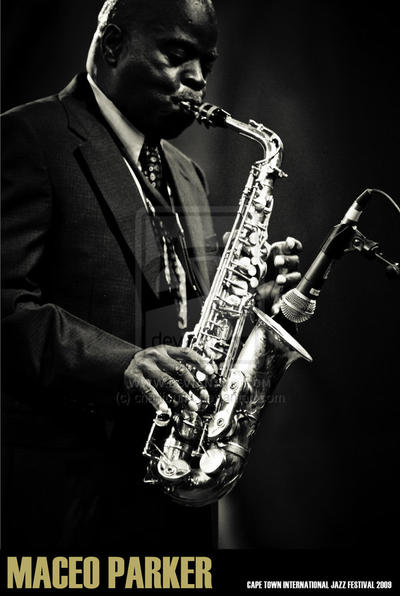
ct_jazz_fest_maceo_parker_4_by_black_white_club.jpg
 
I'm not super experienced in photography, so take my suggestion / thought process with a grain of salt.

I think you would meter in the same way you would meter any scene. You have to decide what parts of the scene you want to record details on the negative. Those parts of the scene must be on Zone III or above.

You also should measure the brightest spot because this, together with the your Zone III, determines your subject brightness range. Ideally, this would be within 6 stops. If it is more than 6 stops, you are left with a choice of burning it in during the print process or pulling your development.

There is a saying that goes something like this: "Expose for the shadow and develop for the highlights."

In practice, I have found the negative to have very long straight line area such that I don't have to worry about my highlight ending up on the shoulder (the flat portion of the response curve) which would result in less separation. But sometime it is hard to burn in the highlights due to the shape of the image, so there are times when pulling makes sense during the development stage.

My guess is the photographer who shot the photo you used as an example placed the sax player's face on Zone III or Zone IV.
 
I'm not super experienced in photography, so take my suggestion / thought process with a grain of salt.

I think you would meter in the same way you would meter any scene. You have to decide what parts of the scene you want to record details on the negative. Those parts of the scene must be on Zone III or above.

You also should measure the brightest spot because this, together with the your Zone III, determines your subject brightness range. Ideally, this would be within 6 stops. If it is more than 6 stops, you are left with a choice of burning it in during the print process or pulling your development.

There is a saying that goes something like this: "Expose for the shadow and develop for the highlights."

In practice, I have found the negative to have very long straight line area such that I don't have to worry about my highlight ending up on the shoulder (the flat portion of the response curve) which would result in less separation. But sometime it is hard to burn in the highlights due to the shape of the image, so there are times when pulling makes sense during the development stage.

My guess is the photographer who shot the photo you used as an example placed the sax player's face on Zone III or Zone IV.
Thank you, that makes sense to me.
 
I would not meter at all. I would aim for something like ASA1600, 1/125, f2.8. That's give or take. Give it more exposure if you can. If you have a super sharp f2 lens, use that. I've messed with this type of thing quite a bit. TMax 400 or Tri-X works fairly well pushed to 1600.
 
If you have a spot meter, I would meter for the faces. Remember to adjust for skin color.
 
If you have a spot meter, I would meter for the faces. Remember to adjust for skin color.
That seems to make sense and then I'd only need a couple of different exposures after determining the first exposure value. I wasn't planning on metering for every shot but only getting the basic exposure and leaving the camera's settings alone as long as the lighting didn't change drastically. (like go down to one small spot or something)
 
so use the fastest film you have and 1/15th wide open
good luck !
john
 
It depends on the purpose/mood of the shot.
  • One like what was shown in OP I might dictate by 'just barely hold detail in the hightlights' goal...I'd spotmeter highlights and compensate the reading to render the detailed highlights appropriately
  • A different rendition would be obtained if metering to midtone...some of the highlights may well go to 'detailess highlights' when stage light/spotlights reflect.
 
Is it possible the example image of Maceo is a studio shot not live? Live is tricky. If someone is in a spot light the contrast range between dark and light is probably way more than the print can show. The usual thing is to capture the highlights (expose for the highlight of the face or the instrument depending on the subject and placed on zone 8) and sacrifice the shadows, they will be full black without detail. This method has the advantage that it gives shorter shutter speeds which is helpful when shooting handheld. When the subject is not in a spotlight the contrast range is probably less extreme but I would still meter for the highlights since the shadows are probably empty. I work with a spotmeter calibrated for zones 1-10 and chose to expose for print highlights with detail that should fall in the zone 8.
 
It depends on the purpose/mood of the shot.
  • One like what was shown in OP I might dictate by 'just barely hold detail in the hightlights' goal...I'd spotmeter highlights and compensate the reading to render the detailed highlights appropriately
  • A different rendition would be obtained if metering to midtone...some of the highlights may well go to 'detailess highlights' when stage light/spotlights reflect.
Ok...so it's sort of like placing the important tones in any other situation like daylight.
Thanks.
 
Is it possible the example image of Maceo is a studio shot not live? Live is tricky. If someone is in a spot light the contrast range between dark and light is probably way more than the print can show. The usual thing is to capture the highlights (expose for the highlight of the face or the instrument depending on the subject and placed on zone 8) and sacrifice the shadows, they will be full black without detail. This method has the advantage that it gives shorter shutter speeds which is helpful when shooting handheld. When the subject is not in a spotlight the contrast range is probably less extreme but I would still meter for the highlights since the shadows are probably empty. I work with a spotmeter calibrated for zones 1-10 and chose to expose for print highlights with detail that should fall in the zone 8.
Ok...understood. I'll try that.
 
My free app for mobile phone helps me in situations like this. I frame it on the screen, similar to the pictures to be taken and measure the spot I need. At this particular case it will be face under light to measure.
This allows me to skip "measure for shadows, develop for light or else, zones and such". All I need to know is aperture, shutter speed and ISO. I develop per ISO which I used to measure. In this particular situation I would rate HP5+ as 1600 and develop it as 1600. I hope, I'm not offending anyone with keeping it new way and simple :smile:
 
how would I meter in a small venue jazz club?
I think I'd meter very coolly, while nodding my head imperceptibly on the off beat ...
 
how would I meter in a small venue jazz club?
I think I'd meter very coolly, while nodding my head imperceptibly on the off beat ...
I'm a white guy so nodding might be doable but hitting the off-beat for more than a bar might prove challenging. :smile:
 
If you have a spot meter, I would meter for the faces. Remember to adjust for skin color.
I've shot several classical orchestra performances/rehearsals and this method worked best for me. It helps to have a camera with a built-in spot meter, at the time I was using a Nikon F4, with TMax 3200 rated at 1600.

I ignore the shadows as the range of stage lighting is often too broad to capture detail everywhere. Especially with spotlights, it's easier to blow-out the highlights (usually faces) if you just use an averaging or center-weighted reflective meter. For average Caucasian skin I overexposed 1 stop, for darker skin I would bracket from 0 to -2 stops under.
 
I've shot several classical orchestra performances/rehearsals and this method worked best for me. It helps to have a camera with a built-in spot meter, at the time I was using a Nikon F4, with TMax 3200 rated at 1600.

I ignore the shadows as the range of stage lighting is often too broad to capture detail everywhere. Especially with spotlights, it's easier to blow-out the highlights (usually faces) if you just use an averaging or center-weighted reflective meter. For average Caucasian skin I overexposed 1 stop, for darker skin I would bracket from 0 to -2 stops under.
Thank you...now all I have to do is find a band to shoot :smile:
 
Thank you...now all I have to do is find a band to shoot :smile:

Although the APUG Portfolios aren't back in place yet, Tony Egan's article on gig photography - (there was a url link here which no longer exists) might give you a few pointers and you can still see some of his work at pbase: http://www.pbase.com/tonyegan/music and peppered throughout his gallery here: (there was a url link here which no longer exists)
 
Although the APUG Portfolios aren't back in place yet, Tony Egan's article on gig photography - (there was a url link here which no longer exists) might give you a few pointers and you can still see some of his work at pbase: http://www.pbase.com/tonyegan/music and peppered throughout his gallery here: (there was a url link here which no longer exists)
Thanks very much!
 
Jiimjm has it right. I use Leica m5 with built in spot and a 1.5 lens. Sometime an f2 lens. Only difference is that I use 400 film. This may be because a rf camera allows for more steadyness at slower shutter speeds than an slr Also easier to focus in dim light. But don't forget the audience...interesting shots exist there also. Expanding on the venue, darkness can be an important element in the picture. When I was younger, in the heyday of jazz before the onslaught of anti music r&r, jazz was often performed in well lighted venues during daytime. And fun. Great rivalries between fans of east coast vs west coast styles, cool vs bob. But we went to all kind of performances, had a good time and debated our favorites afterward. Much like apug members debating best cameras and formats when in fact they enjoy all of them!
Interestingly, where I grew up you would meet some of the same people at the jazz club, the hillbilly bars (we didn't call it country back then) and the symphony hall.
 
I'm trying to figure out how to meter (spot meter) for a scene that's mostly dark like a stage with spots highlighting band members faces/hands/instruments etc.

Specifically, where would you meter? (shadows or faces?) and where would you place that value (faces on zone 6 or shadows on zone 3 or what?

I took some photos recently of a swing band and though the pictures printed ok, and my negatives weren't horrid, I just winged it and got lucky for the most part.

For next time, I want to have a game plan and know what I'm doing.


This is an example of what I have in mind as the finished product.

ct_jazz_fest_maceo_parker_4_by_black_white_club.jpg
I would like get as close as I can to the performer and trust my incident meter;not a good example for using a spotter but if that's all you have ,pick something that looks like Zone V and take it from there.
 
You can take a couple of approaches, most have been discussed. If you are pushing a fast film say Tmax 400 to 1600 there will be no shadow details with a 2 stop push, so meter for the highlights and let the shadows fall where they may. High contrast is part of the "look" of the classic night club shot, in today's world just missing the smoke. You can also use Diafine, shoot with a non t grain film like Trix, HP5 or Foma 400, Diafine will give you the best shadows, but the prints may be somewhat flat and need to printed to for more contrast. If you shoot with Diaine I would use a in camera matrix meter or spot meter and meter for face tones. I would avoid a incident meter as in a night club, the light falling on the performers will very bright but by the time the light reaches you at a table will have dropped off, you want the light that reaches the camera not the subject. .
 
I'm a white guy so nodding might be doable but hitting the off-beat for more than a bar might prove challenging. :smile:

Just count and move your head with "one TWO three FOUR" and not "ONE two THREE four" (a sure sign of uncoolness).
 
I'd use Ralph's incident method. Presuming you can get to the stage.
I doubt the spotlights would change enough to matter even with different performers.
 
If you have a spot meter, I would meter for the faces. Remember to adjust for skin color.

Yes, remember Zone VI is for Caucasian skin tones. Dark, African skin tones might be Zone IV or V, or possibly lower. Not racism, just fact.......Regards!
 
Photrio.com contains affiliate links to products. We may receive a commission for purchases made through these links.
To read our full affiliate disclosure statement please click Here.

PHOTRIO PARTNERS EQUALLY FUNDING OUR COMMUNITY:


Ilford ADOX Freestyle Photographic Stearman Press Weldon Color Lab Blue Moon Camera & Machine
Top Bottom
