• Welcome to Photrio!
    Registration is fast and free. Join today to unlock search, see fewer ads, and access all forum features.
    Click here to sign up

How to selectively mask for toners?

Cigar again

H
Cigar again

  • 1
  • 0
  • 31
Rainy Day Trees

A
Rainy Day Trees

  • 8
  • 1
  • 120

Recent Classifieds

Forum statistics

Threads
203,166
Messages
2,850,795
Members
101,706
Latest member
FreddieH
Recent bookmarks
1

crumpet8

Member
Allowing Ads
Joined
Nov 3, 2015
Messages
393
Location
Scandinavia
Format
Medium Format
hi,

So I don't know what this technique is called so was unable to find any info on it. I'm looking to use a sepia toner on only parts of my print. I heard about a guy using some sort of wax (I think) to mask off areas before going through the process, anyone know how to do this? I use Matt fibre paper.

Thanks.
 
the only times i have ever toned an image i used rubber cement to mask
it worked well, and was fun to roll off the print when i was done .. ( entertainment ! )
 
I used to do a lot of hand colouring which also involved toning steps - sepia toning, then gold toning, and toning with dye couplers. I preferred to just bleach the areas with paint brushes of varying fineness, I found I could work quickly and accurately. I gave demonstrations of the techniques back in the mid to late 1980s.

I tried special resist materials but found it much slower and less accurate. Here's a simple example:

index.php


This was some notes on more advance colouring.

Ian
 
I never tried Ian's method. I wish I would have! I used to do selective toning/double toning (I don't know what to call it) back a long time ago. IIRC I used something called Maskoid which was red. I don't think the kind I used is made anymore, but the Fotospeed product above sounds like it. You can also use the masking solution that water color artists use. IIRC it is a latex based product. There is also (or used to be) sheet material you can get that will protect large areas. You can do some neat things with masking, although it is very time consuming
 

Attachments

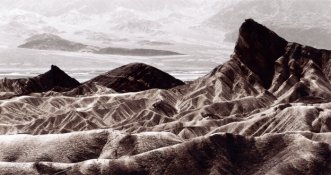
  • 1998-107-39 Manly Beacon Zabriski Point PS.jpg
    1998-107-39 Manly Beacon Zabriski Point PS.jpg
    210.3 KB · Views: 127
I can't remember what masking fluid I bought, like Maskoid it was latex based, I found it wasn't easy to use as accurately as just bleaching free-hand, also with no masking you can gradate if you want.

Ian
 
I used to do a lot of hand colouring which also involved toning steps - sepia toning, then gold toning, and toning with dye couplers. I preferred to just bleach the areas with paint brushes of varying fineness, I found I could work quickly and accurately. I gave demonstrations of the techniques back in the mid to late 1980s.

I tried special resist materials but found it much slower and less accurate. Here's a simple example:

index.php


This was some notes on more advance colouring.

Ian

I was thinking I'd start with this actually :smile: good to hear it's a tried and true method. Thanks also to everyone else for the input on rubber cement and fotomask.
 
I can't remember what masking fluid I bought, like Maskoid it was latex based, I found it wasn't easy to use as accurately as just bleaching free-hand, also with no masking you can gradate if you want.

Ian
 
This guy is fun to watch and he uses rubber cement.
The masking starts at the 16 minute mark but watch the whole thing...he's great.
 
When I was in first year photo school we used Elmers glue to mask out areas to tone .

Today I take advantage of bleach sepia and gold for the highlight regions and use selenium for the shadows, I have tried with mixed
success to use Iron Blue at the end to add another colour ,like I said mixed results with the blue.
 
Photrio.com contains affiliate links to products. We may receive a commission for purchases made through these links.
To read our full affiliate disclosure statement please click Here.

PHOTRIO PARTNERS EQUALLY FUNDING OUR COMMUNITY:


Ilford ADOX Freestyle Photographic Stearman Press Weldon Color Lab Blue Moon Camera & Machine
Top Bottom