• Welcome to Photrio!
    Registration is fast and free. Join today to unlock search, see fewer ads, and access all forum features.
    Click here to sign up

How to process old plates ?

Cigar again

H
Cigar again

  • 1
  • 0
  • 31
Rainy Day Trees

A
Rainy Day Trees

  • 8
  • 1
  • 120

Recent Classifieds

Forum statistics

Threads
203,166
Messages
2,850,787
Members
101,706
Latest member
FreddieH
Recent bookmarks
0

Andy38

Member
Allowing Ads
Joined
Aug 16, 2008
Messages
242
Location
Lyon , Franc
Format
Medium Format
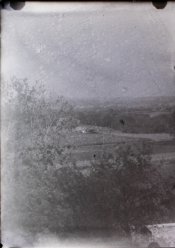
Yesterday, I was taking some shots with a plate camera, a 10X15 ICA Ideal (~1920).
Film is 6,5X9 plates I use with adapters and plates have been made in 1939 by Ilford.
I have many other plates of this age in 4,5X6, 6,5X9, 9X12, 10X15 and 13X18; they were stored in a dry place.

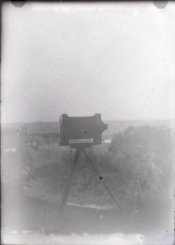
Here is a picture (the camera you see is my old 13X18 Gilles-Faller), sorry for the bad composition; 1/10 sec and f9 with a 165mm f4,5 Tessar; it's the better photo, I have tried other processes with 3 other plates but results are bad.

Processing :
development : Rodinal 1+50 , 9mn;
stop bath : Rollei citro stop 1+19, 1mn;
fixer : Ilford rapid fixer 1+4, 4mn;
washing : 5 mn.

The speed is 700 H&D (~18 ASA).

Can I get better result with more details or is that normal with such an old emulsion ?
 

Attachments

  • plate_2.jpg
    plate_2.jpg
    160.8 KB · Views: 116
hi andy

try using a stronger developer
like for prints, but dilute it a bit ...
a lot of the print developers of today
( at least the old ones like dektol ) were for film, prints and plates.
if your plates or ortho emulsion you can develop them by inspection under a red safelight ...
i have a box of old plates but have never bothered to expose them
i have coated my own, which is fun too :smile:

god luck !
john
 
You have to expect a level of base fog with older emulsions. I shoot old plates and sometimes they are perfect, almost like new and others from the same box can be nearly black with fog. You can also expect the emulsion to have lost some of its speed. If I had a result that looked like yours I would give the next exposure a couple of stops extra light. I might also try about 5ml of a 2% benzotriazole solution added to the dev to cut some fog.
 
Hi,

I've got a fairly big collection of old plates, too. My experience is that anything that was considered to be 'rapid' - which might be considered medium speed by today's standards - is usually very foggy. Anything above about ISO 32 (or the equivalent from those days) is usually unusable. Often, too, they have mould growth or mottled markings. Some kodak press plates I had from the 50s were completely scrap. FP4 plates that can't be all that old (or they'd be FP3!) are also very foggy. The slower the emulsion, the better the results. My best results were with Wellington process plates from the 1920s. These were 'ordinary' blue sensitive plates and VERY slow - I reckon about ISO 1/2 ! They were really squeaky clean and fog free, though. For faster materials, around ISO 16 or so, I got similar results to what you have above.
The speed now is meaningless, they will have lost a lot of this sensitivity and probably need a lot more exposure - it serves more as a guide to how fogged the plate is likely to be!

The advice from the others is good, Ilford PQ universal developer worked for me, also Kodak DK50, both used at a fairly strong concentration ('stock'). They helped a bit - but not a lot. You can sometimes squeeze out a bit more contrast and reduce the fog a little, but If the emulsion is stale and fogged - which obviously it must be after this time - there isn't much you can do.
 
Thank you, John and Michael, for your answers !

I'll try Dektol as developer and over-expose next exposures.

I don't expect extra results, but if sometimes it's better...
 
Steve, I am sorry I have not thank you.

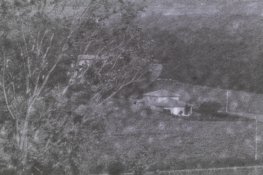
I have tried with a presoak (2 mn) and a shorter development time (4 mn) with Rodinal 1+50 (not yet found Dektol) : it's a bit better, with some more details; water of presoak was violet; never seen this colour before, and not seen after...
There is fog, but landscape is now visible; the second pic is an enlargement of the center (Tessar is sharp !).
 

Attachments

  • plate_4.jpg
    plate_4.jpg
    181.7 KB · Views: 89
  • plate_41.jpg
    plate_41.jpg
    190 KB · Views: 91
Photrio.com contains affiliate links to products. We may receive a commission for purchases made through these links.
To read our full affiliate disclosure statement please click Here.

PHOTRIO PARTNERS EQUALLY FUNDING OUR COMMUNITY:


Ilford ADOX Freestyle Photographic Stearman Press Weldon Color Lab Blue Moon Camera & Machine
Top Bottom