
• Welcome to Photrio!
    Registration is fast and free. Join today to unlock search, see fewer ads, and access all forum features.
    Click here to sign up

How to control the contrast of graded paper?

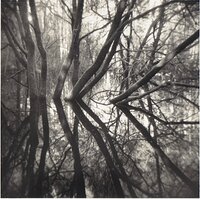
Flooded woodland

Flooded woodland

  • 15
  • 1
  • 96
Babylon

D
Babylon

  • 3
  • 1
  • 85

Recent Classifieds

Forum statistics

Threads
202,841
Messages
2,846,348
Members
101,559
Latest member
gnafin61
Recent bookmarks
0
jtk - I'm multi-format myself, though was exclusively large format for three decades. But sheet film does have real advantages, not only in being able to develop each sheet as needed; but IF on dimensionally-stable PET base (versus acetate), it's far more appropriate in relation to masking or any other kind of registered printing. Acetate film base, which most roll film is, and at least some color sheet films, can sometimes be hell to work with if masking is involved. But that's sorta an advanced topic beyond this thread itself.

fwiw this thread's Topic isn't just about chemistry...so I thought it might be useful to point out important techniques/skillsets it overlooks.

Film base and relative awkwardness of roll/35 Vs sheet for pin registration do represent challenges but of course are issues well within skill sets of many on Photrio (me, for example).

Pin registration can be fussy, but not if one works carefully.

Flashing probably doesn't help when exposures imply too much contrast for Grade 2.

Bleaching has always been part of many personal skill sets, and was fundamental to Bill Brandt and Ansel Adams (for example).
 
Last edited:

Pin registration is easy with the correct equipment, even in total darkness. But trying to register separate sheets of film without a matching punch and pin system is a huge headache.

The problem with bleaching is that, with some papers, you get a color shift in the bleached areas, due to silver reduction there. But if used judiciously with the right papers, it is indeed a valuable tool in the kit. Classic Kodak Farmers Reducer is no longer made. The Photog Formulary equivalent is way stronger, and needs to be highly diluted.
 
You could also try a SLIMT bleach. That would do it too but that is more complicated. It works by printing for the highlights then bleaching in a super dilute bleach before developing the print. The bleach acts on the latent image opening up the shadows.
Just came across this great thread about SLIMT from user @clayne , and am adding it here for reference. His post was really useful and he did a great level-headed job of getting the best out of a bunch of grumpy old men who know a lot about photography. Sadly he hasn't posted here since 2015. You can use SLIMT to reduce contrast, and post-develop bleaching to increase contrast with subtleties about contrast at various zones that differ between the various techniques. When you need it, you add a fairly straightforward step to your workflow, and then use your usual testing/test print workflow to get to your final image.
 
I did not notice this mentioned but exchanging a dichro and condenser head on a LPL 670 enlarger produced 1 grade difference in the prints.
 
Photrio.com contains affiliate links to products. We may receive a commission for purchases made through these links.
To read our full affiliate disclosure statement please click Here.

PHOTRIO PARTNERS EQUALLY FUNDING OUR COMMUNITY:


Ilford ADOX Freestyle Photographic Stearman Press Weldon Color Lab Blue Moon Camera & Machine
Top Bottom