• Welcome to Photrio!
    Registration is fast and free. Join today to unlock search, see fewer ads, and access all forum features.
    Click here to sign up

How to control Fuji Instant FP-3000 B contrast

Recent Classifieds

Forum statistics

Threads
201,265
Messages
2,821,466
Members
100,624
Latest member
ericstoynov
Recent bookmarks
0

Jose A Martinez

Member
Allowing Ads
Joined
Mar 26, 2005
Messages
617
Location
Mexico City
Format
Multi Format
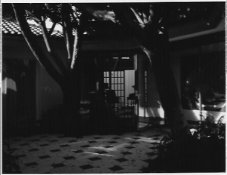
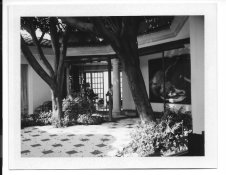
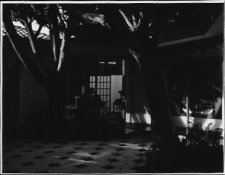
I decided to work with Fuji FP-3000 B for a new project, this is my first experience with this material. I expose the first print at the Fuji settings, 3200 ASA develop 20 sec at 21º C and it came out high contrasted, so I make another shot with the same settings to be sure that there wasn't an error. The result was the same. I develop the third film for 5 seconds more and no noticeable changes occurred, just a slight increase of the detail in the high lights, then I increase the exposure rating the film at 2500 ASA, etc. I go through the whole pack increasing the development and exposure and get no good print, one with a reasonable range of tones.

Any suggestions? is this film high contrast? there is a way to test it to find the desired contrast?

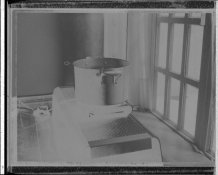
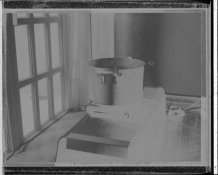
two scans of the best results:
fp3000 b-1.jpg

fp3000 b.jpg
 

jslabovitz

Member
Allowing Ads
Joined
Nov 27, 2007
Messages
63
Location
Shanghai, WV
Format
Medium Format
I have indeed found FP-3000B to be inherently high in contrast. My absolute best exposures were with my century-old, uncoated Wollensak Velostigmat lenses. On film, these lenses render quite low contrast; on the Fuji instant film, they were pretty well balanced. Here's an example:

404573_3691115037803_1486292838_n.jpg

Your scenes look quite high in contrast to begin with, and I can understand how the Fuji prints might accentuate that. Have you tried it in low-contrast situations?
 

EASmithV

Member
Allowing Ads
Joined
Aug 22, 2008
Messages
1,984
Location
Virginia
Format
Large Format
Funny, I've found that in manual cameras it needs to be exposed at asa 2500
 

ic-racer

Member
Joined
Feb 25, 2007
Messages
16,697
Location
USA
Format
Multi Format
They look too dark to me. I'd increase the exposure.
 

himself

Member
Allowing Ads
Joined
Apr 8, 2011
Messages
513
Format
Multi Format
I've always found it to be low in contrast too.
so I'd agree with ic-race that maybe it's the exposure that's the problem
 
OP
OP
Jose A Martinez

Jose A Martinez

Member
Allowing Ads
Joined
Mar 26, 2005
Messages
617
Location
Mexico City
Format
Multi Format
Thanks all... I'll try, again, more exposure, maybe less development, "expose for the shadows and develop for the highlights".
 

hsandler

Subscriber
Allowing Ads
Joined
Oct 2, 2010
Messages
476
Location
Ottawa, Canada
Format
Multi Format
I have read that the paper negatives from fp-3000b are scannable. The suggestion was to thoroughly overdevelop before peeling them apart, air dry the negative, then scan as a reflective object with a flatbed and invert in photoshop. Maybe it will give lower contrast than the print.
 
OP
OP
Jose A Martinez

Jose A Martinez

Member
Allowing Ads
Joined
Mar 26, 2005
Messages
617
Location
Mexico City
Format
Multi Format
I think I have a good result rating the film at 2500 ASA, and develop less, 15 sec at an ambient temp of 21º C.

fp 3200 03.jpg

@hsandler, I'll try the negative scan method. Observing the negs I'm thinking that if I peel them from it's base, if it's possible, I can mount them in a black plexiglass and made a sort of "instant film amprotipe".
 

cscurrier

Member
Allowing Ads
Joined
Jan 15, 2012
Messages
59
Location
Bellingham,
Format
35mm
That last one looks much nicer! If you're still looking for less contrast, though, I second trying to scan the negatives. I played with scanning them before and they seemed to work quite well.
 
OP
OP
Jose A Martinez

Jose A Martinez

Member
Allowing Ads
Joined
Mar 26, 2005
Messages
617
Location
Mexico City
Format
Multi Format
After another pack of ten prints I found out that following the earlier quoted Ansel Adams's motto, "expose for the shadows...", I get a more desirable contrast. The key for what I'm trying to do is to place the zone III correctly. The film has a very short dynamic range, so it's easy to fall in a very contrasty image if you misplace your zones, and there is no room to alter the developing process, at least as far as I know.

The whole exercise allowed me to catch up on the practice of the zone system, I get my Pentax spot meter out of my gear cabinet after some time of no use.

Here the more recent print:

ene 2013003.jpg

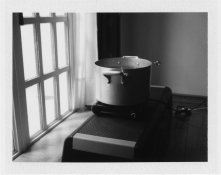
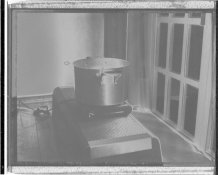
I also gave a try to the scan suggestion. The result was a discovery to me, I didn't expect the outcome. I guess this is a discussion for the hybrid forum, but here it goes: I scan the negative as it is, normally develop, I inverted it in photoshop, and it looks like a Sabatier version of the original positive:

The negative as it is:

ene 2013004a.jpg

Inverted in photoshop:

ene 2013004b.jpg

Flipped horizontally to mimic the orignal positive:

ene 2013004c.jpg
 

himself

Member
Allowing Ads
Joined
Apr 8, 2011
Messages
513
Format
Multi Format
oh yeah, that's pretty common with the 3000b. They solarise quite easily, especially if you've developed for shorter than the recommended time and the image hasn't completely developed.
 

digic

Member
Allowing Ads
Joined
Apr 5, 2012
Messages
23
Location
Norway
Format
Multi Format
The thing with these FP films by Fuji is that once you pull the develop sheet, even if it's not been developed as instructed yet, it will still continue to develop and darken for a few more seconds. Atleast this is my expirience. You may pull the development after 8 seconds instead of the instructed 15, but the end result will just be an overexposed/poorly exposed frame in the end. There is no way to "pull" the film like you would with rollfilm. If I wanted to lower contrast on, say, a roll of Ilford Delta 3200, I'd expose it at a lower iso value and develop for a shorter time. But since the development time of the Fuji FP-3000B is allready so short, measured in mere seconds (and after you pull the develop sheet, as previously stated, it continues to darken the blacks), I dont think this will be as easy as one would think...

But then again, I could be completely wrong..?
 

soboyle

Member
Allowing Ads
Joined
Jul 11, 2012
Messages
15
Location
Berkshires, MA
Format
Multi Format
This is an old post, but thought I would ad my current experience with this film.
This film is self terminating, meaning you don't have to peel the film at the recommended time. If you wait several minutes or longer you will minimize the solarizing issue if you want to scan the neg, which to me is one of the real reasons to use the film. The paper neg is lower contrast, scans fairly well, and with a boost in contrast and clarity can get a nice image with a unique look and character. The problem with the negatives is that they are delicate and can take a long time to dry. My process is to usually shoot and pull a number of the films, and not peel them until I get to my car or back home. I let them dry for a day, then they are good to scan.
 
Photrio.com contains affiliate links to products. We may receive a commission for purchases made through these links.
To read our full affiliate disclosure statement please click Here.

PHOTRIO PARTNERS EQUALLY FUNDING OUR COMMUNITY:


Ilford ADOX Freestyle Photographic Stearman Press Weldon Color Lab Blue Moon Camera & Machine
Top Bottom