
• Welcome to Photrio!
    Registration is fast and free. Join today to unlock search, see fewer ads, and access all forum features.
    Click here to sign up

How to achieve soft and dreamy look when handprinting

Recent Classifieds

Forum statistics

Threads
203,114
Messages
2,849,961
Members
101,673
Latest member
mkamera
Recent bookmarks
0

samcal

Member
Allowing Ads
Joined
May 14, 2020
Messages
1
Location
London
Format
Medium Format
Hi! Hope everyone is doing well!

I have been shooting medium format (Mamiya RZ67 Pro II) for some time now. I would love to start getting into making handprints but have no experience in this at all.

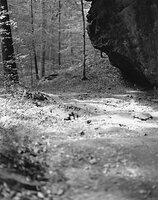
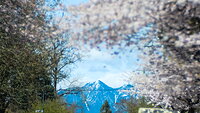
I was wondering if anybody would be able to help me out at all by giving me some tips on how to achieve a soft and dreamy look like these images:


Is this effect created more so when taking the photo by using a particular lens/filter or in the darkroom by using a certain type of paper/technique?

Thanks!
 
Diffusion filter is a good way to start. Different filters give slightly different effects. Softar, Tiffen soft FX Are two examples that I find good. Duto filter, if you can find one is another. There are lots of different options.. review a couple of filter catalogs. Any of these are better than smearing Vaseline or stretching pantyhose over the lens!
 
Another approach... gum bichromate printing.
 
Look into the Rodenstock Imagon Lens.
 
Record it sharp and diffuse when printing. That way you control the degree of diffusion. One way that I have used is : get two 3/8 -1/4 inch thick pieces of glass 4-6 inch square,tape the edges so as not to cut yourself and place a small amount of baby or mineral oil between them. Hold under the enlarging lens with the focus lamp on. You can move it up or down an/or rotate one piece of glass over the other. When you see what you like remember what you did then make your test print. I have done this to make a print from a 2 1/4 neg then scanned the print and had a five foot by four + foot print made for an exhibition once we get back to some kind of normalcy . This technique lets you produce many degrees of diffusion and still have a sharp negative.

http://www.jeffreyglasser.com/

http://www.sculptureandphotography
 
Try two exposures on the same piece of paper - one in focus (2/3 of the correct exposure), then one moved out of focus (1/3 exposure). You can experiment with the amount of out of focus and also the way you divide the correct exposure between the two.
 
I have used 2 methods over the years, one is to stretch a black stocking over the lens, either for the whole or part of the exposure, I tended to expose with stocking over the lens for the whole exposure, and the stocking must be black, you can vary the diffusion effect by the tightness of the stocking on the lens, the tighter it is streached the less the diffusion, also make your exposure testswith the stocking in place, the second, which is a genuine soft focus, is to opt for long exposure, 20 seconds at least, and for the first half of the exposure expose with the lens sharp and for the second half focus and de focus the lens, which works a treat,
 
Hi welcome to Photrio!
What I would do is find a crummy old brownie or similar box camera or dime a dozen folder. Carefully remove the lens and use that as your enlarging lens. If you want DOF look into making a disk out of cardboard make it loo like a sink strainer ( like an Imageon uses). You will still have DOF and retain the aberration you look for...
Have fun !
John
 
For Black and white you can split print where you put a diffusion stocking over the lens during the lower filter and then print the higher filter with no softness OR print the lower filter with no stocking and print the higher filter with stocking.

they both give different looks and are quite easy.
You also can print through a large textured crumpled paper for part of the exposure which is laid over the complete easel and dodge the areas you want hard... lots of fun. I do this with lith printing all the time.
 
If you want the highlights to bleed into the shadows then you diffuse the light when you are taking the image. If you want the shadows to bleed into the highlights then you diffuse the light when printing.

The Zeiss Softar was always the "way" back in the day.

I had a doohickey called a Pictrol once that i never used. It went below the enlarger lens for controlled diffusion. Since I never used it I sold it years ago and the dude who bought it was famous for his smeary prints. Take that for what it is worth....

If you haven't figured it out yet, there are a multitude of ways to achieve what you are looking for.
 
One simple diffusion method in printing is to obtain an embroidery hoop and stretch some open-pattern black tulle fabric over the hoop. This is then held under the enlarger lens and moved about during the exposure for various percentages of the total printing time to smooth and soften the projection. You have to experiment to find the amount of softening that works best for the subject at hand. This was shown in some Kodak darkroom printing books I bought in the 1980s.

https://www.hobbylobby.com/Fabric-S...Tulle-Fabric/Black-Nylon-Tulle-Fabric/p/47290

I prefer the coarser variety of tulle:

https://www.tulleshop.com/products/...MIlsa86M-06QIVkIbACh1GDAaEEAQYBSABEgJbHvD_BwE

It’s a cheap, clean method, and is easy to control. There’s no oily mess.
 
Last edited:
You can use a plastic bag or black netting. But I would not expose the print 100% with the soft filter. Try experimenting partial exposure with the filter and without. That way, could control the level of softness. I you want more softness, increase the ratio with more soft exposure.
 
Having a swing-out filter holder just below below your enlarger lens helps. You can take a cheap glass filter and selectively smear some vaseline on it, or use a Softar style filter, or a bit of black nylon hose for a different effect. One can experiment with all kinds of things.
 
Photrio.com contains affiliate links to products. We may receive a commission for purchases made through these links.
To read our full affiliate disclosure statement please click Here.

PHOTRIO PARTNERS EQUALLY FUNDING OUR COMMUNITY:


Ilford ADOX Freestyle Photographic Stearman Press Weldon Color Lab Blue Moon Camera & Machine
Top Bottom
