
• Welcome to Photrio!
    Registration is fast and free. Join today to unlock search, see fewer ads, and access all forum features.
    Click here to sign up

How much of a difference does 1/3 a stop make?

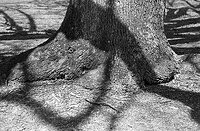
Tree with Big Shadows

Tree with Big Shadows

  • 2
  • 0
  • 32
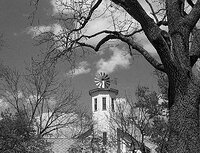
Everal Barn

A
Everal Barn

  • 0
  • 0
  • 32

Forum statistics

Threads
203,450
Messages
2,854,913
Members
101,850
Latest member
psimon
Recent bookmarks
0

saman13

Member
Allowing Ads
Joined
Mar 28, 2017
Messages
365
Location
Sarasota, Florida
Format
Multi Format
From my limited experience shooting slide film, I can see how it could make a difference in exposure. But what about b&w negative film?

I’ve thought about this before, rating my FP4 at 100 instead of 125 just because it makes it easier to translate the numbers from my light meter to my camera. And, I got perfectly workable negatives. I started thinking about this again reading people say they’re exposing Fomapan 100 at 80. Does it really make that much of a difference?

I was planning on doing a film speed test on this particular film and was wondering if it would even be worth it to use this speed, or just shoot at 100 and 50.
 
Consider that in narrow-latitude slide film e.g. Velvia 50, Provia 100... +/– 0.3 stop would have a very small difference, visible to a trained eye with experience in judging exposure steps and the effect this has on the image, and again in specific lighting conditions. Consider again using an E6 film, how much 0.6 (two-thirds) of a stop would have, which in many cases is too much, leading to gross over- or under-exposure (blocking of shadows or busting highlights), but not as a rule, just as something that will be noticed by inexperienced users.

With negative film it is the film's very generous latitude effectively 'masks' small increments of exposure compensation such as 0.3 stop. Exposure in half- to one stops is better for many people, and indeed, many handheld exposure meters allow setting exposure steps in 0.3, 0.5 or 1.
 
From my limited experience shooting slide film, I can see how it could make a difference in exposure. But what about b&w negative film?

I’ve thought about this before, rating my FP4 at 100 instead of 125 just because it makes it easier to translate the numbers from my light meter to my camera. And, I got perfectly workable negatives. I started thinking about this again reading people say they’re exposing Fomapan 100 at 80. Does it really make that much of a difference?

I was planning on doing a film speed test on this particular film and was wondering if it would even be worth it to use this speed, or just shoot at 100 and 50.
a 1/3 stop overexposure gives slightly better shadow detail; otherwise, it makes no difference at all;1/3 stop underexposure puts shadow detail at the quality limit but is hardly visible otherwise.
 
I have rated FP4 and currently FP4+ at 100 ASA for decades. I have also rated it higher, but that is a very rare situation. Many times I also use 80 ASA and rarely 64 ASA. I use D76 1:1, have done for almost the last 30 something years. That said I have used a smattering of other developers for some different situations, but by and large D76 1:1 is what I use.

In reality and assuming you are doing your own developing, if you choose an exposure regime and stick to it, then in time you may make incremental changes to your developing regime and eventually you should find you have very good negatives for whatever post camera work you decide you will be doing with your negatives. At this point in time you may and possibly should realise that the methods you are using, work for you.

1/3 of a stop is important if you are trying to extract shadow detail when wet printing and enlarging in a darkroom. Workable shadow detail is everything; within reason.

Mick.
 
It will make precisely 1/3rd of a stop!:D

No, seriously, it will make very little difference in practical terms. Better to have the error on the side where you get slightly less exposure than the other way, then compensate for the change in the developing stage by perhaps no more than -5%.

An old saying in UK for B&W processing is expose for the shadows and develop for the highlights. That certainly works for me
 
Unless you are overly dead accurate in exposure and development and you can tell a 1/3 stop of exposure difference in either way, just do not bother with it. A third of a stop might be just missed by a subtle change in the development temperature, in your agitation scheme, or event the light under which you observe a print.
 
hi sam

depending on if your shutter is timed correctly probably won't make much of a difference ...
have fun with the speed test ! there is a lot written about it on this site ... AND don't forget
that making the negatives is only 1/2 of it, you need to reproduce them the way you intend to view the
prints ... so you can see what they look like as a positive... / ... print

john
 
Does it really make that much of a difference?

No difference. You will hardly notice a 0.5 stop difference and even a 1 stop gap is acceptable. So 1/3 stop is way within B&W film tolerance.
 
I am sure the posts here are correct on neg film's latitude and while not wishing to start an argument it does make you wonder if film testing to see how far away from "box speed" exposure you are, is really worthwhile. It suggests that the simplest way to film speed test is take three exposures of the same scene consecutively at box half stop over and a full stop over, use the rest of the film at box speed then develop according to box speed instructions for the developer. Examine the first 3 negs, make 3 prints then make a simple choice of which is the best. End of testing for all except the "real afficionados" of testing. Enjoy the rest of your photography

pentaxuser
 
For Ansel Adams' whatever this 16 grades of grey method called it might be catastrophic. :smile:
But for someone who looks at the picture as not as the calibrated exposure list, 1/3 is absolutely nothing, 0.5 is nothing and 1 is nothing.
For printing or scanning, doesn't matter.
But it is better to be +1/3, +0.5, +1. :smile:

Here I accidentally opened it to f1.5 (clickless aperture ring). While it supposed to be f5.6-f8. How many stops it is?

 
If your exposure is already into a hard toe or sharp shoulder then 1/3 stop can make the difference between a great image or just a very good one.
 
I'm an amateur - for me it makes no difference, disappearing among my other variables of metering, developing and printing. One stop I would notice, but a third of a stop, no.
 
OP, just do tests. Sometimes I've had to push things 2 or 3 stops with dodging and burning. 1/3 stop is nothing.
 
It does not make much practical difference. It is difficult to set your camera for exact exposure anyway. Shutter speeds are usually set in one stop increments, and are not dead on accurate, particularly at higher speeds. Most lenses are set in one stop or occasionally one-half stop increments. A few Zeiss lenses have one-third stop increments, but they are the exception. Of course, it all assumes your metering technique is perfect in the fist instance.
 
Last edited:
If your exposure is already into a hard toe or sharp shoulder then 1/3 stop can make the difference between a great image or just a very good one.
+1
Translating slightly, if you are at the edge of serious over-exposure or serious under-exposure, 1/3 of a stop can make the situation either much worse, or a bit better.
At the printing end of the process, a 1/3 stop change in print exposure is both small and clearly noticeable. If you feel the need to create a visual reference of how much a difference is made with a 1/3 stop change, a side by side printing comparison will give you a useful indication, albeit one that is using significantly different materials.
 
How much of a difference does 1/3 a stop make?

1/3 stop increases or decreases the light intensity by 1.23 power.

Example 1:
Flux of 100 lumens becomes 123 lumens with the addition of 1/3 stop.

Example 2:
Film developed to a gamma of 0.7 would have an increased density of 0.07 log d with the addition of 1/3 stop exposure.

Example 3:
An object traveling at a constant velocity will move 23% more distance during the exposure when exposure time is increased 1/3 of a stop.

Example 4:
Kodak Vision3 (ISO 500) is rated 1/3 stop faster than Kodak TMY (ISO 400).

Example 5:
0.1 log D is 1/3 of a stop.

Exemple 6:
Neutral Density filter 0.1 decreases film exposure 1/3 stop.
 
Last edited:
If your exposure is already into a hard toe or sharp shoulder then 1/3 stop can make the difference between a great image or just a very good one.

If your photo is a great image a third of a stop won't make a difference. However, if the photo is a great exposure 1/3 of a stop will make the difference between a great exposure and a very good exposure.
 
For negative film, 1/3 f/stop will not make much difference at box speed. Unfortunately the same cannot be said for slide films.
 
From my limited experience shooting slide film, I can see how it could make a difference in exposure. But what about b&w negative film?

I’ve thought about this before, rating my FP4 at 100 instead of 125 just because it makes it easier to translate the numbers from my light meter to my camera. And, I got perfectly workable negatives. I started thinking about this again reading people say they’re exposing Fomapan 100 at 80. Does it really make that much of a difference?

I was planning on doing a film speed test on this particular film and was wondering if it would even be worth it to use this speed, or just shoot at 100 and 50.
Black and white negative film is much more forgiving because it has better latitude. Highlights blow out faster with transparency film. Some people even have their own "Personal" ASA for their BW film and not shoot box speed and still get beautiful results.
 
I picked up an 0.1 and 0.2 neutral density filter to use to demonstrate the amount of light that a meter tries to put on film.

The goal was to be able to set the camera to what the meter indicated, as closely as possible. The OM-4 I was using only makes changes in full f/stops. So I needed the filters to select the nearest 1/3 stop.

Because I was trying to prove something, I had to be that precise.

Normally, all the advice you read so far is good. There is tolerance, especially towards overexposure.
 
Depends on both the specific film, the scene contrast, and what you're using the negatives for. I just developed a set of matched color separation negatives where even
1/6th of a stop of deviance between them would be unacceptable. But I cut my teeth on Kodachrome and other slide films, so simply got accustomed to tight exposure tolerances. Now I shoot a lot of Ektar, and it is certainly less forgiving than most traditional color neg films. But I never did buy into that "latitude" shoot-from-the-hip philosophy. Every kind of film has an optimum potential exposure, which can certainly differ from "good enough for government work" as we used to say, or nowadays, "I can fix anything in Phototoshop"... yeah, even a wrecked car if you have enough time and Bondo.
 
Simonds demonstrated considerable exposure latitude in negative-positive photography systems. Similar results were obtained by Jones et al. In the diagram the distance between the bars = 2/3 Stop ( Log E = 0.2 = 2/3 Stop.)
Simonds.jpg
 
Just to avoid any confusion, the graph in post #22 has an X-axis representing in-camera negative exposure. If one were interested in exposure latitude in the darkroom for hard contrast printing papers, the exposure latitude is almost nil.
 
That Simonds graph looks like a graph for contact-printed photographs. 35mm enlargements have a drop in quality with overexposure, not as steep as the rise in quality with increasing exposure (as you approach the best exposure), but almost immediately after the peak it starts to ‘deteriorate’.
 
If your exposure is already into a hard toe or sharp shoulder then 1/3 stop can make the difference between a great image or just a very good one.
Yes. After experimenting I rated TXP ei 200, not 160, not 250. I want to know I can have details, where to place shadows and highlights; with careful metering and uniform development it gives me exactly what I expect on the negative, in other words it means I can locate the toe, instep, shank, and knee with adequate precision. The slight veiling flare from uncoated lenses helps get the film off the toe, too and needs to be accounted for when using coated and uncoated lenses.
So yes, 1/3 stop makes a difference - but if the rest of your process is sloppy you'll never be able to take advantage of it.
Edit - the above refers to 8x10 film intended to be contact printed.
 
Photrio.com contains affiliate links to products. We may receive a commission for purchases made through these links.
To read our full affiliate disclosure statement please click Here.

PHOTRIO PARTNERS EQUALLY FUNDING OUR COMMUNITY:


Ilford ADOX Freestyle Photographic Stearman Press Weldon Color Lab Blue Moon Camera & Machine
Top Bottom
