

jvo
Subscriber
We all have our personal preferences, but if the intention is art, there shouldn't be any rules.
++++
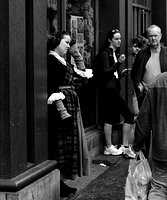
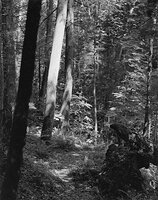
We all have our personal preferences, but if the intention is art, there shouldn't be any rules.

A definition that has been highly diluted from the original, although the example may be closer to the original, if it applies to a boxer who has been accredited by a recognized accrediting organization.
The second definition, while correct in current/common usage as stated by Pieter, seems best when used with another word, like 'quality': "The editing of their images are both memorable and of professional quality."
Art is constructive. It is constructed from the reality around the artist, the tools and materials at their disposal, and their imagination.
Photography has always been "edited" whether by chemical, digital, or mechanical means. Moreover, the compositional/constructive process of the photographer is inherently an editing process even in the most abstract of photographs.
For me, all methods and manipulations are in bounds so long as the process is under the photographer's control. If you want to scan your negative, edit/fix/improve it, create a digital internegative to make a carbon transfer print, that's all legit. You are in charge of the whole business. This holds true for digital, analog, and/or hybrid workflows.
Where I part ways with all this is when some significant portion of the manipulation is no longer under the photographer's direct control. The digital post capture of many consumer products like iPhones are increasingly intended to give you the picture it's decided you wanted, not the one you took. The process if opaque and not easily placed in the hand of the photographer.

Art is constructive. It is constructed from the reality around the artist, the tools and materials at their disposal, and their imagination.
Photography has always been "edited" whether by chemical, digital, or mechanical means.


You win some, you lose some. The loss of immediacy can be a perfectly valid or even desirable consequence in the light of the desired output.Editing is fine and individual photographers do what they think is necessary, but isn't photography unique as an artform in it's immediacy and when used in that way, too much editing can destroy that quality. Just my personal opinion.
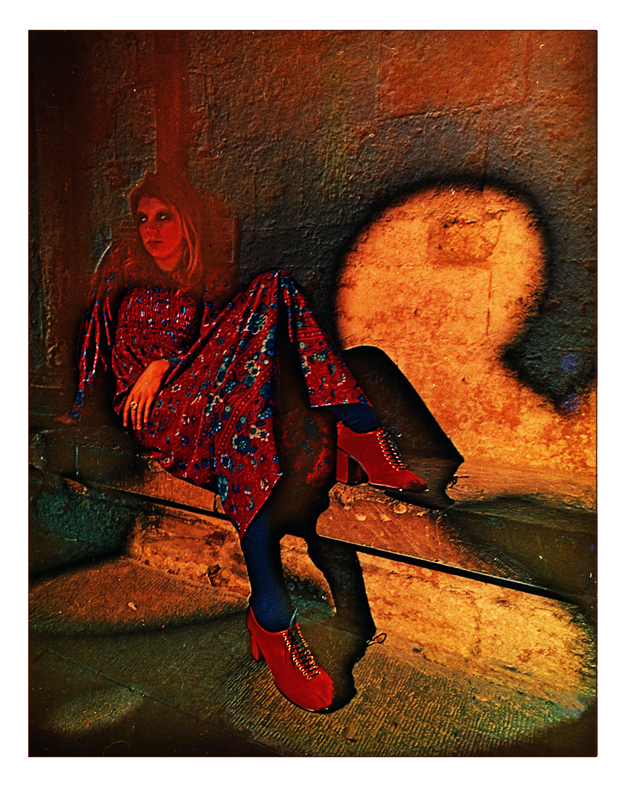
I would consider your image heavily 'edited' and not answer in particular to the criterion of 'immediacy' that you purport to be essential. I don't blame you for it; by no means, but I do find it remarkable and frankly quite refreshing and comforting that you seem to happily break your own doctrine.
I understand that, and I could comment in either of two ways.the only editing was a sabattier effect
(cf. @chuckroast's argument above - you were inherently not in control).
+100But the lack of doing cannot be mistaken for the lack of an effect.
Wouldn't you want different standards based on purpose? For example news, documentary and scientific vs. Portrait and fine art.
You might say that some forms of art, such as sculpture, are edited. Chipping away at a block of marble is in fact editing.
If you, or anyone else would do so, I'm sure virtually everyone on this forum would quality the editing as 'extensive'.
All this analysis is a bit beyond me, I just press the shutter.
It is the intentionally of the artistic manipulation or act that makes the work the artist's, not the machine's.
immediacy
Deciding when to press the shutter button is a form of editing.

| Photrio.com contains affiliate links to products. We may receive a commission for purchases made through these links. To read our full affiliate disclosure statement please click Here. |
PHOTRIO PARTNERS EQUALLY FUNDING OUR COMMUNITY:  |
