• Welcome to Photrio!
    Registration is fast and free. Join today to unlock search, see fewer ads, and access all forum features.
    Click here to sign up

How many print do you print in a session?

Cigar again

H
Cigar again

  • 0
  • 0
  • 11
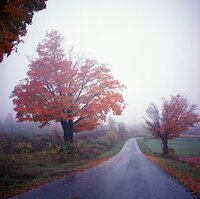
Rainy Day Trees

A
Rainy Day Trees

  • 7
  • 1
  • 108

Recent Classifieds

Forum statistics

Threads
203,160
Messages
2,850,738
Members
101,705
Latest member
kyuut
Recent bookmarks
3
You know, the (there was a url link here which no longer exists) is just about to close, Matt. Still time to sign up before tomorrow. You wouldn't have to cover the fridge with those 500 prints. A single well-crafted one would do just fine.

:wink:

Ken

I've had poor luck in the Blind Print Exchange with not getting a print from someone, so I just keep it to my 24 prints (plus a couple extra) for the postcard exchange.

If two or three people don't come through with a postcard, I've still got 20 or so to enjoy.

I do like face to face, draw a name, exchanges though. They are outside APUG.
 
I standarize on six sheet per session. I have six slots in my big archival washer, six big drying screens, and it's a pretty intense day printing
an average of three different negative of two prints each, which might or might not pass muster after I tone them and see them fully dry.
I rarely print two exactly the same, nor do I wish to, although if it's a home run I might re-print it in a later session. It's just as much work
to make little itty bitty prints from 35mm as to make largish prints from 8x10 film, maybe worse, because you need to clean the neg far
more carefully to begin with. 120 film is the worst, but that's what will be involved in my next session. Paper is expensive, museum board is
worse, and I've already got a foot-thick pile waiting to be drymounted.
 
I like this thread, it's nice to see how passionate everybody is in their own way. some crazy stories.
 
Equally, you can, with practice, judge projection density of a negative on a white printing easel in the dark with a standard safelight running for comparison and calibration. Don't say you can't because you can. I learned to make hundreds of perfect prints in a row with no misses by learning what the projected neg should look like on the easel to result in a perfect positive in the light. I kept my timer at five seconds, and completely worked the exposure with the aperture, until the image on the easel looked correct. If you genuinely try to learn this, you will be surprised. You need to be a quick burner and dodger, but that's a separate problem.

Once you get basic exposure out of the way, then you can worry about the real problems.

Any tips on this? I just began printing and I'd love to jump in
 
I agree with this line of thought.

I can judge on easel the density that is required, 20 x24 down to 8x10- I will not say that the first print will be exact but it certainly will be close.
Also you can pre-determine starting filter by looking at your days work on a light box and by having a known negative you can judge the contrast difference and with some reliability have the right contrast in your first print.

I always nail my density first before nudging contrast around.
Also I always do a full print never step off tests, which I think are a waste of time.

Read on Michael Smiths website his outflanking method of printing- I have used this method since day one.
Also it one should play with extreme density shifts on contact sheets to judge how your negatives print. Sometimes a really dark OR light print is correct for a certain scene.

Exactly what jnanian said: somewhere between 1500 prints a day (really, I did that in a commercial setting one summer, one neg = one 8x10 at a time) and none. When it was none, it wasn't because I couldn't make a good print the first time most times--it was because I couldn't decide what I wanted the good print to look like. In a normal situation, though, clicking through familiar territory like portraits or weddings or commercial shots, then 200 prints in a half-day session is not all that difficult. I'm talking B&W in trays, not machine work.

If you are looking for a strategy, getting a good competent print should not be an issue. The first studio I worked in, in high school, the boss stressed making every print look like every other. That requires control of the whole process--no loose cannons. Once you have that, it just becomes decision making. Just like how driving shouldn't be difficult; you just get in and do it. For me, that meant standardizing my exposure process based on a trick I learned from the first studio's owner: you can easily judge print darkness of a positive under a controlled light, right? No problem. Equally, you can, with practice, judge projection density of a negative on a white printing easel in the dark with a standard safelight running for comparison and calibration. Don't say you can't because you can. I learned to make hundreds of perfect prints in a row with no misses by learning what the projected neg should look like on the easel to result in a perfect positive in the light. I kept my timer at five seconds, and completely worked the exposure with the aperture, until the image on the easel looked correct. If you genuinely try to learn this, you will be surprised. You need to be a quick burner and dodger, but that's a separate problem.

Once you get basic exposure out of the way, then you can worry about the real problems.
 
I print around dozen within five hours. But they are not the best prints.
I feel what my limit has to be three hours and five prints.
 
Photrio.com contains affiliate links to products. We may receive a commission for purchases made through these links.
To read our full affiliate disclosure statement please click Here.

PHOTRIO PARTNERS EQUALLY FUNDING OUR COMMUNITY:


Ilford ADOX Freestyle Photographic Stearman Press Weldon Color Lab Blue Moon Camera & Machine
Top Bottom