• Welcome to Photrio!
    Registration is fast and free. Join today to unlock search, see fewer ads, and access all forum features.
    Click here to sign up

How many drops are in one milliliter?

Two Horses

A
Two Horses

  • 8
  • 2
  • 41
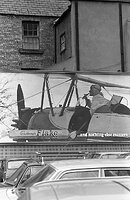
Billboard, Cork city 1977

H
Billboard, Cork city 1977

  • Tel
  • Mar 17, 2026
  • 1
  • 0
  • 33

Recent Classifieds

Forum statistics

Threads
202,802
Messages
2,845,710
Members
101,541
Latest member
ΦÆdon
Recent bookmarks
0

Curt

Member
Allowing Ads
Joined
Sep 22, 2005
Messages
4,618
Location
Pacific Nort
Format
Multi Format
How many drops are in one milliliter for the purpose of determining how many prints can be made from a 100 ml bottle for a "normal" Pt/Pd print?

Curt
 
How many drops are in one milliliter for the purpose of determining how many prints can be made from a 100 ml bottle for a "normal" Pt/Pd print?

Curt

The volume of a drop as i recall is dependent upon the specific gravity of the liquid and the geometry of the 'dropper'.

Glass eye droppers are reported to be less uniform from dropper to dropper compared to droppers made of plastic.

At any rate, if you are using a plastic dropper as sold by Bostick & Sullivan, the volume of the droplet will be approximately 0.05ml. That works out to about 20 drops per ml.
 
Last edited by a moderator:
The volume of a drop as i recall is dependent upon the specific gravity of the liquid and the geometry of the 'dropper'.

Glass eye droppers are reported to be less uniform from dropper to dropper compared to droppers made of plastic.

At any rate, if you are using a plastic dropper as sold by Bostick & Sullivan, the volume of the droplet will be approximately 0.05ml. That works out to about 20 drops per ml.

Don that's exactly what I found to be the answer, given the variables.
 
You'r wright there are to many variables. For this reason when I want to now the exact volume of a drop of the solutions to mix or spread I use a 2ml plastic graduated syringe (without it's needle) and count the drops till 1 ml.
 
Last edited by a moderator:
If your process requires precise sub-milliliter measurements, you might want to actually calibrate your dropper with the solution you are using.
 
If your process requires precise sub-milliliter measurements, you might want to actually calibrate your dropper with the solution you are using.

That's what micro-pipettes are used for. The disposable plastic pipettes are actually accurate enough for alt processes and aren't terribly expensive. They can be reused, as well.

Don
 
How many drops are in one milliliter for the purpose of determining how many prints can be made from a 100 ml bottle for a "normal" Pt/Pd print?

Curt
It depends on he viscosity of the liquid and the gwometry of the dropper, but I tested this once()yawn)and ended up with a number ranging from 12-20 drops for 1ml of distilled water.:munch:
 
I use glass pipettes calibrated in tenths of a ml. along with a fast release pump. I go by volume so the size of the drop isn't an issue. Syringes minus the needle could also work. I use a separate pipette for each solution so there is no contamination. I put the solutions into a shot glass and then use a syringe to withdraw the amount needed. I never lose count of the drops that way. (for pt/pd printing)

HOME
 
micro pipettes are awesome :smile:
 
"Drop" size is largely determined by the liquid's viscosity. If you add wetting agent you are going to get a lot more drops per mL than without. Thus, 'drop' volume is not standardized. - David Lyga
 
Metric drops or Imperial drops?

Seriously, though, I've found droppers to be too inconsistent to be an accurate way of measuring anything, personally. Small syringes are my tiny measurement devices of choice.
 
1 ml insulin syringes are available without needles. They are marked in "units" of insulin. 100 units=1ml. They are also available in 0.5ml in 1 unit (0.01ml) increments. Cheap and disposable.
 
I use 1.325 ml for an 11 x14
2.125 ml for an 12 x18
3 ml for a 14 x 20
I use eppendorph system to deliver....


I do not know how many drops it takes to fill these quantitys.... I highly recommend a measuring device like eppendorph...
 
Metric drops or Imperial drops?

Seriously, though, I've found droppers to be too inconsistent to be an accurate way of measuring anything, personally. Small syringes are my tiny measurement devices of choice.

Temperature and viscosity effect the drop size. That is why I recommend measuring with a graduate cylinder or a syringe.
 
Rule of thumb for Pt/Pd is 20 drops/ml. However, a drop of ferric oxalate is less than a drop of Pt/Pd. I found that out with my first four bottles from Bostick and Sullivan. I was into my fourth bottle of Pd and still had ferric oxalate left in my third bottle. Since then, I have done my measurement with a pipette. It is a lot less tedious for large prints too. Sometimes I lost count of the drops. I can't say there was anything wrong with those first prints though, so perhaps supreme precision is not necessary.
 
Last edited:
"Drop" size is largely determined by the liquid's viscosity. If you add wetting agent you are going to get a lot more drops per mL than without. Thus, 'drop' volume is not standardized. - David Lyga

In the case of aqueous solutions, droplet size is determined by the surface tension, not the viscosity. Wetting agents (surfactants) reduce the surface tension of water. The viscosity is unchanged.
 
The standard in hospitals is 20 drops per ml.

It depends on viscosity and surface tension. That would not work for lymph fluid nor blood. Also aqueous solutions with very low or high surface tension or viscous solutions cannot be accurately measured that way. Use a graduated cylinder, syringe, pipette, ...
 
It depends on viscosity and surface tension. That would not work for lymph fluid nor blood. Also aqueous solutions with very low or high surface tension or viscous solutions cannot be accurately measured that way. Use a graduated cylinder, syringe, pipette, ...

It's used as a crude way to work out the speed an intravenous drip is running, usually with normal saline etc. Anything more critical goes through an infusion pump and they are very accurate but blood can be damaged by infusion pumps so is run under gravity or by putting pressure directly on the bag.
 
My Dad's old late 1930's Remington's Practice of Pharmacy stated that a standard glass medicine dropper would deliver 1 cc of water with 19 drops. As others have noted this is glass with water, not plastic with HC-110 concentrate. etc.
 
Since this discussion of drops keeps reappearing...

The number of drops per ml will vary depending on the liquid (viscosity, surface tension, etc.), however for a given liquid and a given dispenser, the repeatability is more accurate than needed for many photographic purposes and can be quite convenient. I use small graduated syringes to measure my developer concentrates, but am really happy with the convenience of a glass eyedropper for Photo Flo and small amounts of bleach solutions. I simply took my eyedropper of choice and dripped (or dropped?) out 5ml into a narrow graduate a few times, counting drops. Results were within a drop or two every time for 5ml; a small enough margin of error for the things I measure in drops. Did that once for each solution (different numbers for different solutions...), made a few notes and sped things up a bit.

Best,

Doremus
 
Since this discussion of drops keeps reappearing...

The number of drops per ml will vary depending on the liquid (viscosity, surface tension, etc.),

If you read the link in post 19, you will find that the word viscosity does not appear anywhere in the description of how droplets form.
 
Photrio.com contains affiliate links to products. We may receive a commission for purchases made through these links.
To read our full affiliate disclosure statement please click Here.

PHOTRIO PARTNERS EQUALLY FUNDING OUR COMMUNITY:



Ilford ADOX Freestyle Photographic Stearman Press Weldon Color Lab Blue Moon Camera & Machine
Top Bottom