

• Welcome to Photrio!
    Registration is fast and free. Join today to unlock search, see fewer ads, and access all forum features.
    Click here to sign up

How do you store negatives?

Forum statistics

Threads
203,139
Messages
2,850,454
Members
101,692
Latest member
eviosl
Recent bookmarks
1

Odot

Member
Allowing Ads
Joined
Oct 11, 2016
Messages
257
Location
Berlin
Format
Multi Format
I want to store them in an open filing office folder such as this one so i wonder if it will have a bad effect on the negatives? The folders will be in a shelf and not anywhere near direct sunlight and whatnot.

I have them stored in this peregamine (paper-like) solution:
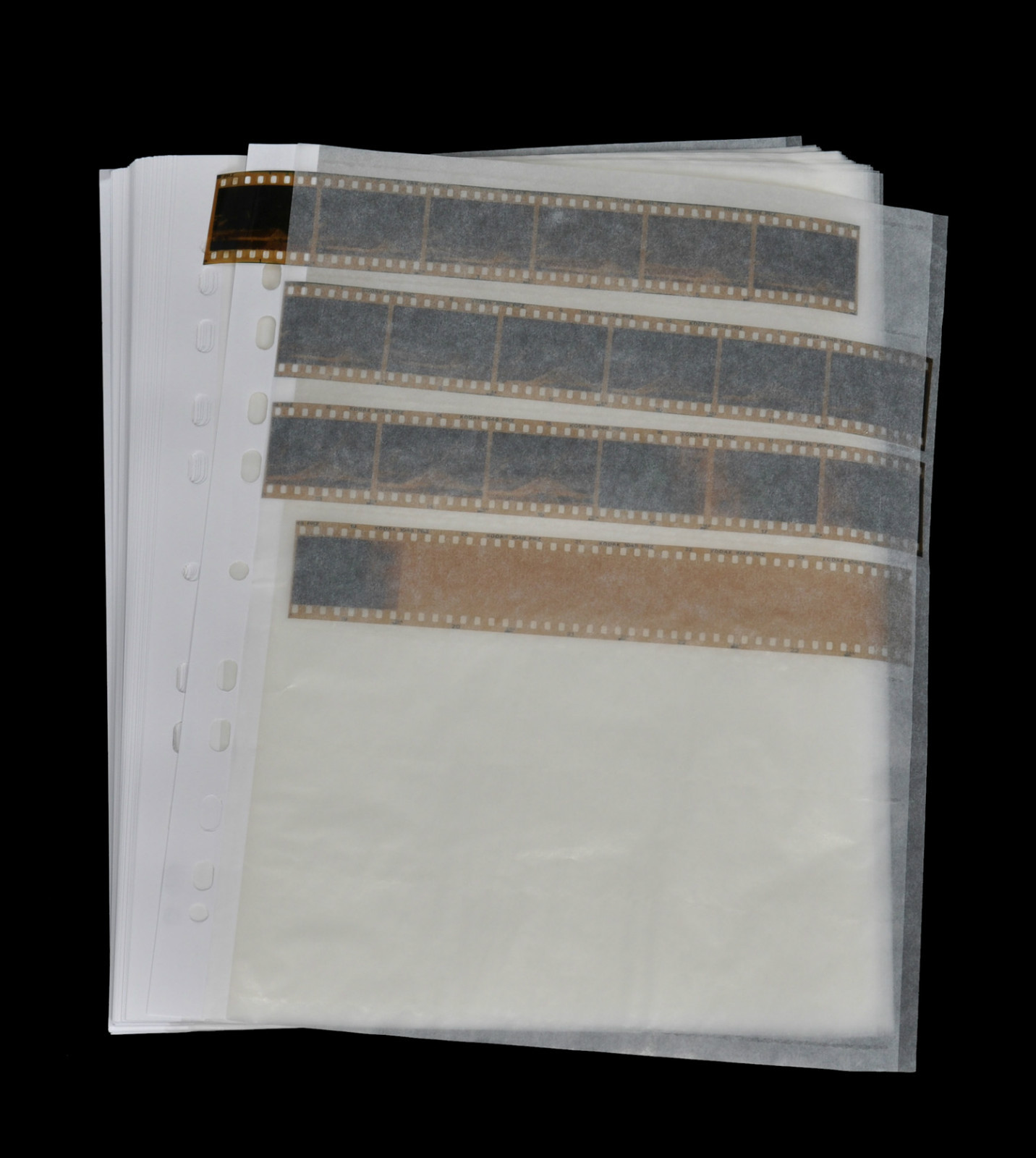
s-l1600.jpg


and want to add structure with this

ordner-leitz-1080-din-a4-180-oeffnung-80mm-_3.jpg
 
Last edited:
glassines in a metal file box.
 
I use a clam shell binder that is made out of rag and seals pretty tight from the environment.

1.5-BinderBox.jpg


http://www.printfile.com/black-portfolio-box-binder2.aspx

This means that no dust gets into the negative sleeves, and that any changes in humidity and temperature are slow, so that I don't get a bunch of condensation on my film.

They are not inexpensive, but they are nice because you can stack them on top of each other.
 
glassines in a metal file box.

+1

I would also add using a archival cardboard boxes. Film can stick to plastic sleeves and be hard to retrieve. The plastic can also leave marks. Glassine sleeves and envelops have be recommended for archival storage for decades.
 
There is a drawer in my kitchen.............
 
Where do you get your glassine? I've looked before and not been able to come up with any.
 
I've tried many systems. I've ended up with a simple one. I cut unbufferd archival paper into strips which fold in the middle. The neg strip goes in there. I have about 7 per roll of these. Those seven go into an envelope, which goes into a archival box. Similar to this (except I don't put the negs into plastic, I use the archival paper folds):

http://www.gaylord.com/Photo,-Print-&-Art/Gaylord-Archival®-Tan-Barrier-Board-Flip-Top-Negative-Storage-Kit/p/HYB02430

One box takes 40 rolls of 135.

I used to use glassine or other PP "slide-in" sheets before. They scratched APX100. Not telegraph line scratches, but very very fine scratches on the non-emulsion side. I realized this when I switched to a condenser enlarger. On the diffuser they didn't show up. That was it for me and the slide-in-out systems.

Andi
 
Last edited:
Shoe box. Top of the closet. Proven archival...
 
Where do you get your glassine? I've looked before and not been able to come up with any.

bought a couple boxes of 10, 000 many years ago before they went scarce and expensive.

id like to buy more but b&h prices went through the roof.

it doesnt make any sense why, you still get your stamps and egg rolls in them!

.
 
I use PrintFile pages some in binders, the more recent ones in a case to protect from dust.
 
I use PrintFile pages in Besfile binders. They're a plastic binder kinda like Thomas' that can be stacked. They do start to fall apart at the edges after being opened and closed a few hundred times, though.
 
Negafile, then in a huge set of flat files (Blueprint drawers) Whirlpool may have sent my Job overseas but I got their Damn Drawers! :laugh::laugh::laugh:.
Mike
 
mind blown.

thats just what ill do, haha

thanks you guys
 
hi odot

it depends what film it is... 35mm film and 120 film i typically store in print file sleeves.
some make their way to 3 ring binders some are in piles in various places.
4x5 film used to go in the same sort of print file sleeves ( 4-up ) but stopped using that filing system
and put them all in glassine sleeves in small top open thumb tabbed envelopes stored in archival shoe boxes
i don't make contact sheets, but some contact prints of 4x5 negatives and they are stored in shoe boxes the same way ( less the glassine )
( envelopes and glassine and shoe boxes bought at a mail-order library / archival supply place )
or they are just in piles of film, or in empty film boxes ready to be sorted out.
paper negatives are stored in a cheap chip board-self assembled free standing 4drawer set ( craft shop, 50$ assembles in 1/2 hour )
its full and unfortunately i have too many left to file away. retina prints and sun prints turn grey so i don't need to worry about them.
xerox negatives and waxed charcoal rubbings turned negative are in a pile too ...

have fun!
 
35mm and 120 go in properly sized plastic negative sleeves - sheet film goes 8.5x11 page protectors. Those go into regular file folders and are stored in a 100-year old metal file cabinet. I have 50-year old negatives that are in great shape.
 
and want to add structure with this

ordner-leitz-1080-din-a4-180-oeffnung-80mm-_3.jpg

I just want to add that the manufacturer of these binders is in no way related to the camera manufacturer of the same name.
But the former is older and the Leitz binder became a generic designation in Germany, what can't be said about that camera...
 
and want to add structure with this

ordner-leitz-1080-din-a4-180-oeffnung-80mm-_3.jpg

The problem with vertical storage is that the negative sheets are too heavy for the binders: eventually the holes will fail and the sheets will fall off the binders. If you store them horizontally then the binders will not be square and will do the usual mess that happens when you pile up office binders. You can restrain yourself to thin binders (like those that Paterson used to make) or use those clamshell binders that Thomas showed you - and preferably store them horizontally rather than vertically, so the sheets don't get damaged. I buy mine in Germany from this company: https://archivbox.com/photographie/boxen-kassetten/photoboxen-reflex.html - they also sell glassine negative sheets, on another page. Fairly expensive, but my recurring negative problems have disappeared since I started using this stuff instead of office folders, so I consider it's money well spent.
 
I use PrintFile pages in Besfile binders. They're a plastic binder kinda like Thomas' that can be stacked. They do start to fall apart at the edges after being opened and closed a few hundred times, though.
My method also.
 
The problem with vertical storage is that the negative sheets are too heavy for the binders: eventually the holes will fail and the sheets will fall off the binders. If you store them horizontally then the binders will not be square and will do the usual mess that happens when you pile up office binders. You can restrain yourself to thin binders (like those that Paterson used to make) or use those clamshell binders that Thomas showed you - and preferably store them horizontally rather than vertically, so the sheets don't get damaged. I buy mine in Germany from this company: https://archivbox.com/photographie/boxen-kassetten/photoboxen-reflex.html - they also sell glassine negative sheets, on another page. Fairly expensive, but my recurring negative problems have disappeared since I started using this stuff instead of office folders, so I consider it's money well spent.

Make yourself a rectangle from card-/foamboard, place it around the files and you got a binder that behaves quite as your boxes, thust does not lead to a mess when stacked horizontally.
 
I use Printfile pages and binders with slipcovers. They sit on a shelf just like books and the binders slide right out of their slipcovers. I used to buy ones made by Savage, but I guess they aren't made any more. Archival Methods has them now, but they ain't cheap!

https://www.archivalmethods.com/product/binders-slip-case-set

The biggest problem for me is the size of normal storage solutions. I use 6 frames by 7 strip pages for 35mm which are bigger than standard and they don't fit in most three ring binders that are sold to hold negatives.
 
The problem with vertical storage is that the negative sheets are too heavy for the binders: eventually the holes will fail and the sheets will fall off the binders.

The standard office binders have only 2 bolts, in the center. Binder with 4 bolts, evenly spaced will put less strain on the paper sheets.
A alternative can be adhesive rings strengthening the holes.
 
The standard office binders have only 2 bolts, in the center. Binder with 4 bolts, evenly spaced will put less strain on the paper sheets.
A alternative can be adhesive rings strengthening the holes.

Binders with 4 rings are undoubtedly better than those Leitzes, the Paterson / Panodia binders were made this way, but in my experience the negatives in their glassine sheets are still heavy enough to cause problems on the long term. Also in my experience, the adhesive rings don't age well, they always fail due to their poor glue, and the colour that develops around them over a few years makes me strongly suspect that they are not chemically safe - which makes them a major no-no for archiving. There may be better quality rings, but unless I have a very good reason to return to vertical storage I will keep doing without them.

Another incidental advantage of horizontal storage, that I discovered when I inherited my late father's old archives, is that it makes it vastly better to store those curled films that look like they'll never want to stay flat no matter what you do. Horizontally, they are a PITA but can be tamed by adding something flat and heavy (eg. a book) over them, and with (considerable) time they even seem to get used to being flat even without the weight. OTOH vertical storage is a never ending nightmare with those. I would never do it with LP's, but negative strips just seem to stay flat better on the long term, when stored horizontally.
 
Last edited:
Concerning these strenghthening rings, I use them for printed materials for far more then 30 years, I have not seen lateral glue diffusion, not even to the backside.
Likely archivists will protest against those rings, but they have to protest against those binders anyway...
 
35mm and 120 go in properly sized plastic negative sleeves - sheet film goes 8.5x11 page protectors. Those go into regular file folders and are stored in a 100-year old metal file cabinet. I have 50-year old negatives that are in great shape.
are those 50 year old negatives black and white negatives?
I wonder if color negatives would last that long in any archival method.
 
Photrio.com contains affiliate links to products. We may receive a commission for purchases made through these links.
To read our full affiliate disclosure statement please click Here.

PHOTRIO PARTNERS EQUALLY FUNDING OUR COMMUNITY:


Ilford ADOX Freestyle Photographic Stearman Press Weldon Color Lab Blue Moon Camera & Machine
Top Bottom
