
• Welcome to Photrio!
    Registration is fast and free. Join today to unlock search, see fewer ads, and access all forum features.
    Click here to sign up

How Dark does a darkroom have to be?

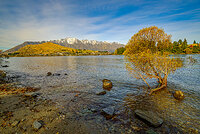
Afternoon Calm

D
Afternoon Calm

  • 3
  • 0
  • 56
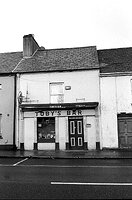
Toby's Bar

H
Toby's Bar

  • Tel
  • Apr 25, 2026
  • 1
  • 0
  • 70

Recent Classifieds

Forum statistics

Threads
203,502
Messages
2,855,659
Members
101,871
Latest member
bluefox
Recent bookmarks
0
I just finished painting the outside of my house and had to recover the darkroom windows. I took two heavy duty, industrial size black garbage bags, one closed in on the upper storm window jam, the other on the bottom, from the inside, between the sash and the storms. Then one held in by the upper sash jam and the lower sash, on the outside of the sash. Then I took some cardboard packaging from a refrigerator and cut it to size and stapled on each window.

Then I went to a fabric store and bought a a large piece of the heaviest, blackest material I could find and made a large, drap for over the doorway. Large enough for pleets to form when closed and to lay on the floor. Make sure the curtain rod is placed to one side far enough so you can push the curtain over far enough to open the door. Use molly bolts in the sheet rock if you cannot find the studs to hold the curtain rod.

The morning sun blasts my darkroom windows and I cannot see my hand inches infront of my face. Even after the scotch. Not in the morning though.

The fog tests should be used to test your safelight. Your darkroom should be pitch black.
 
Ed wrote:"My Gossen Ultra-Pro is a sensitive meter ... reading to a maximum of 8 hours exposure at f/0.7 with a film speed of 800,000 (DIN 60)."

err... that's 16.8 million times (24 stops) more sensitive than the Lunasix, isn't it?

Best,
Helen
 
Here's a tip that I came up with when I got tired of waiting until 10:00 PM to print during the Summertime.

I block my windows with Black foamcore mount boards. They are lightweight, opaque, easy to cut to size with a razor blade and quick to put up for a printing session and removed afterwards. I glued some felt weatherstripping around the edges to block any light coming around the sides. It works Great!
 
Helen B said:
Ed wrote:"My Gossen Ultra-Pro is a sensitive meter ... reading to a maximum of 8 hours exposure at f/0.7 with a film speed of 800,000 (DIN 60)."
err... that's 16.8 million times (24 stops) more sensitive than the Lunasix, isn't t?
Helen

I Don't know. What is the range of the Lunasix? I don't have any information about it.

On consideration... what I've written may be misleading - to "cut finely", The "Measuring Range" (Ambient) as stated in the Gossen manual is : EV -4 to EV 18 at 21 DIN/100 ISO.

EV -4 does not indicate much light... and, being out of range, I have less light than that.
 
I "can't see a damn thing in here" dark.
At this time of year it is a question of stepping out of the night which is fifty below and into the din and glare( courtesy of Photrio) Just keep an eye out for the guy at the table who says: "I guess I'll make it a spread misere" He is certainly dangerous

Andrew, this advice may puzzle those who are not Canucks of Scottish origin:D

pentaxuser
 
After a few hours making my first prints, I am more relaxed now. On two occasions I have had mishaps with no impact on the prints. I left the door slightly ajar, and there was a lot of light coming in.at the bottom, and I hit the wrong button on the timer I use on my tablet and it glared full white for a couple of seconds. No impact. Mistakes are rapidly diminishing as I get used to this. Next time I try will be during the day.
 
At this time of year it is a question of stepping out of the night which is fifty below and into the din and glare( courtesy of Photrio) Just keep an eye out for the guy at the table who says: "I guess I'll make it a spread misere" He is certainly dangerous

Andrew, this advice may puzzle those who are not Canucks of Scottish origin:D

pentaxuser

I think most Canadians know the story of Dangerous Dan McGrew.
 
I think most Canadians know the story of Dangerous Dan McGrew.
My Dad was able to recite the whole poem with actions where appropriate as a bedtime story for me. He was a fan of Robert Service who was a fellow Scot and, as it happened, of Solo Whist - Dan's game :D
 
Seeing responses anywhere form total darkness through don't worry about it too much to "my darkroom would make purist shudder"... there is really only one answer: lights in the darkroom are only the once considered safe for the process / materials and none other. So if daylight is, even theoretically, harmful, no amount of same should be evident. Everything else is just plain crap shoot and taking chances. One can only predict outcome, or assess results, if every aspect of the process is fully controlled. Allowing any amount of daylight to be seen in a darkroom is no different than trying development temperature couple of degrees off specified one, and you will surely get responses from those who have done it and had no issues with results.
 
Well, I have been using my darkroom set up for a few weeks now., and I don't think it is 100% light free, but it is very close, and see no issues with the prints, which tells me there is some latitude with photo sensitive paper. Will not over worry it now. Thanks.
 
Consider that no light is truly safe unless it is so low that it falls under the threshold where the latent image degrades at the rate the light forms a latent image.

What makes safelights effective, and darkrooms effectively safe, is that you keep an eye on the time which the sensitive material is exposed to the light.

For example, I evaluated how long TMAX400 can be exposed to the infrared emitter of my viewer and found that it's safe for about 15 minutes. That wasn't long enough for my taste so I put a neutral density patch of developed film over the emitter to cut it further making it safe for an hour.

I'm also comforted with the thought of how long the exposure would have to be if I setup a camera to take a picture inside my darkroom. It would take forever to get an image.

Once I was a little scared when a roll of film dropped onto the floor within striking distance of the faint light that comes through under the door and around the curtains. You would have to worry about that. But in this accident, there wasn't any significant image on that film.
 
Consider that no light is truly safe unless it is so low that it falls under the threshold where the latent image degrades at the rate the light forms a latent image.

What makes safelights effective, and darkrooms effectively safe, is that you keep an eye on the time which the sensitive material is exposed to the light.

For example, I evaluated how long TMAX400 can be exposed to the infrared emitter of my viewer and found that it's safe for about 15 minutes. That wasn't long enough for my taste so I put a neutral density patch of developed film over the emitter to cut it further making it safe for an hour.

I'm also comforted with the thought of how long the exposure would have to be if I setup a camera to take a picture inside my darkroom. It would take forever to get an image.

Once I was a little scared when a roll of film dropped onto the floor within striking distance of the faint light that comes through under the door and around the curtains. You would have to worry about that. But in this accident, there wasn't any significant image on that film.

I thought the same about long exposures.

How many times have I exposed a shot on the wrong settings (i.e. f/16 1/500) moving from outdoors to dim indoors and nothing showed up on film after development. I try my hardest to get every leak. For film I'm always slightly wary but for prints I'm not as worried.
 
It's easy enough to place 1/4" window insulating foam around a door frame to block out light you see around the frame. Also, taping a piece of blackout plastic to the inside bottom of the door, longer than the length to the floor, and tucking a rolled up towel against it, will block light from the bottom and bottom sides of the frame. The more light you keep out, the better your contrast and whites.
 
Photrio.com contains affiliate links to products. We may receive a commission for purchases made through these links.
To read our full affiliate disclosure statement please click Here.

PHOTRIO PARTNERS EQUALLY FUNDING OUR COMMUNITY:


Ilford ADOX Freestyle Photographic Stearman Press Weldon Color Lab Blue Moon Camera & Machine
Top Bottom
