Hooked corners are a sign of blade flex.
The farther the blade projects from it's holder, the more it will flex.
The thinner the blade is, the more it will flex.
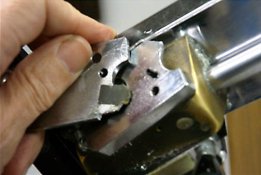
If the blade holder cannot clamp the blade firmly ...at it's nose... the blade will flex.
If the blades bevel steers the blade outward away from the holder, it will flex.
Some things to try...
Try making a light shallow cut first; and then a full depth final cut. The shallow cut doesn't flex the blade as much and makes a "channel" for the final cut.
The C&H 1200SE single edge blade steers the cut inward toward the holder rather than outward away from the holder, reducing blade flutter.
Test the blade clamp by trying to deflect the blade. If it wiggles, shim the clamp. I stuck a piece of thin abrasive film into the clamp as a shim years ago. It's still there and eliminated that source of blade flex.
Don't cut too deep. The farther out the blade extends the more it flexes. If you're pushing down too hard on the bar you could be reverse flexing the cutter rail and lifting it off of the matboard, which lifts the blade out of the cut. This makes you think that the blade needs more depth which in turn means more blade flex.
Watch your speed. "Slashing" at start-up can wildly steer the blade. Steady does it...
Make certain the cutter head bearings don't wobble (unlikely, but verify to be sure...)
C&H cutters are good machines. With a bit of tweaking and some practice you'll be glad you have it.
Reinhold
www.classicBWphoto.com