
• Welcome to Photrio!
    Registration is fast and free. Join today to unlock search, see fewer ads, and access all forum features.
    Click here to sign up

Home Made B&W Developers.

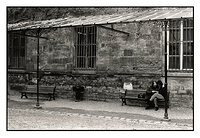
Amour - Paris

A
Amour - Paris

  • 0
  • 0
  • 24
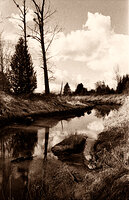
Bend in the river

H
Bend in the river

  • 1
  • 0
  • 42

Recent Classifieds

Forum statistics

Threads
203,229
Messages
2,851,786
Members
101,737
Latest member
Altamira
Recent bookmarks
0
I acquired several scales (analog type) however, have not stocked any chemicals. My concern is lack of availability locally of product, especially color developers, etc. Also, the One Hour operations are rather careless with the negatives.

Unfortunately, as it turns out, the home brew formulas (color) may not be the best way to go. On the other hand, maybe it will end up being to only way.

As far as saving money, that would be nice but not my primary motive.

Note! Darkroom is not quite set up yet, hoping to be operational soon. Really miss it.
 
Agfa Ansco published two versions of Agfa 103, they revised the formula in 1941 reducing the Sulphite to 45g/litre (from 67.8), they recommended it as a -a-er deve36-er, rather than the previous use as a Universal film & paper developer.

It's very similar to ID-20 results would be comparable

Ian
 
Many years ago I decided that mixing chemistry it was a dangerous way to divert my attention away from actually taking photographs. I am easily side tracked and, since I know my own weakness, I avoided mixing my own. For a short while.
One day I ordered some paper and film from a 'certain supplier' - I won't say who because this was about 10 years ago and I know they have improved dramatically - and they mixed the order up and sent me a box of chemistry by mistake. Sulphite, Carbonate and Hydroquinone, mostly - but BIG quantities. I offered to return it but the value was much the same as the courier costs, so they said to keep it as compensation for the mix-up.

So, what to do with all this stuff? I bought some Metol and mixed a few simple developers - then got hooked...
It is very addictive. I've mixed gallons of DK-50, which is a great developer and pretty much unobtainable in the UK, ID-3 (Very soft, like D23), lots of various print developers. It is a great way to explore lots of developers, once you have the basic chemicals them you have about two dozen developer choices available at quite short notice, but it can keep you so busy you have no time left to take any pictures :wink:
 
Last edited by a moderator:
I regularly mix and use...

D-76 (and variations on the theme), D-23 and ID-68 for films and D-72 for paper.

Lately, I like Konica SD-28 for films.
 
Everything I use is store bought, but I would not be adverse to trying it, if I had more space to store and use chemistry.

The additional thing I find interesting about this thread is that with one exception only, every person posting is either a subscriber or a moderator (Edit: or an advertiser) here on APUG.

Matt
 
What is the formula for Ansco 103 John?
********
I was going to tell you to ask Ian because he has the two formulae; in scrolling down, I see he is right on the ball. What I do is to halve the potassium bromide and add 1 or 2% benzotriazole. I like cold blacks.
 
I regularly mix and use...

D-76 (and variations on the theme), D-23 and ID-68 for films and D-72 for paper.

Lately, I like Konica SD-28 for films.
I would be interested to know what your development times are for Konica SD-28 Brad. Fomadon-P is made to the Kodak D-76d formula and the development times are significantly longer than those for standard D-76/ID-11. Axford and Kendall of Ilford Ltd found that 0.25 grams of potassium bromide per litre of stock D-76d (also known as Ilford ID-166) was the practical limit before a loss of emulsion speed occurred. Konica SD-28 contains 0.4 gram of potassium bromide per litre.
D-76d with 0.25 gram of potassium bromide is called Kodak SD-21.
 
********
I was going to tell you to ask Ian because he has the two formulae; in scrolling down, I see he is right on the ball. What I do is to halve the potassium bromide and add 1 or 2% benzotriazole. I like cold blacks.
How many millilitres of benzotriazole solution John? Sorry to keep asking you these questions.
You might as well post your formula here.:D
 
Look at ID-20, ID-62 & ID-78 :D

ID-20 was sold as a PQ version early 60's but there were image colour problems so it was re-formulated as ID-62, take away the Benzotriazole & put back the Bromide & warm tone ID-78.

Ian
 
Film: I mix currently D76 and occasionally D23.
Paper: I bought most of the ingredients for the Ansco 130 and will mix my own soon. Currently I buy Dektol but I would like to have the formula to mix my own. Can some one post it? Thanks
Reasons: it is cheap and you don't depend as much on the ready made products that manufacturers may or may not sell in stores.
 
Film: I mix currently D76 and occasionally D23.
Paper: I bought most of the ingredients for the Ansco 130 and will mix my own soon. Currently I buy Dektol but I would like to have the formula to mix my own. Can some one post it? Thanks
Reasons: it is cheap and you don't depend as much on the ready made products that manufacturers may or may not sell in stores.
I think that the Kodak D-72 formula is the closest to Dektol.

Water at about 50*C = 750ml
Elon developing agent = 3.1 grams
Sodium sulphite, anhydrous = 45 grams
Hydroquinone = 12 grams
Sodium carbonate, monohydrate = 80 grams
Potassium bromide = 1.9 grams
Add more water to make 1 litre of stock solution.
 
I am curious to know what you make and why you do it.

Nothing on a regular basis, but I do mix for special needs. I've done D-23, D-25, D-76 and DK-50 a few times; Ansco 130, until the Formulary came out with BW-65. And I've mixed a few batches of black and white silver bleach for reversal processing.

I keep most of the chemicals on hand for those times when I feel like playing. :smile:

Ed
 
This is what I have on Ansco 103

Cold blue-black on cold tone papers

STOCK
Water 125 F . . . . . . . . . 750.0 ml
Metol . . . . . . . . . . . . . . 3.5 grams
Sodium Sulfite dess . . . . . 45.0 grams
Hydroquinone . . . . . . . . . 11.5 grams
Sodium Carbonate mono . . 78.0 grams / 67 anhyd
Potassium Bromide . . . . . . 1.2 grams
Water to . . . . . . . . . . . . 1.0 liter

contrasty if used straight

Dilute 1 part stock solution with 2 parts water.

Normal development time 1 to 1 1/2 minutes.
 
After alot of playing around I've settled on Pyro, D23, and FG37 for film.

For papers I'm like experimenting with things. Really like Edwal 111, Dupont 58D.
 
For films I mix my own Pyrocat - HD
For Azo/Lodima I mix Michael Smith's Amidol formula.

I purchased the raw materials to mix Dupont 58D based on some of Randy Libersky's posts, but have yet to actually mix up a batch. I've acquired some old papers that I expect to be fogged and one of these wintery days, I'll mix up some 58D and have some fun.
 
Of course SD-28 takes us back full circle as it'd D76d with a pinch of Bromide :D

Ian

Indeed. :smile:


I would be interested to know what your development times are for Konica SD-28 Brad. Fomadon-P is made to the Kodak D-76d formula and the development times are significantly longer than those for standard D-76/ID-11. Axford and Kendall of Ilford Ltd found that 0.25 grams of potassium bromide per litre of stock D-76d (also known as Ilford ID-166) was the practical limit before a loss of emulsion speed occurred. Konica SD-28 contains 0.4 gram of potassium bromide per litre.
D-76d with 0.25 gram of potassium bromide is called Kodak SD-21.

That's very interesting. I have noticed longer development is necessary compared to the vanilla flavor of D76/ID-11 but, I can't say I've noticed a drastic loss of speed. I don't have very much data however - I've only recently taken up SD-28. I don't have my note book at hand but, if memory serves, where I would normally rate 320TXP at EI-250 and give it 7-1/2 ~ 8 minutes in D76 (1+1), I'll rate it at EI 200 and give it 10-12 minutes or so in SD-28 (1:1).

I have actually been giving much thought recently to the sulfite problem....but, perhaps that is a topic for another thread. :smile:
 
Agfa's version of D76, Agfa 19 , also uses a pinch of Bromide 0.5/1g in the developer, but these developers were really designed for replenishment where the bromide & iodide level builds up anyway, so in this case and SD-28 the bromide is a bit like a developer starter to pre-season it.

Ian
 
Agfa's version of D76, Agfa 19 , also uses a pinch of Bromide 0.5/1g in the developer, but these developers were really designed for replenishment where the bromide & iodide level builds up anyway, so in this case and SD-28 the bromide is a bit like a developer starter to pre-season it.

Ian

...exactly what I was thinking....no need to waste a roll or two to season the tank....but, then, I'm using it one shot in a jobo...so...I'm up in the night anyway.
 
Agfa 103 Revised Formula (1941)

This is the 1941 Revised formula for Agfa Ansco 103

This is what I have on Ansco 103

Cold blue-black on cold tone papers

STOCK
Water 125 F . . . . . . . . . 750.0 ml
Metol . . . . . . . . . . . . . . 3.5 grams
Sodium Sulfite dess . . . . . 45.0 grams
Hydroquinone . . . . . . . . . 11.5 grams
Sodium Carbonate mono . . 78.0 grams / 67 anhyd
Potassium Bromide . . . . . . 1.2 grams
Water to . . . . . . . . . . . . 1.0 liter

contrasty if used straight

Dilute 1 part stock solution with 2 parts water.

Normal development time 1 to 1 1/2 minutes.

The original version used 57 grams of Sodium Sulphite, the developer was once available pre-packed as a powder developer.

Agfa never recommended it used full strength, either 1+2 as above or 1+4 for longer development times or softer contrast, with dev times of 1½ - 3 minutes @ 20°C

Ian
 
I mix up PC-TEA for myself and a friend. Works out cheaper than buying commercial developers here, and has the added bonus of long concentrate life. Both of us are more than happy with the results we get from a variety of films.
 
The additional thing I find interesting about this thread is that with one exception only, every person posting is either a subscriber or a moderator (Edit: or an advertiser) here on APUG.

Matt

Interesting observation, although I'm not quite sure what to conclude from it!
 
I'd guess that's because it needs a high level of commitment and knowledge of photography before you start making up developers etcfrom raw chemicals, and we are more likely to subscribe & support such a valuable resource like APYG.

That same commitment is sort by manufacturers & suppliers whichis why so many important companies are prepared to support APUG with sponsorship etc.

Ian
 
Photrio.com contains affiliate links to products. We may receive a commission for purchases made through these links.
To read our full affiliate disclosure statement please click Here.

PHOTRIO PARTNERS EQUALLY FUNDING OUR COMMUNITY:


Ilford ADOX Freestyle Photographic Stearman Press Weldon Color Lab Blue Moon Camera & Machine
Top Bottom
