

-
Welcome to Photrio!Registration is fast and free. Join today to unlock search, see fewer ads, and access all forum features.Click here to sign up
You are using an out of date browser. It may not display this or other websites correctly.
You should upgrade or use an alternative browser.
You should upgrade or use an alternative browser.
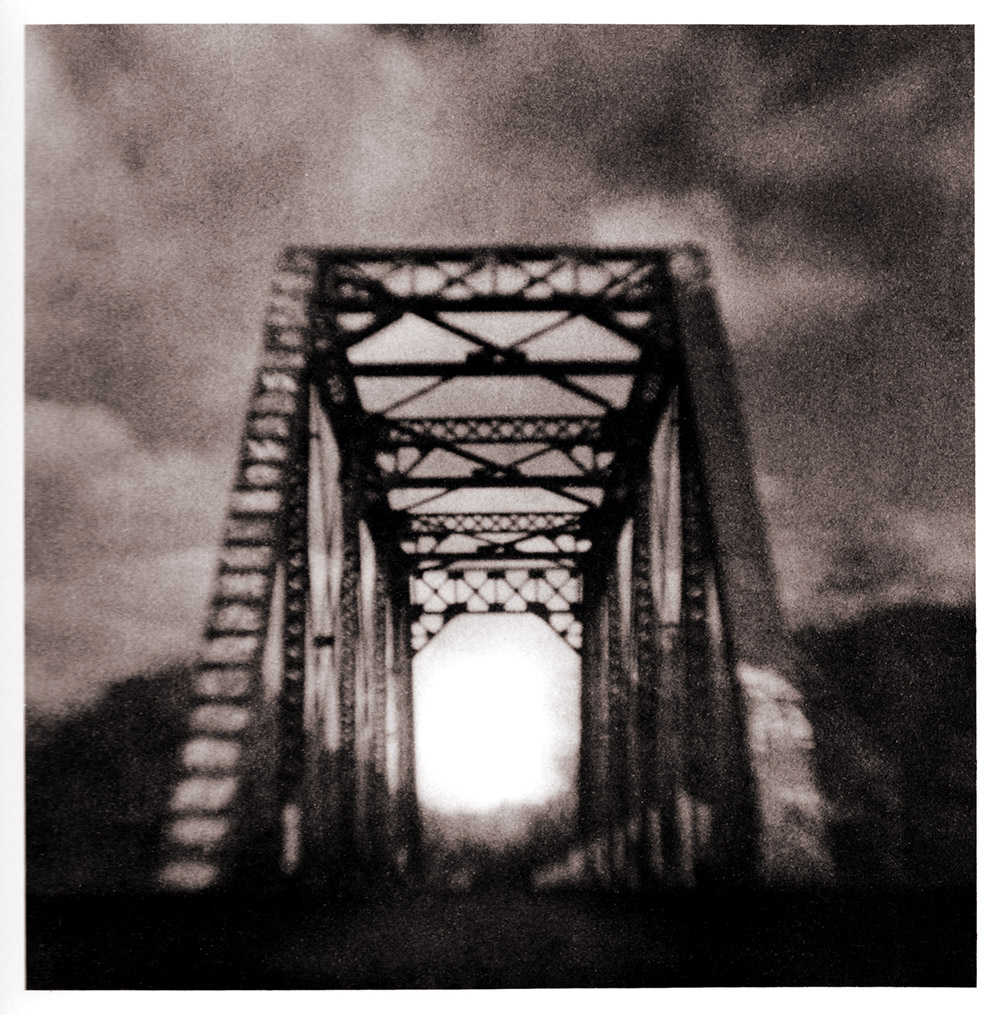
Hiw did masahisa fukase achieve this effect?
-
A
- Thread starter Manuel Madeira
- Start date
Recent Classifieds
-
For Sale Hasselblad V Adapter To Linhof
- Started by Jessxi
-
Sold Niko28mm f3.5 PC-Nikkor
- Started by Rayt
-
Want to Buy Rapid Rectilinear lens for 8x10 or larger
- Started by blee1996
-
Free GONE French lens probably early XIXcentury
- Started by Gaston 012
-
Sold Ilford 4x5 FP4+ (Expired June 2023)
- Started by CreationBear
Forum statistics


Looks like an extreme enlargement, from a small portion of a negative, of a bird in flight.

Looks like an extreme enlargement, from a small portion of a negative, of a bird in flight.
More going on that that though - the grain looks "zoomed", somewhat like the look when you flip a lens element.
OP
OP
Wooow that looks cool, but what do you mean with flipping a lens element? Sorry im a newbie XDMore going on that that though - the grain looks "zoomed", somewhat like the look when you flip a lens element.
i was going to say cheap photocopy of extreme crop but as m carter says the grain itself has an odd zoomed effect in it.
the bird or whatever it is could have been drawn onto some texture screen print with a light pen too maybe?
the bird or whatever it is could have been drawn onto some texture screen print with a light pen too maybe?

I believe from his raven series. It looks like a heavily cropped, and out of focus perhaps deliberately on his part, or from slight motion blur. Most likely the film he was using at the time (70's/80's) was grainy.

From the distortion to the grain at the edges, I would venture a coarse-grain film, pushed and possible duplicated and enlarged with a poor lens with lots of distortion.

4season
Member
- Joined
- Jul 13, 2015
- Messages
- 2,198
- Format
- Plastic Cameras
I quickly leafed through Fukase's "Ravens" and found a very similar image with exactly the same sort of blurred corners. No technical details are provided
But I've just been able to produce something similar by laying the negative atop the stage of a microscope and photographing through the eyepiece. Fukase might have had access to a better setup which allowed for proper proper camera hookup. The blur would be consistent with coma at the periphery of the microscope's image circle.
But I've just been able to produce something similar by laying the negative atop the stage of a microscope and photographing through the eyepiece. Fukase might have had access to a better setup which allowed for proper proper camera hookup. The blur would be consistent with coma at the periphery of the microscope's image circle.

foc
Subscriber
I thought it was a black faced sheep. 

An enlarging lens with field curvature or not enough coverage for the format is another possibility.

- Joined
- Jul 31, 2012
- Messages
- 3,482
- Format
- 35mm RF
I agree with Lachlan. Looks like an extreme enlargement of part of a neg with a lens that didn't cover or wasn't designed for the size of the neg. If you enlarge a neg with a regular lens it will look a lot like this. He probably used a lens from a small camera for the enlargement, perhaps a movie lens from a 16mm or 8mm camera.
Good hypothesis, also explains the magnified grain.I quickly leafed through Fukase's "Ravens" and found a very similar image with exactly the same sort of blurred corners. No technical details are provided
But I've just been able to produce something similar by laying the negative atop the stage of a microscope and photographing through the eyepiece. Fukase might have had access to a better setup which allowed for proper proper camera hookup. The blur would be consistent with coma at the periphery of the microscope's image circle.
The man did some amazing work. I did a little reading on him. Sadly a bad fall left him incapacitated and unable to do any photography for 20 years until his death in 2012. Many of early raven photos were taken from the window of the train he travelled back up to Hokkaido. While reading about his ravens, a murder of them took over a tree outside my classroom window...

I wonder how many non-teachers know about what the word for a group of ravens is...While reading about his ravens, a murder of them took over a tree outside my classroom window...

Crows, too.
Wooow that looks cool, but what do you mean with flipping a lens element? Sorry im a newbie XD
On many cameras, you can remove the front element, flip it around the wrong way and re-install, and you can get some odd effects. With old single-element lenses, you can flip the whole lens.
That shot is from a Kodak Brownie Hawkeye (6x6 negs), just a single glass element for the lens; some of those were glass, others plastic. You just pull the lens and flip it over, some of them have a little plastic tab you cut off. The Agfa Clack is another single-element but a 6x9 camera; flipping the lens on the Clack is pretty extreme, the Brownie not quite as intense.

Hey guys, I was just curious with how did masahisa fukase achieve this distinctive look.
I'm not sure why the grain is blurring radially like that near the corners, but if your question is about the amount of grain it may be simply due to extreme enlargement and lots of contrast. Fukase has a gelatin silver print from the raven series at the Philadelphia museum of art and it's a whopper, 62 × 44 inches. The grain is quite pronounced, as you might expect!
Looks like an extreme enlargement of part of a neg with a lens that didn't cover or wasn't designed for the size of the neg.
I don't think many of those vintage Fukase prints are much bigger than about the 8x10"-11x14" range - and seem to be printed full-frame. A very dense neg and a wide open enlarger lens (maybe one of the Focotars with the known issue with field curvature) are potentially more likely candidates.
Could be a copy neg of a portion of the original.I don't think many of those vintage Fukase prints are much bigger than about the 8x10"-11x14" range - and seem to be printed full-frame. A very dense neg and a wide open enlarger lens (maybe one of the Focotars with the known issue with field curvature) are potentially more likely candidates.
- Joined
- Jul 31, 2012
- Messages
- 3,482
- Format
- 35mm RF
I don't think many of those vintage Fukase prints are much bigger than about the 8x10"-11x14" range - and seem to be printed full-frame. A very dense neg and a wide open enlarger lens (maybe one of the Focotars with the known issue with field curvature) are potentially more likely candidates.
The prints might not be big, but the enlargement of this particular image is. On a regular enlarger to get a tiny piece of film to an 8x10 takes a short focal length lens. The only lenses that fit the bill and are readily available are movie lenses, and those are not designed for a flat field. The only short focal length lens that might work is the Minox lens attached to a Minox enlarger. That is a possibility too since the early Minox enlargers were designed to focus on a curved neg so used on a regular enlarger there would be distortion. Mounting a Minox lens onto a regular enlarger though would be a pain. I have a Minox enlarger so I am familiar with them. I am pretty familiar with grain size compared to neg size and it is clear that the image above was from a very small part of a neg, smaller than a Minox neg. Even with a 30mm Minolta lens on my Focomat I can't get a print larger than about 8" with a full Minox neg. If he made the print directly he would have had to use something much shorter than that. That is why I think he used a movie lens. At any rate, unless we were standing over his shoulder we can only make educated guesses.
Here is another one of his that has a similar aesthetic.

I don't think I have any modern enlarger lenses with that type of falloff. That is, mine all seem to 'go dark' on the corners, before severe aberrations like that kick in.
I do have a 'Zoom' enlarger lens (yes). It gives an image like this:

I do have a 'Zoom' enlarger lens (yes). It gives an image like this:
The word for ravens and crows is "trouble". Not as much trouble as a rooster, nothing can as bad as that. although geese come a close second. Being from the South, I've seen crows most of my life. Yesterday I saw a group of ravens for the first time here in Tucson, and those fatties were bigger than wild turkeys! Watching them getting airborne was a sight, and they only flew across the street. Of course, one of them stayed behind to ck me out just like a crow would. Seeing him up close and all poofed up while he was scolding me, he looked like a Grackle on steroids.

Cholentpot
Member
- Joined
- Oct 26, 2015
- Messages
- 7,114
- Format
- 35mm
I wonder how many non-teachers know about what the word for a group of ravens is...
Where I come from we get a rafter of turkeys terrorizing suburbia.
| Photrio.com contains affiliate links to products. We may receive a commission for purchases made through these links. To read our full affiliate disclosure statement please click Here. |
PHOTRIO PARTNERS EQUALLY FUNDING OUR COMMUNITY:  |