• Welcome to Photrio!
    Registration is fast and free. Join today to unlock search, see fewer ads, and access all forum features.
    Click here to sign up

High cost of colour sheet film

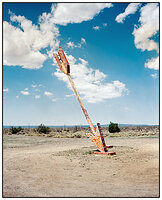
The Lone Arrow

A
The Lone Arrow

  • 0
  • 0
  • 0
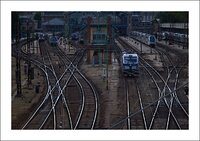
Rail Station

D
Rail Station

  • 0
  • 0
  • 0

Recent Classifieds

Forum statistics

Threads
204,359
Messages
2,867,536
Members
102,233
Latest member
CristianSP
Recent bookmarks
0

adelorenzo

Member
Joined
Mar 10, 2012
Messages
1,420
Location
Whitehorse, Yukon
Format
4x5 Format
I was looking at my film supplier's price lists and I was struck by how much more expensive color sheet film is. I created a quick chart, but basically colour sheet film is twice the price of black and white whereas in roll film there isn't a huge difference between the two. Could be any number of reasons, maybe just low demand?
 

Attachments

  • Capture.PNG
    Capture.PNG
    36 KB · Views: 176
In roll film you have higher added cost due to that more complicated conversion, which make a larger share of the end price.
And thus a price difference in the sheer film costs has a lesser impact.

(On the other hand, at low volumes those boxes of sheet film could form a significant share.)
 
I think the economy of scale plays a roll in the manufacturing (regarding low demand).

Maybe I'm not reading your post correctly, but instead of cost per exposure, shouldn't we compare cost per square inch for this particular situation?
 
My point was not to compare the cost of 35/120 against 4x5 but to compate the cost of color to black and white in the same format. The roll film costs per frame are fairly flat but the costs per frame in sheet film spike way up for color.

Basically, if a roll of T-max costs $8 and a roll of Porta costs $9, why does a sheet of T-max cost $2.50 but a sheet of Porta costs $5 which is twice as much?
 
Yep, I was reading incorrectly :smile:
 
Given 4x5 is about 15 times the size of a 35mm image, a 36 shot roll of 35mm has about 2.4 sheets of 4x5 (area).

2.4 sheets of T-Max @ $2.50 = $6.00 Cheaper than the roll of T-Max ($8).

So, perhaps your question should be "Why is colour sheet film so expensive, when B&W sheet film is so cheap?"

Statistics can be read many ways...
 
Last edited by a moderator:
My point was not to compare the cost of 35/120 against 4x5 but to compate the cost of color to black and white in the same format. The roll film costs per frame are fairly flat but the costs per frame in sheet film spike way up for color.

Basically, if a roll of T-max costs $8 and a roll of Porta costs $9, why does a sheet of T-max cost $2.50 but a sheet of Porta costs $5 which is twice as much?


Hmm. I'm wondering where that $8 (!!) for a roll of T-Max (135/36) figure is coming from. We're talking about US Dollars, so the Australian dollar would be around that, but not what I can see. Prices do vary considerably.

Have you noticed that some colour film stock, Fuji among, has gone up since the beginning of this year? What else has??
T-Max 100 135/36 only $5.95 where I get it. :wink: And Portra $5.35/ 4x5 sheet (which I do not use). It might be down to a lack of competition at a retail level.
 
Those prices are in Canada . It doesn't matter where you buy your film, if you punch in the prices from B&H you get the same scenario with Kodak. TMX is $1.65/sheet while Porta is $3.50/sheet. Whereas the 120 rolls are $4.50 and $5.09 respectively. Why the huge difference in sheet film?

Interestingly enough Fuji prices don't show that same trend. It's a Kodak thing.
 
I think that even though it is a shadow of what it once was, there still is a significant amount of Portra roll film being sold, so there remains economies of sale with respect to the "confectioning", packaging and distribution of roll film.
 
Ten years ago, color sheet film cost three times what black and white cost. The shock is the general increase in price of sheet film relative to roll film.
 
Roll film and sheet film need to be coated onto different base materials. The cost of polyester has gone
up; then they've got to amortize the very specialized chemicals and dyes needed for color film in the face of declining volume, general inflation, etc - all these things add up. Then in the past I suspect that constant price wars between Fuji and Kodak for head-to-head items moderated things, to the effect that maybe this was a partially subsidized product category. But today Fuji has basically ceded color neg film to Kodak, and Kodak has respectively ceded the chrome market to Fuji, which means they can relistically factor profit margin higher. I don't really care. To me, one good shot on 8x10 film
is more useful than 500 with a small camera.

 
My colour-neg, 10x8", pinhole camera plus contact-prints plan died when I discovered how much the film cost these days. Admittedly, my comparison point was nearly thirty years ago so that didn't help the shock-factor!
 
What started this whole investigation for me is, despite having never shot it, I am obsessed with the colors of Portra. With the pricing I will probably stick to black and white for sheet film and get some of it in rolls, at least until I feel a lot more confident about clicking the shutter with a $5 sheet of film loaded. :smile:
 
5 dollars a click forces you to think.
 
The US has been going through the most inflationary period in my 56 years, and possibly in its history. In essence, there is no ceiling on what this film can cost now, and for the next several years. Enjoy the film while you can, if you can.
 
$5 ??? My pricing for my 10x8" pinhole plan would have used Portra 400 . . . at over $26 per sheet. Home processing, using a slosher and optimism, not included.
 
I'm gladly spending $20 a sheet for 8x10 chrome right now. I love chromes and 8x10 format is my new baby. I know based on past experiences with 4x5 that I will take more time to find that perfect shot because of cost. But the high cost is what makes my images great.

More importantly for me, it's not only the look and experience of shooting film, but the fact that I am capturing real images that can be viewed without the aid of technology at any time in the future. Film is a true archive. Migrating a bunch of 1's and 0's are meaningless unless you have the correct hardware to view them. The digital image doesn't exist in its raw state, where as it does with film. So for that, I will alway be shooting my most important memories with film, regardless of cost.
 
Photrio.com contains affiliate links to products. We may receive a commission for purchases made through these links.
To read our full affiliate disclosure statement please click Here.

PHOTRIO PARTNERS EQUALLY FUNDING OUR COMMUNITY:


Ilford ADOX Freestyle Photographic Stearman Press Weldon Color Lab Blue Moon Camera & Machine
Top Bottom