• Welcome to Photrio!
    Registration is fast and free. Join today to unlock search, see fewer ads, and access all forum features.
    Click here to sign up

High contrast negatives - how to achieve them in developing?

Recent Classifieds

Forum statistics

Threads
202,928
Messages
2,847,715
Members
101,541
Latest member
pibanez
Recent bookmarks
0

LF2007

Member
Allowing Ads
Joined
Jan 6, 2007
Messages
16
Format
35mm
Hello everyone,

A quick introduction: I've been shooting b&w film for the last ten years and had a darkroom for about three years.
Unfortunately since moving to a new house the darkroom is gone but it's my intention to build a small one again and go back printing the analog way.

I consider my photography really experimental, I have used about every combination of film and developer out there and have never been really satisfied with the negatives I got.

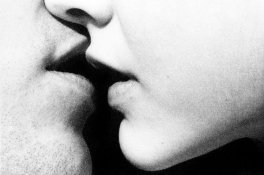
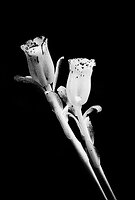
I have a preference for really contrasty prints/ negatives and don't mind if there's grain if it reinforces the quality of the photograph. I very much like the style of people like Ralph Gibson or Renato D'agostin (see attached examples).

I know that Ralph Gibson used to shoot Tri-x at 200 iso in very bright sun and then overdevelops his negatives so they become very dense.

The problem is that where I live we do not have a lot of sun, in fact, in the winter there's lots of overcast days with very little contrast which would give me 'dull' negatives without crispy whites.

What could I do to get those contrasty negatives? The options I'm considering so far are:

1. Underexpose Tri-X at EI 800 or 1600 and develop longer in Rodinal, so I would lose shadow detail (black shadows) but midtones and highlights would become more crispy/ contrasty. The problem is that iso 800 / 1600 is too much for shooting in overcast light.

2. Overexpose Tri-X at EI 200 and overdevelop so I would op up shadows and get contrast in the highlights. The problem would be that EI 200 might give me too slow shutter speeds and I'm not sure if I'm interested in having lots of detail in the shadows. I like the 'chiaroscuro' look with really dense blacks and really dense whites.

3. Try stand development in Rodinal but I'm not really sure what this does to the negative contrast ?

I know that high contrast can be achieved in the darkroom with grades and filters etc. but at the moment I'm more interested in how to get the raw material, that is the negative.

Would be happy to hear your opinions:smile:

Thanks !
 

Attachments

  • example 2.jpg
    example 2.jpg
    53 KB · Views: 903
  • example.jpg
    example.jpg
    55.1 KB · Views: 877
Under expose by about one stop and over develop by about 20%.
 
There's always Kodak D-19 which is still sold iirc. Also you can add potassium bromide or benzotriazole to a developer to hold shadows down while increasing development to drive highlights/dmax up.
 
Thanks. @Athiril, how does it technically work with potassium bromide? I mean, what does it do to hold shadows down? Is it dangerous to mix that with Rodinal (just asking as I have a family and a dog under the same roof ;-)).
 
...what cliveh said. Underexpose and over develop to the desired amount. You don't need to go CRAZY with it because you can always adjust while printing/editing. Keep in mind that even your examples have texture in the whites. I could probably achieve the same thing with just a slight overdevelop and up the contrast while printing and burn in the shadows. The idea behind the underexpose is to purposely lose detail in the shadows and over developing will develop the highlights in hotter. You just gotta find what balance works for you.
 
I have made high contrast prints on Ilford Multigrade from a normally exposed and developed negative using 4 1/2 or 5 grade filter. Manipulating film speed and development would extend the possibilities. Farmers reducer would bleach out the light grey tones before reducing density in the darker areas of the print. Carefully done it can be easily controlled.
 
Don't neglect using color filters when shooting to increase contrast. A deep yellow or orange filter will tend to bump overall contrast in many scenes without the radical tonal shifts of a red filter.

Stand developing will tend to lower overall contrast; if anything I'd think you'd want to increase agitation.
 
I agree with 02Pilot, try a filter. That way you can use a faster film (or pushed).

Another idea: Underexpose and overdevelop Ilford FP4+. It is already a more contrasty film than HP5+, and I like it a lot exposed at 250 or 400 souped in D76 1+1. You could probably get good results with any developer, I just happened to use D76 at the time. It is grainy for a medium speed film. Rodinal empathizes that.
 
Pick high contrast scenes, under expose a bit and then over develop. At least 20%. I sometimes double the developing time.

It is kind of neat for awhile, but this kind of experimenting is really no substitute for good photography. It does give you a sense of what you can do with a given photograph though.

Going the other way can also be interesting, especially with color. Low contrast, painterly photos are interesting with certain subjects.
 
Thanks. @Athiril, how does it technically work with potassium bromide? I mean, what does it do to hold shadows down? Is it dangerous to mix that with Rodinal (just asking as I have a family and a dog under the same roof ;-)).

It restrains the developing action, ie reduces density, more in lower regions than in higher regions, so when you increase developing time.
 
Don't forget you can selenium tone or intensify to increase contrast even more. I prefer selenium.
 
3. Try stand development in Rodinal but I'm not really sure what this does to the negative contrast ?

I stand develop everything in Rodinal. My personal preference is for low-contrast, but that's beside the point.

If you are shooting really high contrast scenes you obviously run the risk of losing one end of the spectrum for the other. Stand development does a good job of making sure everything is within as an acceptable range as possible, then you can print as hard as you like.
 
There is no need to underexpose. Simply develop longer and/or use a high contrast developer, and print on high contrast paper.

Developing longer also has an effect on density, hence my advice for under exposure.
 
When people say overdevelop, does this mean the "new" setting or the original? For example, if you are shooting ISO400 film and you follow the advice here to underexpose, then you shoot at ISO800 maybe. Do you then develop beyond ISO 800? Or does developing at ISO800 count as over developing because you are using ISO 400 film?

The advice above is a bit vague to a newbie.

Thanks.
 
Nothing wrong with giving less exposure, but it doesn't add any contrast to that resulting from increased development.

No, but it may help minimize blocking of upper mid-tones and/or lower highlights.
 
Nothing wrong with giving less exposure, but it doesn't add any contrast to that resulting from increased development.

But that depends on the brightness range of the original subject.
 
Hello everyone,

A quick introduction: I've been shooting b&w film for the last ten years and had a darkroom for about three years.
Unfortunately since moving to a new house the darkroom is gone but it's my intention to build a small one again and go back printing the analog way.

I consider my photography really experimental, I have used about every combination of film and developer out there and have never been really satisfied with the negatives I got.

I have a preference for really contrasty prints/ negatives and don't mind if there's grain if it reinforces the quality of the photograph. I very much like the style of people like Ralph Gibson or Renato D'agostin (see attached examples).

I know that Ralph Gibson used to shoot Tri-x at 200 iso in very bright sun and then overdevelops his negatives so they become very dense.

The problem is that where I live we do not have a lot of sun, in fact, in the winter there's lots of overcast days with very little contrast which would give me 'dull' negatives without crispy whites.

What could I do to get those contrasty negatives? The options I'm considering so far are:

1. Underexpose Tri-X at EI 800 or 1600 and develop longer in Rodinal, so I would lose shadow detail (black shadows) but midtones and highlights would become more crispy/ contrasty. The problem is that iso 800 / 1600 is too much for shooting in overcast light.

2. Overexpose Tri-X at EI 200 and overdevelop so I would op up shadows and get contrast in the highlights. The problem would be that EI 200 might give me too slow shutter speeds and I'm not sure if I'm interested in having lots of detail in the shadows. I like the 'chiaroscuro' look with really dense blacks and really dense whites.

3. Try stand development in Rodinal but I'm not really sure what this does to the negative contrast ?

I know that high contrast can be achieved in the darkroom with grades and filters etc. but at the moment I'm more interested in how to get the raw material, that is the negative.

Would be happy to hear your opinions:smile:

Thanks !

Hi LF2007,

In my humble opinion, you should never purposely underexpose any film. Not even when you're trying to achieve a certain 'look'. In other words, you should always strive to get a good quality negative that you can work with. Any 'looks' can be achieved in the printing stage. Also remember that all these Ralph Gibson photos you've seen are probably printed in books or shown on websites. In other words, these are manipulated for their specific output medium and perhaps not what a real Ralph Gibson print really looks like. Getting the best possible negative should always be your main concern, no matter how you want to print it at a later stage. Purposely underexposing will not achive this.
 
When people say overdevelop, does this mean the "new" setting or the original? For example, if you are shooting ISO400 film and you follow the advice here to underexpose, then you shoot at ISO800 maybe. Do you then develop beyond ISO 800? Or does developing at ISO800 count as over developing because you are using ISO 400 film?

The advice above is a bit vague to a newbie.

Thanks.

The idea being discussed here is the under-exposure means the shadows won't have any detail, the over-development increases the negative contrast.

Generally when people 'push' a film they develop longer, so exposing 400 film at 800 you'd develop longer anyway.

Looking at the Massive Development Chart for an example (no idea whether these times are 'correct')
HP5+, EI400, D76 Stock, 20C, 7.5mins
HP5+, EI800, D76 Stock, 20C, 10.5mins

So they're recommending longer development for higher EI. 40% increase which to me seems a more than I'd expect, but anyway lets assume that's right. Over developing would be to add more time to increase the negatives contrast.

However, upon rereading your question, that's may not be what you're asking. Exposing 400 film at 800 is underexposing regardless of development alterations. If that doesn't drop off the shadow detail that you 'don't want', expose at 1600 and see how you go. Trying to achieve a specific effect like this is going to require a few experiments.

I personally would be aiming to try to print a normal neg in this style before modifying my negs due to the chance of changing your mind sometime in the future and wanting to be able to print it 'normally'. Wouldn't be able to do that with a neg exposed/developed this way, however that the sort of thing that separates people like me and 'artists. (IMO of course)
 
It seems to me the OP isn't concerned about shadow or highlight detail... but wants SOME. I'll not pretend to understand why but that's none of my concern.

1. underexpose
2. overdevelop
3. selenium tone or chromium intensify
 
I think the lighting is probably the most important factor. On a gray overcast day you may not get the style you want, no matter how much contrast you try to add by development. Try adding some lighting with flash, hot lights or reflectors.

I'd just take an iterative approach to exposure and development. Shoot the film at the box speed and develop 20% more than the recommended value. Print normally on a grade 2 paper or filter. See if it needs more contrast. If so, try grades 3, 4 and 5. If you don't get in the ball park contrast wise, add another 20% to the development.

Look at the shadow detail if it needs more then expose at less than box speed and keep your development the same.
 
The idea being discussed here is the under-exposure means the shadows won't have any detail, the over-development increases the negative contrast.

Generally when people 'push' a film they develop longer, so exposing 400 film at 800 you'd develop longer anyway.

Looking at the Massive Development Chart for an example (no idea whether these times are 'correct')
HP5+, EI400, D76 Stock, 20C, 7.5mins
HP5+, EI800, D76 Stock, 20C, 10.5mins

So they're recommending longer development for higher EI. 40% increase which to me seems a more than I'd expect, but anyway lets assume that's right. Over developing would be to add more time to increase the negatives contrast.

However, upon rereading your question, that's may not be what you're asking. Exposing 400 film at 800 is underexposing regardless of development alterations. If that doesn't drop off the shadow detail that you 'don't want', expose at 1600 and see how you go. Trying to achieve a specific effect like this is going to require a few experiments.

I personally would be aiming to try to print a normal neg in this style before modifying my negs due to the chance of changing your mind sometime in the future and wanting to be able to print it 'normally'. Wouldn't be able to do that with a neg exposed/developed this way, however that the sort of thing that separates people like me and 'artists. (IMO of course)

Thank you for your reply. Let me try to re-ask my question since I am certain that my first attempt was not clear. Assume the numbers you posted were correct.

Shooting an image with correct exposure gives us this:

HP5+, EI400, D76 Stock, 20C, 7.5mins

Is "under expose over develop" this?

HP5+, EI800, D76 Stock, 20C, 10.5mins

Or would it be even more time since 10.5 mins is the correct time for ISO800, thus "normal" development time for that setting. The term over develop is what I am trying to understand. To me it seems possible that this term means develop for ISO1600.

Thank you.
 
Thank you for your reply. Let me try to re-ask my question since I am certain that my first attempt was not clear. Assume the numbers you posted were correct.

Shooting an image with correct exposure gives us this:

HP5+, EI400, D76 Stock, 20C, 7.5mins

Is "under expose over develop" this?

HP5+, EI800, D76 Stock, 20C, 10.5mins

Or would it be even more time since 10.5 mins is the correct time for ISO800, thus "normal" development time for that setting. The term over develop is what I am trying to understand. To me it seems possible that this term means develop for ISO1600.

Thank you.

That is way too conservative if you really want a high contrast result.

As an example take the EI800 exposure recommendation from the Digital Truth site and double it. In other words, develop it for 21 minutes.

Even better yet, do your own experimenting. Take your favorite film and find a scene that your like. One that has a variety of tones in it.

Shoot the first shot at the recommended exposure. Then shoot 5 more shots, exposed at +1, +2, +3, +4 and +5. For your 7th shot take another one at the recommended exposure. Now shoot five more but go the other way, exposed at -1, -2, -3, -4, -5.

Shoot 3 more rolls just like this.

Now, take your first roll and develop it normally, the way the manufacturer recommends. Hang it to dry.

Take your second roll and develop it for half the recommended time. If the manufacturer recommends 10 minutes, develop for 5 minutes. Hang to dry.

Take the third roll and develop it for double the recommended time. If the time recommended was 10 minutes, develop for 20 minutes. Hang to dry.

You now have 3 rolls of 12 photos each, all exposed in the same sequence but developed differently. Now print them all the same way. Whatever exposure time it takes your enlarger to get the photo exposed at the recommended time and aperture to print well. Now print every negative the same way. If you don't have your own darkroom then send it to Blue Moon and explain what you want.

When you are done you will be able to go through these prints and see which print looks best. That should be your camera's Exposure Index for that film. But you will also see what over exposed and over developed looks like, what under exposed and over developed looks, what over exposed and under developed looks like, and what under exposed and under developed looks like.

Whichever print you selected as the best, determine the development time and develop the 4th roll at this time. Or, if something doesn't look exact, tweak it a bit. Maybe the development time should be 1.5 times rather than 2 times.

Next time you want to achieve a certain effect with your photographs, high key, low key, high contrast, low contrast, you now have some examples to start with.

It is a great exercise and everyone should try it if you haven't.
 
I would definitely try such an exercise if I could print, which I can't. 2 years shooting film and I have yet to do my first print. sigh...........
 
Photrio.com contains affiliate links to products. We may receive a commission for purchases made through these links.
To read our full affiliate disclosure statement please click Here.

PHOTRIO PARTNERS EQUALLY FUNDING OUR COMMUNITY:


Ilford ADOX Freestyle Photographic Stearman Press Weldon Color Lab Blue Moon Camera & Machine
Top Bottom