
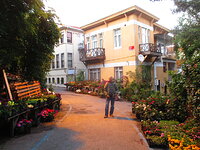
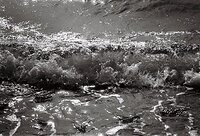
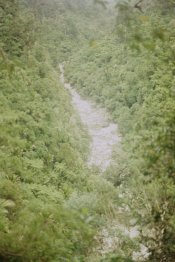
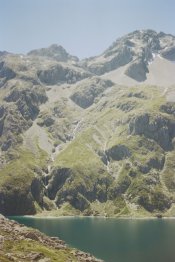
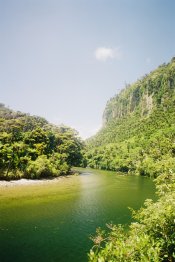
Hi, I recently bought a Tiffen polarizing filter for my Canon AE-1. I developed a roll after I have been using it and I have found the images that came out to be quite dull/exposed incorrectly. I am trying to find out what I have been doing wrong when using the filter. I meter images using the camera's internal meter. When I place the filter on, the light is decreased by 1 or 2 stops. I have been reducing (lengthening) the shutter speed when taking a shot, to compensate for the reduced light. Is this the right process? I have attached some images to demonstrate what I mean, any help appreciated!
-
Welcome to Photrio!Registration is fast and free. Join today to unlock search, see fewer ads, and access all forum features.Click here to sign up
- Home
- Forums
- Analog Workflow Forums (100% Analog/Traditional)
- Analog Equipment
- 35mm Cameras and Accessories
You are using an out of date browser. It may not display this or other websites correctly.
You should upgrade or use an alternative browser.
You should upgrade or use an alternative browser.
Help with using a Polarizing filter
-
A
- Thread starter Paarl2195
- Start date
Recent Classifieds
-
Want to Buy WTB: 4x4 Resin 81B Filter
- Started by NortheastPhotographic
-
For Sale LINHOF SUPER TECHNIKA III VERSION 5 with Raptar 135, film holders and FP4
- Started by Simon Benton
-
For Sale LINHOF TECHNIKA III ver 5 LENSBOARDS
- Started by Simon Benton
-
Sold KODAK COLOR THERMOMETER F
- Started by Jon Shiu
-
Want to Buy Sinar P2 8x10 Bellows (Need the frames)
- Started by Jessxi
Forum statistics

runswithsizzers
Subscriber
What do the negatives look like?
Does your polarizing filter say: "CPL" or "Circular" on it? The metering system on some cameras might be affected by polarized light, and those cameras must use newer circular polarizing filters rather than the older linear ones. The first thing I would want to determine is if the negatives are correctly exposed (more-or-less). So try to photograph the negatives on a light box or taped to a window, and post results.
EDIT: Actually, now that I think about it - I don't think the metering system cares if the polarizing filter is linear or circular. I was confused; it may be the autofocus systems that were affected, and not the autoexposure systems.
Does your polarizing filter say: "CPL" or "Circular" on it? The metering system on some cameras might be affected by polarized light, and those cameras must use newer circular polarizing filters rather than the older linear ones. The first thing I would want to determine is if the negatives are correctly exposed (more-or-less). So try to photograph the negatives on a light box or taped to a window, and post results.
EDIT: Actually, now that I think about it - I don't think the metering system cares if the polarizing filter is linear or circular. I was confused; it may be the autofocus systems that were affected, and not the autoexposure systems.
Last edited:
runswithsizzers
Subscriber
[...] I meter images using the camera's internal meter. When I place the filter on, the light is decreased by 1 or 2 stops. I have been reducing (lengthening) the shutter speed when taking a shot, to compensate for the reduced light. Is this the right process? [...]
Yes, it is normal for the polarizing filter to require 1.5 to 2.5-stops more exposure. But your Canon AE-1 offers through the lens metering, so if you are using the camera's auto exposure function (AE), then there is no need to do anything else. That is, the Canon's shutter-priority AE system will automatically increase the aperture to provide the needed extra exposure.
If, however, you are metering manually, then yes, decreasing shutter speed (increasing exposure time) is needed to get the correct exposure as indicated by the Canon's match-needle, stopped down metering.

How were the other pictures on the roll?

Does the wrongly exposed photos include sky? The AE-1 metering is rather primitive and can be fooled by non obvious things.
Also the sky varies wildly in brightness over the day with a polarizer (there is a traveling band “opposite” the sun through the day).
The filter can also introduce a slight colour cast and the metering cell might be less sensitive to
Either end of the spectrum.
Finally is the possibility that the polarizer simply to your eyes dulls the image. It can take out highlights in leaves, ground and buildings that might be mistaken for underexposure.
Of course check the metering.
Is compensation accidentally set?
Does the meter match a known accurate meter on a sunlit wall?
Is it consistent from day to day without the filter (clear blue sky at noon is a pretty consistent absolute)?
Also the sky varies wildly in brightness over the day with a polarizer (there is a traveling band “opposite” the sun through the day).
The filter can also introduce a slight colour cast and the metering cell might be less sensitive to
Either end of the spectrum.
Finally is the possibility that the polarizer simply to your eyes dulls the image. It can take out highlights in leaves, ground and buildings that might be mistaken for underexposure.
Of course check the metering.
Is compensation accidentally set?
Does the meter match a known accurate meter on a sunlit wall?
Is it consistent from day to day without the filter (clear blue sky at noon is a pretty consistent absolute)?
I used a plain polariser with an AE-1 for a number of years. It even worked in NZ  . As @runswithsizzers said, the shutter priority auto exposure system will open up the aperture to compensate. Just make sure that you don't run out of aperture values at the wide end. If your exposure calls for an aperture greater than the largest aperture on your lens, the AE-1 will flash a warning in the lower right hand corner of the viewfinder and the meter needle will be at the bottom of the scale. The AE-1 will still fire the shutter in this case and your shots will be underexposed.
Most of the Canon FD cameras could use a plain polariser with the exception of the T90 and possibly the F1-N.
. As @runswithsizzers said, the shutter priority auto exposure system will open up the aperture to compensate. Just make sure that you don't run out of aperture values at the wide end. If your exposure calls for an aperture greater than the largest aperture on your lens, the AE-1 will flash a warning in the lower right hand corner of the viewfinder and the meter needle will be at the bottom of the scale. The AE-1 will still fire the shutter in this case and your shots will be underexposed.Most of the Canon FD cameras could use a plain polariser with the exception of the T90 and possibly the F1-N.

IIRC, the test of whether circular polarizer was required with a manual focus film camera turned on whether the camera used a beam splitter to divert a portion of the light for metering purposes.
I don't think that the AE-1 did.
I don't think that the AE-1 did.

A polarising filter works best when the light source (the sun) is at a 90 degree angle to the camera, in other words to your side.
If the light comes from behind you or from in front of you then it will have no effect, like what appears in your 3rd photo taken from the riverbank. You can see what appears to be the sun reflecting in the water.
The easiest way to see the effect of a polarising filter is to turn it while looking through the viewfinder. If the sky / tree foliage / water changes from bright to dark, then you know you have the right light angle.
As has been said, the Canon should meter correctly with the filter in place but depending on how the filter is rotated and the light angle your image can appear bright or dark.
If the light comes from behind you or from in front of you then it will have no effect, like what appears in your 3rd photo taken from the riverbank. You can see what appears to be the sun reflecting in the water.
The easiest way to see the effect of a polarising filter is to turn it while looking through the viewfinder. If the sky / tree foliage / water changes from bright to dark, then you know you have the right light angle.
As has been said, the Canon should meter correctly with the filter in place but depending on how the filter is rotated and the light angle your image can appear bright or dark.
I only buy used filters. And amongst those I came across so far practically the only ones with issues were polarizers. These can deteriorate, showing a haze. Such might explain the result.
A good polarizer is perfectly clear, though with reduced transmission, thus greyish.
A good polarizer is perfectly clear, though with reduced transmission, thus greyish.

A polarizing filter consists of two flat glass plates sandwiching a thin layer of polarizing material. Over many years I've had this complex sandwich (Nikon) deform in extreme environments and for the polarizing film (Leica) to loose it's polarizing ability around its edges.
What's nice about my Nikon polarizer is that there's a stop in the outer ring. It helps you to screw it off the lens as you can grab the whole filter to do it both the moveable and unmoveable rings). Other polarizers I have don't have that feature making it harder to remove.A polarizing filter consists of two flat glass plates sandwiching a thin layer of polarizing material. Over many years I've had this complex sandwich (Nikon) deform in extreme environments and for the polarizing film (Leica) to loose it's polarizing ability around its edges.
My first thought too, in that it looks like the camera was pointed almost directly at the sun, so probably a bit of flare lowering the contrast.A polarising filter works best when the light source (the sun) is at a 90 degree angle to the camera, in other words to your side.
As you say, you need to have the sun at the right angle to the camera, otherwise the filter won't do anything noticeable.
Terry S
Hi, I recently bought a Tiffen polarizing filter for my Canon AE-1.
I have a stupid question, the equivalent of "Is your computer plugged in?". Yes, in my dark, distant past I did spend time at a help desk.
Is this the first time you have ever used a polarizing filter? if so, did you know that the effect changes as the filter is rotated? That you have to rotate it while looking through the camera to get the maximum effect?
The 90-degree point is when the polarizing effect is at its maximum. There's actually a gradation taking place from 0 (180) degrees to 90 degrees where the fall off of the effect operates. Otherwise, you'd just have a hard line of the effect at 90 degrees.My first thought too, in that it looks like the camera was pointed almost directly at the sun, so probably a bit of flare lowering the contrast.
As you say, you need to have the sun at the right angle to the camera, otherwise the filter won't do anything noticeable.
Terry S
You also have to be careful using polarizers with wide-angle lenses. That gradation will be very noticeable because you'll see the sky from its lighter minimum to darker maximum effect. Either shoot less of the sky or switch to a less wide-angle lens so you're only shooting a smaller part of the sky. That way you won't see the gradation.
- Paarl2195
- Deleted
- Reason: error
Hi thanks all for the replies. I definitely was pointing the camera at towards the sun, so that's definitely an error I'll fix. In terms of the shutter speed, I'll try experimenting with opening the aperture instead of increasing the shitter speed and see the results. This is the first time I have used a polarizer which is why I'm confused.

Sirius Glass
Subscriber
Specular refection only can come from man made items and a polarizer will cut down its intensity.

In addition to different obviously hazy polarizers I had one Tiffen that looked good but produced identical results as your samples.
As said earlier polarizers can deteriorate over time.
You can shoot handheld through it with cellphone or digital camera to confirm.
As said earlier polarizers can deteriorate over time.
You can shoot handheld through it with cellphone or digital camera to confirm.
Specular refection only can come from man made items and a polarizer will cut down its intensity.
Already a raindrop, puddle, lake, river, the sea yields specular reflection.
The eye, any body fluid some vegetabile fluids and chitin surfaces too.
Also some minerals, at least at fresh fractures.
The more one thinks, the more natural specular surfaces come to mind...

Perhaps you haven't fully realized how a polarizer works, may I suggest a book that might help. You have an 80's era camera, a very good camera that has a lot of features. An 80's era photo book designed to advance beginning photographers to a higher level of photography was the "Joy of Photography" and the sequel "More Joy of Photography". They might be hard to find in NZ, check flea markets, antique stores, used book sellers, etc. They cover many of the techniques that directly relate to your era of camera. Of course, there are many, many other find books that teach the basics. RB
Thank for the recommendation, I have found a copy of that and purchased it.
In addition to different obviously hazy polarizers I had one Tiffen that looked good but produced identical results as your samples.
As said earlier polarizers can deteriorate over time.
That's what's concerning me, as this was a brand new Polarizer that I was using for the first time, so I'm hoping its not a faulty product.
That's what's concerning me, as this was a brand new Polarizer that I was using for the first time, so I'm hoping its not a faulty product.
If polarizer was new, it could also be an issue with a hazy day. Can be invisible to the eye but there can be a lot of UV pollution in the air.
Film will pick it up. Almost all digital sensors will have built in filter in front of them. Some of my shots were definitely affected on some sunny days.
If you didn't have a UV filter on your lens that might be the cause.
Older uncoated and single coated lenses are also more susceptible to UV. So it would also depend on the lens used to some extent.
You can still test your polarizer with cellphone by shooting something indoors. If it looks good, it's not polarizer. Bad polarizer will put wail equally on every image (it might or might not still have some polarizing properties).
Sirius Glass
Subscriber
Specular refection only can come from man made items and a polarizer will cut down its intensity.
Already a raindrop, puddle, lake, river, the sea yields specular reflection.
The eye, any body fluid some vegetabile fluids and chitin surfaces too.
Also some minerals, at least at fresh fractures.
The more one thinks, the more natural specular surfaces come to mind...
CORRECTION: I used the wrong term, not "specular reflection", I meant "glint" is a refection of man-made objects that polarization handles differently in that it can completely remove or partially remove.
That,'s right the AE -1 requires a linear polarizer, not a circular one.IIRC, the test of whether a circular polarizer was required with a manual focus film camera turned on whether the camera used a beam splitter to divert a portion of the light for metering purposes.
I don't think that the AE-1 did.
| Photrio.com contains affiliate links to products. We may receive a commission for purchases made through these links. To read our full affiliate disclosure statement please click Here. |
PHOTRIO PARTNERS EQUALLY FUNDING OUR COMMUNITY:  |