
• Welcome to Photrio!
    Registration is fast and free. Join today to unlock search, see fewer ads, and access all forum features.
    Click here to sign up

Help understanding PAN, Technical PAN, low ISO films???

Filling In

H
Filling In

  • 1
  • 2
  • 49
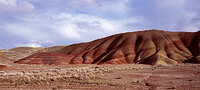
Painted Hills # 3.jpg

H
Painted Hills # 3.jpg

  • 4
  • 0
  • 92

Recent Classifieds

Forum statistics

Threads
203,211
Messages
2,851,499
Members
101,728
Latest member
BrickSandwich
Recent bookmarks
0

stradibarrius

Member
Allowing Ads
Joined
Jan 17, 2009
Messages
1,452
Location
Monroe, GA
Format
Medium Format
I have seen many shot taken with the slower ISO B&W films like CMS 20, EFKE KB25, Rollei PAN 25.

Are these films just each manfacturers version of the same film? What is a "PAN" film or a "Technical PAN"
Reading the description the retailers place with each film makes it difficult, for me anyway" to select a film to try.
I know the shots I like the most have been with Adox CMS 20 for what ever reason. The shots have been very crisp, sharp and tonal range has appealed to my eye.
 
I think "PAN" is a leftover from the 1940s or so when many B&W films moved from orthochromatic to PANchromatic (sensitive across most of the visible spectrum, instead of skewed toward blue). Since slow, fine grain films were common (and went to panchromatic emulsions) back then it's just a name left from the marketing efforts of the time. I believe the "Tech" part came from being film targeted at specialized industrial and scientific uses as opposed to consumer stuff. (I occasionally shot Kodak Panatomic-X back in the 1960s or so, another very slow, fine grain emulsion.)
 
'Technical' film used to be blue sensitive. Technical Pan is also green and red sensitive and is the reason for the 'pan' in the name. Tech Pan is an outgrowth of Solar Flare Patrol film, which is apocryphally related to a film designed for photographing atomic bomb blasts. POTA developer was developed for the same purpose. The extended red sensitivity is for imaging the hydrogen line.

Tech Pan is not related to microfilm or to conventional fine grain films like Panatomic X, Efke or Rollei.

In the 60's and 70's Kodak made a film called High Contrast Copy - HCC was a microfilm variant that could be processed for continuous tone in a POTA-like developer called H&W control.

Tech Pan is different from microfilm as it has a spectrum of grain sizes. Microfilm's uniform grain size results in very high contrast that is very hard to tame. Tech Pan was designed from the start for continuous tone applications - though some of those applications, like microscopy, require a higher-than-pictorial contrast that Tech Pan is only too happy to provide.
 
There are two types of low-ASA-Films.

A) "Normal" films of lower speed. They have fine grain and can developes normally. Examples are ADOX CHS 25 = Efke KB 25, Rollei PAN 25 or Ilford PAN F. Low speed films tend to give harder negatives and should developed with balancing developers, e.g. diluted dev.

B) Document fims which are produced for filming documents, typically at 40x reduced size. There exist again two types:
B1) Grey tones in document are visible in the image
B2) You have only black and white in the images.

Both B1 and B2 could be only blues sensitive, blue and red sensitive (orthochromatic) or fully sensitive (panchromatic). All of them give very hard ngeatives if developed normally, B2 gives extrem hard negatives. Examples are Agfa Copex Rapid (B1) or Adox CMS 20 (B2). The B1 types could give normal negatives with very diluted developer if the sujet ist not too hard. B2 requires specialized devs, e.g. SPUR or Gigabit. B1 types give better results in SPUR too.

Link to SPUR: http://www.macodirect.de/spur-2525-60113br250ml-part-250ml-part-p-1228.html?language=en
 
I'll chime in, take it with a grain of salt; I'm a newbie:smile:

Tech Pan, the Kodak product, was very special, because it had character. It extended it's range into the reds (740nm, IIRC?) and was a generally unusable film for pictorial purposes, but when you developed it with pictorial developer (Technidol, or in my case, PMK Pyro) wow, nothing has ever looked like it. A properly processed stain with pyro and TP is awesome.

I just developed my first roll of ATP1.1+spur. Close, very close, but no cigar.

The point of these films, as used by pictorial photographers, is low grain and a unique look. TP is not merely panchromatic, but extened by about two stops into the red...does awesome things to human flesh. Rollei ATP doesn't seem to behave the same way, though maybe I need to try souping it in PMK Pyro to see for sure.

In a nutshell: you can get a lot of microcontrast with TP, lots of detail in the highs, lots of details in the lows. If you like that for pics, it's the best stuff on earth, but unfortunately unavailable now. I'll be trying over the next months to do the same with ATP1.1 and various developers.

Note: you need a lot of light, or very slow shuttter speeds, to use these films. edit: I shot TP at ISO 6. We are talking serious light, or seriously good focus with a fast (1.4( lens and an unmoving model/subject. And you can't underexpose; it dies.
 
Last edited by a moderator:
i never used tech pan for pictorial use,
but for contrast. when i learned about it
it was when i was looking for a lith-type film
tech pan when shot at asa 200 processed in print developer can
give that look ... with no grain. i have prints of leaves
and light shining through them in the fall, i enlarged a tiny crop
from a 35mm negative to 11x14 ... no grain and sharp as nails
 
I'm confused. You have detailed leaf prints with a print developer on Tech Pan?

I'm not a lith guy at all, do you guys have any detail in your prints?
 
the images i have aren't scanned ... ( they are on someone's wall so i can't grab +scan them )
the prints aren't pure black and white but there is tonality ... just no grain.
i still have a few boxes of 4x5 ... i haven't used it in 15 years ... if they aren't opened
and still have the instructions / info sheet i'll scan and post it ...

it was a very strange film, it had a variable iso ...
 
It wasn't variable with my use. I miss it. Shoot at ISO 6 and develop in PMK with no variation in your development times, it was the most beautiful stuff ever.
 
unfortunately i can't find the boxes i had ..
they seem to be hiding with everything else i tend misplace ...

i did manage to find the kodak tech publication for the film
http://www.kodak.com/global/en/professional/support/techPubs/p255/p255.pdf

depending on the iso and the developer the film could be shot
at asa 16, 32, 64, 100 and 200 ... and everything inbetween ...
and processed in a variety of developers ...
 
I think I misread your last post lol. Thought you were saying you got variable results, ie inconsistent. My bad.

Shawn
 
I shot TP for some years as my main photographic film and had a person do the developing. She learned quickly how to get from high contrast to fantastic continious tones depending on what I shot and the results I wanted. Even better was developing the film as a transparancy. When Kodak disconinued it, I felt more sadness than with the discontinuance of Kodachrome. At the time I could not find a replacement film anywhere as wonderful. Some of my best images were made using TP.
 
It means panchromatic, as opposed to orthochromatic or blue-sensitive. Panchromatic films are exposed by visible light from blue to red. Most pictorial films are panchromatic, and have been for quite some time. Copy/technical films were traditionally orthochromatic or blue-sensitive, but for some things panchromatic films were needed, so there were some that were panchromatic as well.

For continuous tone copying, I usually use Ilford Ortho. For half tone copying (e.g. text - I copy a lot of newspapers and magazines for cyanotypes) I use Rollei ATP 1.1 in D-19, which is a pretty close replacement for Kodak's discontinued Technical Pan. ATP 1.1 can give incredible amounts of resolution and extremely fine grain. These features make for unique images when it is processed for continuous tone. I find it to be overkill for most pictures. It is capable of outresolving any system of camera and enlarger lens that any of us probably have. (I think the data sheet states 300 line pairs per mm.) I only really use it for making halftone negs for printing enlarged lithos.
 
Tech pan is still out there on the secondary market, eg. Ebay. It keeps well since it's so slow. I too love(d) tech pan, and stocked up quite a bit of it to shoot in the future.
 
I loved Gigabitfilm 25 in 4" x 5". Unfortunately no longer available

Gigabitfilm 40 I used in 35 mm and 16 mm, fantastic. One other stock I was fooling around with was Kodak 2468, that orthochromatic microfilm duplicating film at ISO 4 or so.
 
Hi Barry,
Kodak Tech Pan, Adox CMS 20 and the typical slow speed pan or ortho emulsions are different beasts..
Kodak Tech Pan is a panchromatic film on steroids.
Tech Pan comes with uniform spectral sensitivity at all visible wavelengths out to true Red (~690nm), BUT, It asks for color-compensating filter such as cyan if You want to at least come close to the conventional panchromatic look.
Adox CMS 20 is an orthopanchromatic kind of emulsion.. with spectral sensitivity punch in the true Violet (~400nm), true Green (~530nm) and Yellow-Orange (~590nm).. on top of that, its kind of VERY blind for Blue (~460nm) and especially blue-cyan (~480nm).
with Adox CMS 20 You will notice a pronounced color separation.
In comparison.., the 25ASA area pan or ortho films are having different look and You have to try them in combination with filters in order to figure out what/when/how.

You might wanna check their technical data pdf files for more insight.
Slow films are my kind of cup. I use them all, love them all.
note that I tend to shoot 99% B&W, mostly outside/natural light, mostly foliages, trees, landscapes, so I am kind of naturally biased but then again.. if You stand for nothing You fall for anything :D
 
Georg thanks for your response and your photographs. Your images are the very reason I started thinking about these films. Your images "Hand" and "Rangefinder round the Church" are just two of the images that have really caught my eye.
All of the responses in this thread have really helped to clear the fog and help me begin to understand the differences in these films.
 
Yes : )

Thanks Barry,
The 2 images You mentioned are developed in Adolux APH09 that is based on the recipes of the original Rodinal formulation from 1918.
For the film roll with the image "Hands" I shot it @ 10 ASA developer's dilution was 1:100 and develped for 15min @ 20° C / 68 °F 2 agitate for a minute then 2 gentle/slow inversions every 2 minutes. The CMS 20 in fresh fixer needs about 1 minute. The lens was 20mm f/5,6 Russar MR-2 stopped 1 step from wide open at f/8 + yellow 1 or light orange filter..
For the film roll with those images "Rangefinder round the Church" I shot it @ 12 ASA, developer's dilution was 1:300 for 28min agitation for 1 minute then 2 slow inversions @ 26,25,24,23,22min then 2 slow inversions @ 20,18,16,14,12min then 2 slow inversions @ 8,4min. The lens was 1939 Elmar 50mm f/3.5 stopped at f/4,5 + light yellow filter.
I usually use distilled water for the chemicals and washing, Jobo plastic tank.
Those images You liked are shot with different lenses in different light conditions, different elevations etc. etc., hence the different developing techniques. From my set of lenses, the old Elmar 50mm f/3,5 is the one with higher contrast, so I always use higher dilutions to develop (in Rodinal) something shot with it. I am unable to show images shot with the so called "modern" lenses, since my "newest" one is from 1958 - that russian wide 20mm f/5,6 Russar.
Next week I will try to scan & post some images shot on CMS 20 but developed in its dedicated developer ADOTECH.

George
 
Photrio.com contains affiliate links to products. We may receive a commission for purchases made through these links.
To read our full affiliate disclosure statement please click Here.

PHOTRIO PARTNERS EQUALLY FUNDING OUR COMMUNITY:


Ilford ADOX Freestyle Photographic Stearman Press Weldon Color Lab Blue Moon Camera & Machine
Top Bottom
