• Welcome to Photrio!
    Registration is fast and free. Join today to unlock search, see fewer ads, and access all forum features.
    Click here to sign up

Help me to learn Pan F+ and Perceptol.

Recent Classifieds

Forum statistics

Threads
202,056
Messages
2,834,524
Members
101,094
Latest member
not_cal
Recent bookmarks
0

bill spears

Member
Allowing Ads
Joined
May 30, 2007
Messages
565
Location
Cornwall Eng
Format
Multi Format
I also use an RB67 and my usual combination is Pan F @ iso 16-20 and Perceptol 1:2 22 degs for around 11 mins.

The thinking behind the 1:2 dilution is that at 1:1 it (in theory) dissolves more grain which is not always ideal if you want high definition. A small showing of grain can enhance sharpness and acutance. 1:3 dilution would (in theory) show more grain but to be honest the differences are probably negligible when looking at the print with an average eye. I just found that 1:2 seemed to be the 'sweet spot' for me.
 
OP
OP

smithy17

Member
Allowing Ads
Joined
May 12, 2010
Messages
41
Location
England
Format
Medium Format
Just got the PM - haven't been logging on much here lately.

I think like the others say..... trial and error is the best way to go. We all have different visions and variations in technique.
I was led to perceptol after reading Barry Thornton who raved about it with HP5. I was looking for maximum sharpness and fine grain so was curious to see what it was like with Pan F. I must confess though that I'm not big on film testing or zone system practice. I emphasize that this is not because of disregard for it or those photographers that practice it, it's purely down to my own laziness !!

I also use an RB67 and my usual combination is Pan F @ iso 16-20 and Perceptol 1:2 22 degs for around 11 mins.

I stress again though, I've not arrived at these figures from exhaustive testing, It's just what works for me and my particular style.

Pan F can often be quite a contrasty film, especially in bright light and I've found dilute perceptol tends to tame it somewhat by not letting the highlights block up (so long as development is not too long).

The low ISO rating is because I like plenty of shadow detail and I always tend to err on the side of overexposure.

This can be a problem though with often very slow shutter speeds so you might find this a handicap in certain situations.

As is often said there are many other 'links in the chain' when pursuing high definition and just because you use Pan F/Perceptol doesn't guarrantee the results you might be after.

I have found though that it does give me quality on a par with large format, at least up to an image size of 16x12.

Let us know your results

Bill
Hi Bill and thank you for contributing to this discussion and for your clear explanation for film exposure and developing time.

Q1; Is 1:2 the same as 1+2?

Q2; Are you using a hand meter for incident or reflective light measurement?

Q3; Do you use any coloured filters and use the recommended filter factors, or meter through them?

Sorry if too many questions.

I remember seeing some of your still life photos in B&W Photography magazine of fish. :smile:
 

Ian Grant

Subscriber
Allowing Ads
Joined
Aug 2, 2004
Messages
23,418
Location
West Midland
Format
Multi Format
Like Bill I've used a few developers like ID-11, Perceptol etc at 1+2, (Bill means the same with 1:2). While this dilution isn't listed it gives benefits over 1+1 without the bad side effects of 1+3 where the dilution can cause compression/compensation due to developer exhaustion.

As dilution is increased the sharpness & definition improves but the grain increases and 1+2 is a good balance. An alternative is to use a replenished developer as that gives similar results but there's no replenisher for Perceptol.

Bill uses a Spotmeter, and what might surprise you was when we compared meters last month our readings were the same, as were our relative exposures, we were using different films. In my case my Lunapro SBC with an incident reading matched what I'd chosen using the Minolta Spotmeter F I'd bought S/H a few days before.

So an incident or reflected meter reading should make no difference, it's knowing how to interpret your meter that matters. Personally I always use the filter factor when using a filter.

Ian
 

bill spears

Member
Allowing Ads
Joined
May 30, 2007
Messages
565
Location
Cornwall Eng
Format
Multi Format
Yes 1:2 is same as 1+2.

When I do still life work I generally take incident readings with a hand held meter. For landscape I mostly take reflected readings. I've only been using a spotmeter for a short while and before this I used a regular meter, just taking an average reflected reading with the meter dipped down to avoid any influence from a bright sky.
Like Ian says it's how you interpret your readings that matter. the basic guideline when using a spotmeter and black and white film is to take a reading from the darkest area of the scene where you want to retain detail then stop down about 2 stops. This is venturing into zone system territory though and to fully exploit the zone system you need to be doing some sort of film speed and development testing, which in my opinion, for a beginner is a bit like trying to run before walking etc.

I usually apply the filter factor when using coloured filters, normally slowing the shutter speed to get the extra light through.

Modern B+W materials are very flexible and up to a point quite forgiving. While this is not an excuse for sloppy technique don't get hung up on the laws of sensitometry, just get out there and burn some film !
 
OP
OP

smithy17

Member
Allowing Ads
Joined
May 12, 2010
Messages
41
Location
England
Format
Medium Format
Yes 1:2 is same as 1+2.

When I do still life work I generally take incident readings with a hand held meter. For landscape I mostly take reflected readings. I've only been using a spotmeter for a short while and before this I used a regular meter, just taking an average reflected reading with the meter dipped down to avoid any influence from a bright sky.
Like Ian says it's how you interpret your readings that matter. the basic guideline when using a spotmeter and black and white film is to take a reading from the darkest area of the scene where you want to retain detail then stop down about 2 stops. This is venturing into zone system territory though and to fully exploit the zone system you need to be doing some sort of film speed and development testing, which in my opinion, for a beginner is a bit like trying to run before walking etc.

I usually apply the filter factor when using coloured filters, normally slowing the shutter speed to get the extra light through.

Modern B+W materials are very flexible and up to a point quite forgiving.

While this is not an excuse for sloppy technique don't get hung up on the laws of sensitometry, just get out there and burn some film !
Thank you once again. The last sentence of your reply is the best advice of all. Time for me to get out there and take some photos.

I think this thread has been done to death now. Fare well folks and thanks your replies.

John :D
 

Tony-S

Subscriber
Joined
Aug 16, 2009
Messages
1,167
Location
Colorado, USA
Format
Multi Format
Well, after processing a couple of rolls of Pan F+ I'm sold on Perceptol at 1+2. Seems to be a very good balance and provides nice tonal ranges on the film. I'm doing mine at ISO 50 and 16 min at 75F.
 

transporti686

Member
Allowing Ads
Joined
Apr 26, 2012
Messages
57
Format
Medium Format
Hi,

I have a problem with Ilford Pan F Plus and Perceptol 1+1. I developed Ilford Pan F Plus with Perceptol 1+1 (perceptol + destiled water, water from osmoze) 10min 30s and 20 degree of celsius, aborted with destiled water from osmoze (2x this water), fixed with Fomafix 3min, washed with drinking water 10min, at the end wraped to Fotonal with destiled water from osmoze 2min.

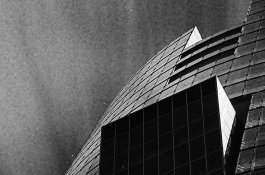
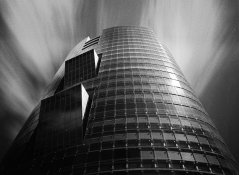
I got this result after scanning. This structure is also on negative. Picture is 100% crop from scan and original. Is it normal? I am a very disappointed wiht this result. This is a long expsure with Hitech 3,0 ND Pro Stop. Exposure time was 2min 30s.

Could you help me with this, please? Thank you for any advice.
 

Attachments

  • pan.jpg
    pan.jpg
    459.8 KB · Views: 163
  • archit.jpg
    archit.jpg
    307.8 KB · Views: 164
Last edited by a moderator:

transporti686

Member
Allowing Ads
Joined
Apr 26, 2012
Messages
57
Format
Medium Format
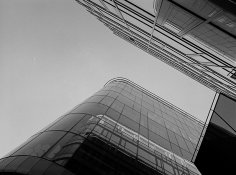
Another picture from same roll of film.

this a original picture resized to 800x600, same as in previous post original picture resized to 800x600

this is no long exposure, exposure time was 1/4 s.
 

Attachments

  • archit1.jpg
    archit1.jpg
    336.8 KB · Views: 145

Athiril

Subscriber
Allowing Ads
Joined
Feb 6, 2009
Messages
3,062
Location
Tokyo
Format
Medium Format
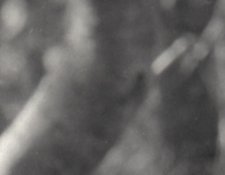
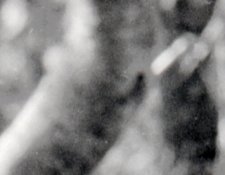
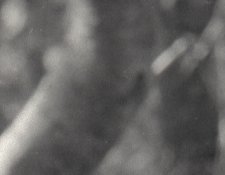
That bizarre pattern looks like a sharpening artefact to me in scanning, Try advanced mode and make sure sharp/unsharp etc is off/disabled/etc. Get out a loupe or whatever you can to magnify it and check out that sky area optically.


First image is an original, following 3 are different looks of sharpening artefacts of different levels of sharpening applied.

mmmm_film_oof_scan1.jpg

mmmm_film_oof_scan2.jpg

mmmm_film_oof_scan3.jpg

mmmm_film_oof_scan4.jpg
 

transporti686

Member
Allowing Ads
Joined
Apr 26, 2012
Messages
57
Format
Medium Format
This pictures was scanned with Noritsu S-4 in fotolab (max scan from medium format 6x4,5).
 

TareqPhoto

Member
Allowing Ads
Joined
Nov 19, 2009
Messages
1,171
Location
Ajman - UAE
Format
Multi Format
For my neg, i can get better result if i do scan myself, the lab scanning will be sharper, but overall i feel i can do better with my scanning method, i had my Pan F+ nicely done 2 rolls but with Ilfosol 3, not sure with other Ilford developers.

Try to tell them about the results you get, if they can do it better fine, if not dunno what you can do. Also try to find someone a friend maybe who has a scanner and ask him/her to scan it for you and see if you can get something you like or look for.
 

transporti686

Member
Allowing Ads
Joined
Apr 26, 2012
Messages
57
Format
Medium Format
For my neg, i can get better result if i do scan myself, the lab scanning will be sharper, but overall i feel i can do better with my scanning method, i had my Pan F+ nicely done 2 rolls but with Ilfosol 3, not sure with other Ilford developers.

Try to tell them about the results you get, if they can do it better fine, if not dunno what you can do. Also try to find someone a friend maybe who has a scanner and ask him/her to scan it for you and see if you can get something you like or look for.

For your opinion, is this problem on side of scanning process? I will send this negative for scannig on Nikon Coolscan 9000ED without sharpening.
 

Ian Grant

Subscriber
Allowing Ads
Joined
Aug 2, 2004
Messages
23,418
Location
West Midland
Format
Multi Format
The only time I had a consumerv lab scan my negatives to CD on a minilab scanner (Fuji in my case) I had similar resuls on off colour negatives. I've sacns done by my local pro-lab and they are in a different league.

Ian
 

transporti686

Member
Allowing Ads
Joined
Apr 26, 2012
Messages
57
Format
Medium Format
I have a scan from nikon coolscan 9000ED and result is nearly same. Problem is on negative, but I dont know why :sad:
 

transporti686

Member
Allowing Ads
Joined
Apr 26, 2012
Messages
57
Format
Medium Format
Can you upload the original scan file somewhere? I can take a look.

Sorry, I have no data, yet, but I saw scan from negative on the monitor. The result was nearly same.

I will try another roll from another seller and I will be testing exposures with Hitech 3,0 ND filter, without Hitech 3,0 ND filter, with orange filter and without orange filter.
 

polyglot

Member
Allowing Ads
Joined
Jun 12, 2009
Messages
3,467
Location
South Australia
Format
Medium Format
I've had that clumping effect on Pan-F before; I think it's due to temperature shocks during processing but I don't know. It's definitely (in my case) in the negative and not a digital artifact. I think I was using D76 or LC29 at that point and haven't had the problem with Rodinal 1+50, however my improved results might be due to better temp control.
 

TareqPhoto

Member
Allowing Ads
Joined
Nov 19, 2009
Messages
1,171
Location
Ajman - UAE
Format
Multi Format
I am not sure if i post some Pan F+ scans i done before, but i don't have any long exposure shots, maybe that what caused the problem, maybe the developer but i know that Perceptol is one fine for most Ilford films, can't define one factor for your problem.
 

transporti686

Member
Allowing Ads
Joined
Apr 26, 2012
Messages
57
Format
Medium Format
I've had that clumping effect on Pan-F before; I think it's due to temperature shocks during processing but I don't know. It's definitely (in my case) in the negative and not a digital artifact. I think I was using D76 or LC29 at that point and haven't had the problem with Rodinal 1+50, however my improved results might be due to better temp control.

Temperature was stable 20 degrees of celsius. I measured the temperature of developer, stopper, fixer and drinking water. Large thermal schock is not possible. Only one shock is possible - pH schock. Developer pH is in range 7,0 - 8,0 (Perceptol 1 + 1 destilled water), stopper 6,0 - 7,0 (destilled water) and fixer 5,5 (Fomafix).
 

polyglot

Member
Allowing Ads
Joined
Jun 12, 2009
Messages
3,467
Location
South Australia
Format
Medium Format
Is your wash also at 20C? I think my problems were due to differing wash temps but don't know for sure. I would suggest trying Rodinal or HC-110 as I've had very good uniform results with those (EI25, Rodinal 1+50 for 9:00, agitation first 30s plus 10s/minute).

Which is not to say it's definitely temp-related. My post is mainly just to confirm that it's a real thing that you're not imagining and it's not due to your scans.
 

transporti686

Member
Allowing Ads
Joined
Apr 26, 2012
Messages
57
Format
Medium Format
Or problem is not with film or developing process, but problem is with optics. I used Hitech 3,0 ND Pro Stop Filter. This filter creates blue color cast on digital cameras. See this link Dead Link Removed

Maybe this color cast is problem for film.
 

transporti686

Member
Allowing Ads
Joined
Apr 26, 2012
Messages
57
Format
Medium Format
Is your wash also at 20C? I think my problems were due to differing wash temps but don't know for sure. I would suggest trying Rodinal or HC-110 as I've had very good uniform results with those (EI25, Rodinal 1+50 for 9:00, agitation first 30s plus 10s/minute).

Which is not to say it's definitely temp-related. My post is mainly just to confirm that it's a real thing that you're not imagining and it's not due to your scans.

Yes, 20C. (same as developer, stopper, fixer, no high variability with temperature range, maybe +/- 1C)
 

transporti686

Member
Allowing Ads
Joined
Apr 26, 2012
Messages
57
Format
Medium Format
Or problem is not with film or developing process, but problem is with optics. I used Hitech 3,0 ND Pro Stop Filter. This filter creates blue color cast on digital cameras. See this link Dead Link Removed

Maybe this color cast is problem for film.

I will buy Hitech standard ND filter (density 2,1 - 7 stop or 2,4 - 8 stop, no PRO STOP 10 stop) and I will test this combination. This filter blocks visible light, but infra light goes through this filter. This filter creates red or pink color cast on digital cameras, because digital sensor is very sensitive to IR light. Infra light is not problem for Ilford Pan F Plus, because spectral sensitivity of this film is only to 650nm. Is it a good idea?
 

polyglot

Member
Allowing Ads
Joined
Jun 12, 2009
Messages
3,467
Location
South Australia
Format
Medium Format
I will buy Hitech standard ND filter (density 2,1 - 7 stop or 2,4 - 8 stop, no PRO STOP 10 stop) and I will test this combination. This filter blocks visible light, but infra light goes through this filter. This filter creates red or pink color cast on digital cameras, because digital sensor is very sensitive to IR light. Infra light is not problem for Ilford Pan F Plus, because spectral sensitivity of this film is only to 650nm. Is it a good idea?

Do some with/without testing of your filter on a single roll before buying another filter. I really doubt that the filter would be causing the problem but if you can show (in a single roll!) that the filtered frames have the issue and the unfiltered do not, then buying a different filter might be a good approach.
 
Photrio.com contains affiliate links to products. We may receive a commission for purchases made through these links.
To read our full affiliate disclosure statement please click Here.

PHOTRIO PARTNERS EQUALLY FUNDING OUR COMMUNITY:



Ilford ADOX Freestyle Photographic Stearman Press Weldon Color Lab Blue Moon Camera & Machine
Top Bottom