• Welcome to Photrio!
    Registration is fast and free. Join today to unlock search, see fewer ads, and access all forum features.
    Click here to sign up

Help! Is This an Agitation Problem or Something Else?

Forum statistics

Threads
202,630
Messages
2,843,251
Members
101,414
Latest member
biochrome
Recent bookmarks
0

marcmarc

Member
Allowing Ads
Joined
Jan 22, 2009
Messages
391
Format
Medium Format
Hi Everyone,

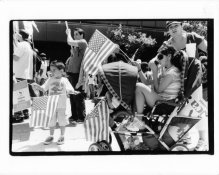
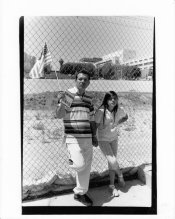
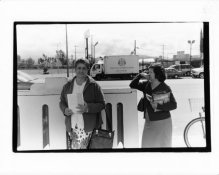
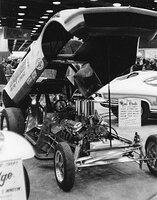
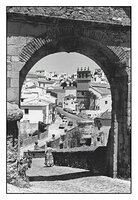
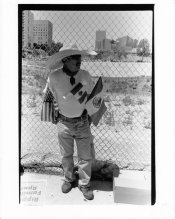
Today I spent a great day printing some recent work in the college darkroom I use. However, I seem to be getting some odd results that I'm trying to pin point. Please look at the examples below. I've been developing my own film for over five years now but is seems lately I've been getting density build up along the edges of both my 135 and 120 films. At first glance it would seem this issue is simply over-agitation. However, if this was the case, wouldn't the entire roll have the same effect? In the first picture one can see how the center part of sky is gray compared to the edges of the print. The second picture is a couple frames from that picture so it's the same roll but does not have this effect. These are straight prints by the way. The third image is a different roll but same location and it's even more obvious. The last image is a different roll taken on a different (overcast) day but it too has a very obvious build up along the bottom.

Here's the technical part: These are Legacy Pro 100 films (re-branded Fuji Acros 100?) that I rate at 50. These were all souped in Rodinal 1+100 for 14 minutes. I put the reel with the film on the bottom and an empty reel on top in a 16oz tank. On the top reel I wedge a piece of a plastic pen cap into the center to keep the reels from moving during agitation. I pour in the developer almost to the top and agitate 4 very gentle inversions for the first 30 seconds. Then a minute after and every minute thereafter, I do two very gentle and slow inversions until I pour out the developer. This method seems to work wonderfully for Ilford films at least in 120 size.

Now the instructor in todays lab said it was an over-agitation issue but he also couldn't figure out why this only affects some images and not others on the same roll. He suggested I start with two changes for future rolls. One is to pre-soak the roll. The other is to shoot some Fuji Acros 100 and develop the same way to compare. His thought is that re-branded films may not be identical to the films that we may think they are. He said that Legacy Pro may be made on different coating machines, it may be shipped somewhere else to be cut etc. and anywhere along they way, QC may suffer. So it could be an issue with the film itself hence his suggestion to shoot some Fuji Acros branded film which I'll do this week.

I have about 25 more exposed rolls that I'll wait on developing until I can figure out what's happening. In the meantime I appreciate any feedback any of you can give.

PS -
I also mentioned I'm getting the same issue with 120 film. I've recently started shooting Adox/Efke film again. I guess the lesson here when it comes to agitation there is no "one size fits all".
 

Attachments

  • 5-29a.jpg
    5-29a.jpg
    86.5 KB · Views: 217
  • 5-29b.jpg
    5-29b.jpg
    63.9 KB · Views: 183
  • 5-29c.jpg
    5-29c.jpg
    88.7 KB · Views: 175
  • 5-19a.jpg
    5-19a.jpg
    41.3 KB · Views: 172
Firstly, it's not going to be over-agitation. Too much agitation just builds up contrast and grain to the point where the negative starts blocking up. But you won't find parts of the film showing underdevelopment.

Second, I think it's much more likely to be underdevelopment. Two probably causes judging from what you wrote. You are overfilling the tank and there isn't sufficient surge and movement in the developer fluid - especially with the development method you're using. So exhausted developer is still hanging around the edges of the film and not being fully replaced with fresh developer. You only need to fill to just cover the reel containing the film. Everything above that has no value and if your dilution is high (which it is) then you're further starving the film of active developer ingredients.

Third, and coupled to the above, film manufacturers are not in the business of giving advice that produces uneven or second rate results from their films. Hence if they say to agitate for the first 30 seconds and then twice again every 30 secs or four times every minute, involving full inversion and twist methods, then they have a reason for saying that. If dilutions of 1:100 and stand development gave the best results they'd certainly recommend that way - but they don't!

So go back to standard recommended dilutions (say, Rodinal 1+50) and standard development times and agitation methods - don't overfill the tank - and see what you get from that.
 
Thanks for the quick reply Leigh. I used to agitate for a full minute per the instructions that come with each bottle of Rodinal. I recently cut it back to the four inversions/30 seconds I mentioned in an attempt to remedy this problem. I also used to use the 1+50 dilution but started with the 1+100 because I could see more sharpness in my prints at this higher dilution. I've always filled the tank to the brim because I used to hear that too much air space between the lid and developer would cause too much turbulence during agitation and thus contribute to blocked up highlights. I'll set aside a test roll and develop 1+50 with less fluid in the tank. How many oz would you suggest?
 
Agreed, that looks like under-agitation, not over. With the reels locked into place and the tank full, there isn't any significant flow of developer across the face of the film. The only real flow happens right along the edges, so the edges get more developed.

I'd say that the differences between film on different parts of the reel is from simple wave patterns. You aren't agitating enough to create random turbulence, only a wave or two in the tank. Do you rotate the tank between inversions so that the wave of agitation isn't always traveling across the film in the same place?

When I had similar looking negatives in 120, I stopped filling the tank all the way, and I went to a harder tank motion- rapid flip and jolt with a bit of a twist. This gets fresh developer across the whole of the film, and the problem went away.
 
I'll set aside a test roll and develop 1+50 with less fluid in the tank. How many oz would you suggest?

Do a check on the empty tank with the reel inside and just using water. Fill until the water covers the reel by about one quarter inch. Tip the water into a measure and you'll have your answer. With that level and dilution you can be sure that every bit of the developing agent is working for you and not having a rest in the top half of the tank. As you're already securing the reel against movement inside the tank I don't need to caution you to do that.

The Massive Development Chart suggests 11 mins in Rodinal 1+50 for Acos 100 at ISO50. My standard method for Rodinal 1+50 is constant agitation with the 'twiddle stick' for 30 secs, check temperature (in case any adjustment to time is needed) and replace tank lid, then four full inversions in 10 secs every minute (Ilford recommendation). I don't use a stop bath for Efke/Adox/Foma emulsions - seems to give a spotting problem, but I use it for more modern films.
 
I pour in the developer almost to the top

Do NOT do this. Pour it until it just starts to appear in the mouth of the tank, not to the brim. If you don't provide enough room for displacement you will get this effect. I have been a victim to this and successfully traced it back to the single aspect of overfilling the tank.

Any negative possibility of excessive turbulence far outweighs trying to fix this gradient edge bloom after the fact - simply put, it's a pain in the ass to fix. You'd be surprised how forceful one can be with agitation without risk of surging. Agitation should be reasonably firm and delivered with moderate force.

If it's a 500ml tank usually 470-480ml is enough, but do as Leigh recommended and figure out the appropriate volume for your tank.
 
If you don't provide enough room for displacement you will get this effect. I have been a victim to this and successfully traced it back to the single aspect of overfilling the tank.

I've had the same problem.

The newest Paterson tanks have a 'head' that allows for extra agitation space. I find these newer tanks much nicer to work with because of this (other reasons as well). But older tanks not completely filled-up should also work fine.
 
To me it looks like under agition, or under development, I use the paterson tanks and they need 300mm of chemical to cover the film, I would suggest that you try using 400 for one 35mm film, and use the twiddle stick for the first minute of developing, ten seconds one way, ten seconds the other, then after the first minute 2 inversions per 30 seconds, This is what I do with rodinal, and never had a problem. 300 mm only just covers the film, the extra 100 gives better coverage, but don't over fill the tank as this can prevent the developer from agitijng properly,Richard
 
One of the best agitation schemes is one reel in a two reel tank with only enough liquid to cover the loaded bottom reel. All the empty head space in the new Pattersons does the very same thing. Agitate by inversion.


You have a classic case of insufficient agitation. What is happening is the developer gets replenished along the edges, but not in the center. So you get high density edges, under developed centers.

Do not control contrast with "gentle agitation schemes" or this is typically the result. Control contrast with time, not by reducing agitation until you are an expert.

You need the empty space at the top of the tank so the liquid has a place to move, so only use enough to cover the film, no more. Assess in daylight without the cover using water and an empty reel.

Fix is just as sensitive as developer. If you get uncleared areas in the center between frames, there is insufficient agitation. Refix will cure this.

Agitation needs to be vigorous enough to replace all the developer across the film on every agitation cycle and of a random nature to as not to leave underdeveloped areas which get misinterpreted as "surge marks"
People try to reduce agitation to gain uniformity, and the opposite occures.

The Kodak website in J78 will actually tell you 5 to 7 inversions in 5 sec. This is not gentle, believe me. And it works.
 
This does not look like a development problem, in fact you would be able to see the increased density on the edges of the film quite easily from a distance.

Looks like the wrong lens, condensor position in the enlarger , I would check this first.
 
Thanks for the replies. I guess the reason why this doesn't appear on all the pictures on the rolls is that it's more apparent when there is some sky area or other similar tone to make it more apparent. I cannot imagine such under agitation would only affect some frames on the roll and not others. I'll do as Leigh suggested and fill the tank with water to a 1/4 inch over the reel and use that measurement. 120 reels almost reach the top of the tank, so with these, as long as the reel is covered there will still be enough room for the developer to get sufficient movement correct? Thanks again.
 
Thanks Bob this was a 50mm lens in the enlarger. I'm fairly certain I had the condenser in the correct position. Sometimes I find out I don't by light fall off at the four corners of the edges of the print, but never running alongside the edges of the images themselves
 
Ok , but it seems odd that after 5 years of success developing film, you start getting such significant edge problems. You would really have to be doing something significantly different which would be obvious to you .
If you are working in a shared darkroom , I would really look into issues there first.
Also I would consider the negative position in relation to the easal , lens and bulb.
If they are not all in direct line up you will start getting all kinds of falloff that is not wanted.


Thanks Bob this was a 50mm lens in the enlarger. I'm fairly certain I had the condenser in the correct position. Sometimes I find out I don't by light fall off at the four corners of the edges of the print, but never running alongside the edges of the images themselves
 
Yes it is a college darkroom. I use the same enlarger each printing session too since it's one that is fairly well aligned. It is strange that this is appearing now whereas with the Ilford films it did not except once about four years ago and I was told to secure the reels so they don't move around during agitation.
I forgot to mention that I do rotate the tank as well. I used to simply rotate the tank after each agitation but with the tank so full, this probably wasn't helping any. Now I give my wrist a little twist as I invert the tank to swish the developer around a bit.
 
I made two contact sheets but it's hard to tell. It doesn't appear that these edges are constant. That's why I posted the second picture (of the lady in the buggy). It's the same roll but there isn't any sign of this in the print. I guess it depends on how much time I give the paper will determine if it appears. Here is another print from the same roll as the first two pictures. There is a slight difference in tone along the top but on the contact sheet there does appears greater. The sky density is probably built up more then in my other examples. Of course this could also be just the fold lock sleeves I keep my negs in now. The top folds over so this may prevent jus I'm off to work now so I won't be able to comment anymore until this Even. Thanks.
 

Attachments

  • 5-30a.jpg
    5-30a.jpg
    41.5 KB · Views: 102
Overly agitated

I often suffer from being over agitated, like your situation I frequently can not put my finger on the exact cause.
My symptoms are totally different however! :smile:
 
Photrio.com contains affiliate links to products. We may receive a commission for purchases made through these links.
To read our full affiliate disclosure statement please click Here.

PHOTRIO PARTNERS EQUALLY FUNDING OUR COMMUNITY:


Ilford ADOX Freestyle Photographic Stearman Press Weldon Color Lab Blue Moon Camera & Machine
Top Bottom