
• Welcome to Photrio!
    Registration is fast and free. Join today to unlock search, see fewer ads, and access all forum features.
    Click here to sign up

Help Ian G once again

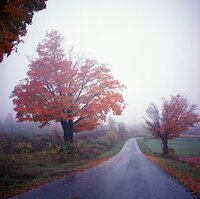
Rainy Day Trees

A
Rainy Day Trees

  • 4
  • 0
  • 59
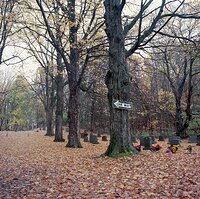
One Way

A
One Way

  • 1
  • 1
  • 57

Forum statistics

Threads
203,152
Messages
2,850,617
Members
101,700
Latest member
Cpeason301
Recent bookmarks
1
I'm glad Mr. Anchell is right on top of it!

Anyway, according to a handout I have from John Wimberley, it should say "sodium bisulfite 20.0 g" It goes in the list of ingredients right after the metol.

I'd suggest taking a pinch of bisulfite and dissolve it first before adding the metol.

Kirk
 
Bob

This is an authentic Canadian Formula of Kodak's D-52.
It is similar to Dektol, but has a different balance of metol and HQ , for a more useful contrast.

I've only used it for 40 years, but it shows promise.

It does everything Dektol will do, but you won't have to use the 2x4.
Don't tell Les.

PM me for how you can easily use Bromide as a control.

Dead Link Removed
 
It's identical to D-52 except for the 12.5 g of Hydroquinone instead of 12 g. It's similar to Selectol, rather than Dektol so is slightly softer working.

Ian
 
Here is an official Kodak formula for D-52, Photo Almanac, Anchell 1st Ed.

Water 500 ml 500 ml 500 ml
Elon 1.5 g 1.5 g 1.5 g
Sodium Sulfite (anh) 22.5 g 22.5 g 21.2 g
HQ 6 g 6.5 g 6.0 g
Sodium Carbonate (monohydrate) 17g 15.0 g 17.0 g
Potassium Bromide 1.5 g 1.5 g 1.5 g

Water to 1 liter in each case.

I also have the Handbook of Chemistry and Physics version and I'm sure some others, but they are basically all in the range of the above.

The formatting of the above, while neat in the original, turns into crap when posted. Sorry! I've tried to patch it as best as possible but nothing helps.

PE
 
Last edited by a moderator:
It's identical to D-52 except for the 12.5 g of Hydroquinone instead of 12 g. It's similar to Selectol, rather than Dektol so is slightly softer working.

Ian

Yes. And we should note, that we aren't talking about Selectol Soft !!!!!

Softer working, but fully capable of printing a proper #2 negative on #2 paper with full Dmax blacks. It is just a lot easier to control than Dektol.

And if you can make D-72, you can make this.
 
Bob

This is an authentic Canadian Formula of Kodak's D-52.
It is similar to Dektol, but has a different balance of metol and HQ , for a more useful contrast.

I've only used it for 40 years, but it shows promise.

It does everything Dektol will do, but you won't have to use the 2x4.
Don't tell Les.

PM me for how you can easily use Bromide as a control.

Dead Link Removed

Interesting how Kodak Canada was offering metric equivalents as early as 1926!
 
Interesting how Kodak Canada was offering metric equivalents as early as 1926!

And describing the alternative as "avoirdupois" :smile:.

Matt
 
And describing the alternative as "avoirdupois" :smile:.

Matt
Because that's the correct name for the system. See: http://en.wikipedia.org/wiki/Avoirdupois

The British and US systems vary because the British included the "stone" unit and wanted to make larger units easily divisible by 14, which is what the "stone" mass equals in pounds.

The greek drachma was the equivalent to the avoirdupois "dram".

Lee
 
Because that's the correct name for the system. See: http://en.wikipedia.org/wiki/Avoirdupois

The British and US systems vary because the British included the "stone" unit and wanted to make larger units easily divisible by 14, which is what the "stone" mass equals in pounds.

The greek drachma was the equivalent to the avoirdupois "dram".

Lee

I know that to be true Lee, but it is so rare to actually see "avoirdupois" used, I had to comment on the Canadian correctness of it all! :smile::smile:

Matt
 
I know that to be true Lee, but it is so rare to actually see "avoirdupois" used, I had to comment on the Canadian correctness of it all! :smile::smile:

Matt
Got it. :smile: I see it all the time on my uncle's 1930's Pelouze balance that I've used for 40 years for my darkroom weight measurements, so I guess I'm overly accustomed to it. FWIW, I have some US photo chemical company books from the 1930's that also have two columns for many formulae, one for avoirdupois and one for metric.

Lee
 
Interesting how Kodak Canada was offering metric equivalents as early as 1926!

Well I have Eastman Kodak Formulae from around 1912 and possibly earlier that are listed as metric as well a avoirdupois from the outset. Ron (PE) raises the issue of the Photo Lab Index/Photo Almanac's etc problems, many conversions between anhydrous and mono-hyrdated/crystalline forms of sulphites/carbonates were incorrect, as well as metric/avoirdupois conversions. The only reasonably reliable sources are the original manufacturers publications, even these have the odd error but these are few and far between.

Ian
 
Last edited by a moderator:
Because that's the correct name for the system. See: http://en.wikipedia.org/wiki/Avoirdupois

The British and US systems vary because the British included the "stone" unit and wanted to make larger units easily divisible by 14, which is what the "stone" mass equals in pounds.

The greek drachma was the equivalent to the avoirdupois "dram".

Lee

There is also a major difference in liquid measure, A US Gallon is 3.85L, a British Gallon is 4.5L, so if you require 5 grains of something per gallon, then you need to know which gallon.
 
Photrio.com contains affiliate links to products. We may receive a commission for purchases made through these links.
To read our full affiliate disclosure statement please click Here.

PHOTRIO PARTNERS EQUALLY FUNDING OUR COMMUNITY:


Ilford ADOX Freestyle Photographic Stearman Press Weldon Color Lab Blue Moon Camera & Machine
Top Bottom
