• Welcome to Photrio!
    Registration is fast and free. Join today to unlock search, see fewer ads, and access all forum features.
    Click here to sign up

Hello all, longtime optical designer here.

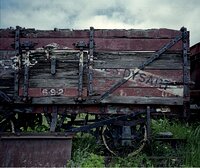
A coal wagon

A
A coal wagon

  • 2
  • 1
  • 32
Morning Birdie

D
Morning Birdie

  • 1
  • 2
  • 36

Forum statistics

Threads
203,142
Messages
2,850,478
Members
101,692
Latest member
eviosl
Recent bookmarks
0

jonesmi

Subscriber
Allowing Ads
Joined
Jan 11, 2026
Messages
10
Location
Texas
Format
Multi Format
I've been doing optical design since 1972, including university, photographic, defense and astronomical optics. I'd love to discuss camera lens design here, with an emphasis on large-format lenses. These lenses fascinate me, and I'm interested in how well lens aberrations are controlled in historical and contemporary lenses. Nice to meet everyone!
Mike
 
Welcome, Mike! You should have a good experience here as optical desing if often discussed. I'll be starting a thread soon on a specific question I have regarding how to use a 19th century lens with an aperture wheel but no markings. Hopefully that will be something you can help me with. :smile:
 
I'm looking forward to these discussions!
 
I've been doing optical design since 1972, including university, photographic, defense and astronomical optics. I'd love to discuss camera lens design here, with an emphasis on large-format lenses. These lenses fascinate me, and I'm interested in how well lens aberrations are controlled in historical and contemporary lenses. Nice to meet everyone!
Mike

Interesting. FWIW, I've been using such lenses for decades and still don't know how to recognize aberrations in my photographs.

The little voice in the back of my mind wonders why you don't go into databases of lens designs, e.g. OSLO's or the smaller but free one on dioptrique.info, and use your design software to see how well the prescriptions do. I think that dioptrique.info shows how some aberrations vary by angle off-axis.

I understand that prescriptions are idealized representations of lenses as actually made, am having trouble understanding how anything I can report about mine can interest anyone. Except, perhaps, for remarks about distortion seen in, e.g., the few photographs of USAF 1951 test charts I've taken.
 
Welcome Mike and perhaps you could provide more information about the lens used by Julia Margaret Cameron?

The Jamin lens consisted of two separate groups of elements. It had rack and pinion focussing and a fixed aperture of f 3.6, a design invented by the Hungarian mathematician Joseph Max Petzval in 1840.
 
Yeah, me too! I will start posting some camera lens designs and performance as the weeks go by. It's always interesting to me to see how bad these lenses look when analyzed in optical design software, yet they perform beautifully in reality. Or for some lenses, not so much.
 
Yeah, me too! I will start posting some camera lens designs and performance as the weeks go by. It's always interesting to me to see how bad these lenses look when analyzed in optical design software, yet they perform beautifully in reality. Or for some lenses, not so much.

Welcome to Photrio. Do the old designs perform beautifully in a technical or aesthetic sense? There's something about pictures that have defects, unfocused areas, and other antique parameters that make them aesthetically attractive, yet technically they're awful.
 
Interesting. FWIW, I've been using such lenses for decades and still don't know how to recognize aberrations in my photographs.

The little voice in the back of my mind wonders why you don't go into databases of lens designs, e.g. OSLO's or the smaller but free one on dioptrique.info, and use your design software to see how well the prescriptions do. I think that dioptrique.info shows how some aberrations vary by angle off-axis.

I understand that prescriptions are idealized representations of lenses as actually made, am having trouble understanding how anything I can report about mine can interest anyone. Except, perhaps, for remarks about distortion seen in, e.g., the few photographs of USAF 1951 test charts I've taken.

It is often hard to get optical prescriptions for old lenses in US patents. I have examined tens of thousands of old lens patents, both for work and as a hobby, and for some older lenses the prescriptions are even hand-written on the patents!

Here's how to see your aberrations: go out somewhere dark, focus well at infinity, and take perhaps 1-3 second time exposures of star fields (depending on ASA). Best to use a 2nd magnitude star so it doesn't blow fine detail away. Put stars in the center, sides and all four corners of the field. This will directly show you your point spread functions (PSFs) across the FOV, and even show focal plane tilt on large format cameras. I can post up some representative PSFs of astigmatism, coma, lateral color and so forth so you can compare them to what you image.

 
It is often hard to get optical prescriptions for old lenses in US patents. I have examined tens of thousands of old lens patents, both for work and as a hobby, and for some older lenses the prescriptions are even hand-written on the patents!

Thanks for the reply.

Three thoughts. First about making point spread functions visible, fine, wonderful, thanks for the hint. Who will pay for the film and processing? How will seeing them benefit my photography? Have you looked at dioptrique.info?
 
Thanks for the reply.

Three thoughts. First about making point spread functions visible, fine, wonderful, thanks for the hint. Who will pay for the film and processing? How will seeing them benefit my photography? Have you looked at dioptrique.info?

You're most welcome.
Not following your pay question.
Yes, dioptrique.info is another good historical lens site. I don't speak French, so I'll have to let Google Translate do it.
 
You're most welcome.
Not following your pay question.
Yes, dioptrique.info is another good historical lens site. I don't speak French, so I'll have to let Google Translate do it.

About paying. I have many lenses, and by lens I mean design type and manufacturer, e.g., f/6.3 Tessar and Zeiss, f/6.8 Beryl (Dagor clone, I don't know which version) and Boyer, and so on. Using film to find PSFs is somewhat costly these days. Before I take the pictures needed to see PSFs I'd like to know how seeing them is likely to change my practice as a photographer.

I ask this last question because I've never known what to take away from the calculated PSFs on dioptrique.
 
I've been doing optical design since 1972, including university, photographic, defense and astronomical optics. I'd love to discuss camera lens design here, with an emphasis on large-format lenses. These lenses fascinate me, and I'm interested in how well lens aberrations are controlled in historical and contemporary lenses. Nice to meet everyone!
Mike

We will,most likely , have thousands of questions for a guy with your experience. Here is my first: the Nikon 105mm f/2.5 comes as a Sonnar and as a Gauss version. Is there any objective reason why one would be better than the other?
 
Welcome to photrio, great to have you here!

If you ever look into the APO EL Nikkors, I'd be very curious to know more about their special design.

One day I hope to own the 210mm one....
 
Welcome to Photrio.
 
Welcome to Photrio!!
 
It is often hard to get optical prescriptions for old lenses in US patents. I have examined tens of thousands of old lens patents, both for work and as a hobby, and for some older lenses the prescriptions are even hand-written on the patents!

Here's how to see your aberrations: go out somewhere dark, focus well at infinity, and take perhaps 1-3 second time exposures of star fields (depending on ASA). Best to use a 2nd magnitude star so it doesn't blow fine detail away. Put stars in the center, sides and all four corners of the field. This will directly show you your point spread functions (PSFs) across the FOV, and even show focal plane tilt on large format cameras. I can post up some representative PSFs of astigmatism, coma, lateral color and so forth so you can compare them to what you image.

I am no expert on optical patents, but as a holder of several patents on mechanical devices and processes I can say that it is a good practice to not be any more specific in one's patent application than you have to be. Otherwise it may turn out that you patent some sub-optimal configuration that if you then improve upon and are found to be operating outside your patent then so can anyone else. That may be what is going on in optics.
Bruce
 
I am no expert on optical patents, but as a holder of several patents on mechanical devices and processes I can say that it is a good practice to not be any more specific in one's patent application than you have to be. Otherwise it may turn out that you patent some sub-optimal configuration that if you then improve upon and are found to be operating outside your patent then so can anyone else. That may be what is going on in optics.
Bruce

That's pretty much what our patent lawyers at work suggested, too. Sometimes it's better not to file a patent, so your competition does not get to know what you're doing and just use your idea to improve your own product or processes. If you file a patent, your idea is out in the public with limited protection. Not knowing about it is pretty good protection, too.
 
That's pretty much what our patent lawyers at work suggested, too. Sometimes it's better not to file a patent, so your competition does not get to know what you're doing and just use your idea to improve your own product or processes. If you file a patent, your idea is out in the public with limited protection. Not knowing about it is pretty good protection, too.

I have worked at a place where we relied upon secrecy to protect our IP. It turned out that anyone with enough money can purchase your device and reverse engineer it. This happened at a company that I worked for in the optics industry. I don't want to name names, although it may be obvious to anyone involved, but a user of the device that we were the sole provider of did not feel comfortable about the situation, so they went to great lengths to analyse a device that we were providing and that we relying upon secrecy rather than patent protection to maintain a monopoly upon. They then applied for a patent, with all the details. Since they had no actual interest in producing the device but just wanted to encourage our competitors to produce competing devices, they then withdrew the patent application once the information was public.
 
It turned out that anyone with enough money can purchase your device and reverse engineer it.
Most of the time, yes. There are a few notable examples where this seems to take remarkably long despite massive investments. However, it's likely a matter of time and persistence.

I'd like to point out that the rationales for keeping patents generic mentioned between you and @RalphLambrecht are really distinct ones. One is about flexibility and in a way, efficiency. The other is about safeguarding competitive advantage.
 
They then applied for a patent, with all the details. Since they had no actual interest in producing the device but just wanted to encourage our competitors to produce competing devices, they then withdrew the patent application once the information was public.

At a previous employer, there was an instance where we did not want to file for a patent (because as you mentioned, people will then be able to see or reverse engineer the invention), and we did want to prevent others filing a patent, so the guys at the IP office put an ad in a tiny local newspaper outlining the invention (thereby making it public domain). For dull legal people, those guys were pretty wild.
 
Most of the time, yes. There are a few notable examples where this seems to take remarkably long despite massive investments. However, it's likely a matter of time and persistence.

I'd like to point out that the rationales for keeping patents generic mentioned between you and @RalphLambrecht are really distinct ones. One is about flexibility and in a way, efficiency. The other is about safeguarding competitive advantage.

Most of the time, yes. There are a few notable examples where this seems to take remarkably long despite massive investments. However, it's likely a matter of time and persistence.

I'd like to point out that the rationales for keeping patents generic mentioned between you and @RalphLambrecht are really distinct ones. One is about flexibility and in a way, efficiency. The other is about safeguarding competitive advantage.

It turned out that anyone with enough money can purchase your device and reverse engineer it. of course with a patent paper in hand, that gets even easier, or the patent paper raised the awareness in the first place. Patents can be counterproductive.
 
Photrio.com contains affiliate links to products. We may receive a commission for purchases made through these links.
To read our full affiliate disclosure statement please click Here.

PHOTRIO PARTNERS EQUALLY FUNDING OUR COMMUNITY:


Ilford ADOX Freestyle Photographic Stearman Press Weldon Color Lab Blue Moon Camera & Machine
Top Bottom