

• Welcome to Photrio!
    Registration is fast and free. Join today to unlock search, see fewer ads, and access all forum features.
    Click here to sign up

Heiland LED Printing Question - how to vary contrast

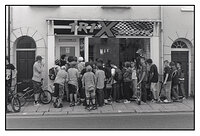
New Kids on the block

A
New Kids on the block

  • 1
  • 0
  • 28
Parliament Square.

A
Parliament Square.

  • 1
  • 0
  • 92

Forum statistics

Threads
203,342
Messages
2,853,222
Members
101,796
Latest member
wus1026
Recent bookmarks
0

andrewherrick

Subscriber
Allowing Ads
Joined
Mar 26, 2009
Messages
13
Format
8x10 Format
Hi everyone,

A few days back I asked a question here about the Heiland Splitgrade and Comfort Controllers. Thank you to everyone who helped with that question, it was very helpful. I’ve concluded that if I want the Comfort Controller, I would also need the Splitgrade controller.

I think I’ve also realised however that if I actually don’t want either the Splitgrade, or Comfort Controllers. I just want to do simple / non splitgrade printing, similar to a CMY head, which is what I am used to. I thought this is what the Comfort Controller was for, but I realise now this is what I need… the HEILAND ELECTRONIC LED controller-adapter for time switches or analysers

My question now is how I do CMY printing with this device, when as I understand it, the system works by varying RGB colours?

If I want to reduce contrast, and I would have previously done this by adding 10Y on a CMY colour head, would I achieve this by reducing blue on the Heiland LED unit? Similarly if I wanted to increase contrast, say by adding 10M on a CMY colour head, would I reduce green using this control unit?

Is there some way to know how any changes to blue and green, would be equivalent to units of yellow and magenta, on an old style CMY head?

Thanks so much for your help

Andrew
 
My question now is how I do CMY printing with this device, when as I understand it, the system works by varying RGB colours?

I don't think the product you linked to is intended to be used that way. I think you set the paper grade, the controller then decides how it translates this into the required green to blue ratio. Red is not used/needed for VC printing.

I think the best course of action is to let go of how things used to work in your current setup and instead embrace the functionality as offered by the product of your choice. Forget about CMY if you're going to use an RGB light source and instead get used to how that works.

If you absolutely must adhere to the CMY way of thinking (which IMO is entirely counterproductive to what you're doing, printing-wise), then use the "Control unit for color processes". This is specifically designed to control light source color in RGB or CMY mode. Note that 'CMY' mode is kind of a fantasy/simulation here since it's not an actual subtractive light source, but you can forget about that as well since it doesn't really matter for your application and you can just assume that CMY works roughly like you're used to. However, there's no guarantee whatsoever that the CMY values you're used to on your current enlarger map 1:1 to the new setup.

If you buy a new car with a nifty fully automatic/smart transmission, you also don't ask the dealer to graft an old-school stick shift onto it. The machine isn't supposed to work that way and ultimately you'll realize (after having tried it) that it actually works better if you use it the way it's designed to be used.

Having said that, I can't blame you for getting confused w.r.t. which Heiland controller to purchase with your light source. It's beyond me why he decided it would be a good idea to have 3 different controllers for the same light source while all functionality could be easily integrated into a single control box. A very unfortunate decision in terms of product strategy.
 
ok thanks and point taken about leaving CMY behind. If that is the case, how does this unit work? Is it basically setting the dial to a paper grade, then it figures out the colour to achieve that?
 
The Heiland led-controllers small devices to make the led unit work in your situation.
There is one to use with the split grade controller.
Then there is one to use with other analysers (or no analyser at all)
And there is one to use for color printing.
 
Hi everyone,

A few days back I asked a question here about the Heiland Splitgrade and Comfort Controllers. Thank you to everyone who helped with that question, it was very helpful. I’ve concluded that if I want the Comfort Controller, I would also need the Splitgrade controller.

I think I’ve also realised however that if I actually don’t want either the Splitgrade, or Comfort Controllers. I just want to do simple / non splitgrade printing, similar to a CMY head, which is what I am used to. I thought this is what the Comfort Controller was for, but I realise now this is what I need… the HEILAND ELECTRONIC LED controller-adapter for time switches or analysers

My question now is how I do CMY printing with this device, when as I understand it, the system works by varying RGB colours?

If I want to reduce contrast, and I would have previously done this by adding 10Y on a CMY colour head, would I achieve this by reducing blue on the Heiland LED unit? Similarly if I wanted to increase contrast, say by adding 10M on a CMY colour head, would I reduce green using this control unit?

Is there some way to know how any changes to blue and green, would be equivalent to units of yellow and magenta, on an old style CMY head?

Thanks so much for your help

Andrew

I use this controller and only this controller. You selected paper grade between 0.0 and 5.0, and brightness, and off you go. The controller decides what LEDs and in what amount are needed to achieve the desired grade and output. There is no independent control of CMY. This makes it way simpler to use.


I happen to use it primarily for split grade printing, so I almost always use only 0.0 and 5.0 settings, though I do vary the brightness according to the negative.

The first system I got was defective, and was promptly replaced. It has been perfect ever since. It is leagues better than the old condenser/filter and VC cold light systems I used for years. There is no brightness drift and the various grades appear to be pretty well speed matched. The light is also entirely even across even the largest negatives. Very happy with it.
 
This is not quite the situation you are in but to respond to your post 1.
I have a blue green enlarger and a Magenta Yellow enlarger and asked the same question. I used a Stouffer step wedge and the various grade settings on the M/Y enlarger to create a set of negatives showing each half grade and the visible steps from black to white. I then played around with the B/G enlarger until I had the same number of visible steps. At that point I could say that each grade in my system was this colour setting in both enlargers which left time exposure as the variable. I helped me a lot to the point that now I can look at a negative and estimate time of green and time of blue ( or M/Y) without regard to grade number.
It was a helpful exercise for me.
 
One other thing about the controller you pointed to:

The ability to turn on a red safe light has the nice property of allowing you to preposition dodging or burning tools ahead of the exposure.

This is handy when you have a relatively small amount of image real estate to dodge or burn and/or when the exposure time is short and you don't want to waste time finding the geometry of interest.

I sort of tripped across this in today's printing session and it was super helpful.

I have been using the head with the simple Controller-Adapter for several months now and have never found a need for anything more.

Of late, I've been printing old negatives from the 1990s forward. These are all over the place in format and negative density as I was doing a lot of learning and experimentation back then. The ability to control the head's light output over a wide range has proven to be a terrific capability in that context.

Personally, I've never understood why people feel the need to know what "Grade" they are printing. This is a hold over to the old days when only graded papers were available and you had to pick one and then fiddle it as necessary with developer time & dilution, potassium bromide, benzotriazole, etc.

But the real power of VC is to print for the image itself and decide on the soft light time/intensity for the highlights, and hard light time/intensity for the shadows. This then is further exploited to improve local contrast by dodging/burning with much the same mindset. The final print isn't bound to some specific "Grade". It's optimized for appearance. I haven't made a print in 20+ years where I knew even the approximate grade.
 
I would like to see Ilford make a video on how these controllers and light sources work. Ilford (Harman Technologies) wins the prize for instructional videos in English. I'm a prime candidate for a Heiland setup and I'm not sold on it.
My current setups incorporate timer and filtration changes. Blue/Green. I have a virgin CMY colorhead to fall back on thank goodness. Ilford (thankfully) still puts Y/M values in instructions.
 
I would like to see Ilford make a video on how these controllers and light sources work. Ilford (Harman Technologies) wins the prize for instructional videos in English. I'm a prime candidate for a Heiland setup and I'm not sold on it.
My current setups incorporate timer and filtration changes. Blue/Green. I have a virgin CMY colorhead to fall back on thank goodness. Ilford (thankfully) still puts Y/M values in instructions.

No complex instructions needed:


1. Install the Heiland:

Mount it on the enlarger. One cord goes to your timer, one cord goes to the controller. Plug in the controller power source

At least with my D2, I had to use the lower housing of the original light source as the mount point for the new head. That's because it is configured for this AND because it is so light it needs some weight above it to hold it in place.

The only tricky part was installing it into my D2 lower housing because the head's mounting holes did not line up perfectly. So I had to fiddle the mounting ears a bit to get it to go. It's not a critical adjustment and took all of 20 minutes. The old Omegas were not precision machines and Heiland didn't leave any "slop" in their mounting configuration for normal manufacturing tolerances in the enlargers. I suspect this is only a problem for old Omegas and not newer enlargers.

2. Use the Heiland:

Select paper grade from 0.0 to 5.0 on the controller. Dial in desired brightness. Start the timer.


There is a Focus mode that gives you white light on the easel and a safelight mode that gives you red.


The one and only thing I did not like about the head as shipped was that there was no gasket at the interface of where the light source touches the negative carrier. Well ... there was one but it was painfully thin. This allowed some slight light leakage when the head was on. I fixed this by installing weatherstripping foam around the perimeter of the light source. When I lower the head, this compresses to form a light tight seal.
 
Last edited:
My setup has a sensor that allows for variable contrast constant exposure (VCCE) is this happening with the Heiland setup?? This is what's unclear (I'm not the sharpest knife in the drawer so bear with me). On my setup the soft and hard mix changes exposure times. I have a vario Stopclock that runs 2 Zone VI VC cold lights on 5x7 and 8x10 type 2 ZoneVI enlargers. This is as wonderful a setup that any dummy like me could ask for.

My day to day is a 4x5 enlarger I use for medium format is a Beseler Universal 45, RGB, 3 separate lamps, 1 red, 1 green and 1 blue. With VC control just uses a mix of green and blue to produce different contrasts, closed loop so each lamp is monitored. Different controller allows for color printing, get this, even though it's additive through separate RGB dichro filters, the controller interacts with the operator in CMY 😆 😎

I'm in the place of everything is working fine so don't fix something that's not broken.

Still I'm intrigued with the Heiland setup, I may need to get one someday

Best Regards Mike
 
The Heiland will work similarly to your RGB setup; the only thing different is the closed loop thing which just isn't necessary on the Heiland because the LEDs don't drift significantly.

Not sure if the closed loop thing is the same as the 'variable contrast constant exposure' thing you mentioned.
 
My setup has a sensor that allows for variable contrast constant exposure (VCCE) is this happening with the Heiland setup?? This is what's unclear (I'm not the sharpest knife in the drawer so bear with me). On my setup the soft and hard mix changes exposure times. I have a vario Stopclock that runs 2 Zone VI VC cold lights on 5x7 and 8x10 type 2 ZoneVI enlargers. This is as wonderful a setup that any dummy like me could ask for.

My day to day is a 4x5 enlarger I use for medium format is a Beseler Universal 45, RGB, 3 separate lamps, 1 red, 1 green and 1 blue. With VC control just uses a mix of green and blue to produce different contrasts, closed loop so each lamp is monitored. Different controller allows for color printing, get this, even though it's additive through separate RGB dichro filters, the controller interacts with the operator in CMY 😆 😎

I'm in the place of everything is working fine so don't fix something that's not broken.

Still I'm intrigued with the Heiland setup, I may need to get one someday

Best Regards Mike

You do not vary green/blue with the Heiland, you select grade. As far as I can tell , the different grades are all the same light output but I have not tested it rigorously.

Level matching was necessary on the older heads because of how both incandescent bulbs and cold light fluorescent tubes work. I do not think LEDs have this problem.
 
As far as I can tell , the different grades are all the same light output when I have not tested it rigorously.
Note that 'same light output' is a very fickle concept if you factor in:
* What kind of unit you're talking about in reference to pure blue & green light
* The sensitivity of the paper
* How you define the amount of exposure that would produce an equivalent print across the grades (i.e. are you looking at the toe, midtones or shoulder of the paper curve)

I do not think LEDs have this problem.
It depends, but the drift is unlikely to be as unpredictable as a tungsten bulb on a non-stabilized power supply. I.e. there can still be a drift, but it will be more consistent and therefore not much of an issue in the real world.
 
When I choose the correct paper in the Heiland controller I get consistent highlight exposure across any grade. This is one of the main advantages of the system, though it’s not hard to test for this otherwise with any system. Make sure you have your preference set for “lights” or highlights.
 
Note that 'same light output' is a very fickle concept if you factor in:
* What kind of unit you're talking about in reference to pure blue & green light
* The sensitivity of the paper
* How you define the amount of exposure that would produce an equivalent print across the grades (i.e. are you looking at the toe, midtones or shoulder of the paper curve)

Sure, but I think the point is that viz a fluorescing tube or incandescent light source, the various colors of LED will be very close to the same level of light emission. In fact, I think there may be trimmers on this controllers to adjust for slight differences but it's not a documented features for users (and I'm not sure exactly what those trimmers do).

As you say, how that maps onto the spectral response curve of various papers is a whole other discussion.

It depends, but the drift is unlikely to be as unpredictable as a tungsten bulb on a non-stabilized power supply. I.e. there can still be a drift, but it will be more consistent and therefore not much of an issue in the real world.

I have seen none.

For each height/lens/aperture/light output setting I use regularly, I have a LunaPro reading taken on the easel with its enlarging attachment and empty negative carrier and the controller set to "Focus" (white light). Within the resolution of the light meter, I do not see drift even if the head is on for a while. The LunPro will show variations of about 1/6 stop in the middle of its low measurement range. If I can't see that, it's more than good enough for anything I plan to do.

Interestingly, I have a rehabilitated a number of LunaPros. Imagine my surprise when I discovered significant variability among the various enlarging attachments themselves. When I say "significant" I mean 1/2 to 2/3 stops different readings if I use different enlarging attachment with the same meter. All I care about is repeatability, so I selected the best attachment I owned and use it as my easel light measuring tool.
 
When I choose the correct paper in the Heiland controller I get consistent highlight exposure across any grade. This is one of the main advantages of the system, though it’s not hard to test for this otherwise with any system. Make sure you have your preference set for “lights” or highlights.

The OP is talking about the basic VC controller, not the split grade model.
 
Sure, but I think the point is that viz a fluorescing tube or incandescent light source, the various colors of LED will be very close to the same level of light emission. In fact, I think there may be trimmers on this controllers to adjust for slight differences but it's not a documented features for users (and I'm not sure exactly what those trimmers do).

As you say, how that maps onto the spectral response curve of various papers is a whole other discussion.


I have seen none.

For each height/lens/aperture/light output setting I use regularly, I have a LunaPro reading taken on the easel with its enlarging attachment and empty negative carrier and the controller set to "Focus" (white light). Within the resolution of the light meter, I do not see drift even if the head is on for a while. The LunPro will show variations of about 1/6 stop in the middle of its low measurement range. If I can't see that, it's more than good enough for anything I plan to do.

Interestingly, I have a rehabilitated a number of LunaPros. Imagine my surprise when I discovered significant variability among the various enlarging attachments themselves. When I say "significant" I mean 1/2 to 2/3 stops different readings if I use different enlarging attachment with the same meter. All I care about is repeatability, so I selected the best attachment I owned and use it as my easel light measuring tool.

I wonder how reflectance readings off a gray card would work?? Would need to have same angle, would be tricky.
 
the various colors of LED will be very close to the same level of light emission.

I don't think so as that's essentially a meaningless statement for two reasons.

First, if the colors would have the same 'level of light emission' in the sense of the same light intensity per surface area, then they wouldn't produce different paper grades (BW) or color filtering (RA4). The ratios of course need to change for the whole concept to work.

Second, and probably more to the point: I assume you mean that when using this head for VC B&W printing, the blue & green ratios are similar in behavior to what Ilford Multigrade contrast filters also do: i.e. they give a similar exposure time on Ilford papers across a selection of paper grades to achieve a specific image tone. That does not amount to the 'same level of light emission' or 'same power' etc., though. Very much the opposite, in fact.

However, the whole thing IMO is pretty much moot. I've dealt with the same situation and went down the road of 'equal exposures across grades' concept, and realized at some point that...it was just a whole load of codswallop. There's not a whole lot of practical sense to it in a real-world darkroom printing situation. What works, regardless, is to just make a test strip (or probe measurement) for the grade you'll be printing at. When switching between grades, make a new test strip. That precludes the whole thing. Done. Easy. Works always.

I have seen none.
I totally believe you. My point was that there can be drift in LED exposure systems, but it's generally consistent (unless it's a very poorly designed unit) and if it's consistent, it's not much of an issue in the real world even if it's there. So it's nothing to worry about.

I stick firmly to what I said earlier, which is that if people are looking to adopt this system or any other kind of modern/new exposure system, the best they can do is forget about how things worked back in 1975 and just use the piece of equipment the way the manufacturer intended it to be used. We did that back in the day, I don't see why all of a sudden it would be different in modern times, but I see this all the time in the analog photography community. People want new things to work the way old stuff used to work 50 years ago with materials that are long gone. Why? It's ridiculous. Make the print already! (This isn't referring to you @chuckroast).
 
When changing between grades with the led unit, the time changes slightly. I use the "full" Heiland system (controller, comfort, led unit). When I made a working print with correct highlights, I switch the controller to keeping the highlights the same. Changing the grade to get the shadows in place then gives a very small change in time, like 1 or 2%.
 
Photrio.com contains affiliate links to products. We may receive a commission for purchases made through these links.
To read our full affiliate disclosure statement please click Here.

PHOTRIO PARTNERS EQUALLY FUNDING OUR COMMUNITY:


Ilford ADOX Freestyle Photographic Stearman Press Weldon Color Lab Blue Moon Camera & Machine
Top Bottom
