

Perhaps, but I'm not at all sure if the "Yes, Yes, Yes" of the photographer and the viewer actually coincide. Might be different for both, but the same on occasion. And perhaps the something that exists before the photo is taken is akin to Plato's Theory of Forms, but we'll have to ask Aristotle about this.At the start of the process, the artist (HCB) recognises the picture he wants to capture with “yes!…yes!…yes!” (as he put it). Would you say that artist and viewer are recognising the same thing, that there is in fact something independent of both that each recognises? I can believe in there being a visual form that appeals to both parties, it’s the recognition bit that bothers me. It seems to imply that this something exists before the photo is taken - in which case, what is it? A bundle of shared cultural references?
-
Welcome to Photrio!Registration is fast and free. Join today to unlock search, see fewer ads, and access all forum features.Click here to sign up
You are using an out of date browser. It may not display this or other websites correctly.
You should upgrade or use an alternative browser.
You should upgrade or use an alternative browser.
HCB Appreciation
-
A
- Thread starter cliveh
- Start date
Recent Classifieds
-
Want to Buy Mamiya RB67 TYPE A Cut film holders
- Started by pdccamerqs
-
For Sale Prontor Professional 1S
- Started by Stankula
-
For Sale Rolleiflex Original (Germany, 1929)
- Started by Manual Camera
-
For Sale Original Rolleiflex Lens Cap (bayonet 1)
- Started by Manual Camera
-
For Sale Rolleiflex Adapter for Cut Film and Plates
- Started by Manual Camera
Forum statistics


snusmumriken
Subscriber
It's worth keeping in mind that a lot of what we want to see in a photo originates from how Cartier-Bresson took them.
Well, yes, but his influence is strong because we ‘recognise’ something special in his photos. Or do you think his influence is strong solely because he was a pioneer?

I know a whole bunch of photographers, of people who practice photography every day, including some who are actually quite good at it, who never open a photobook, who don't even own a photo book, and thus who do not know how to look at photographs. Being a photographer just means that maybe you know how to photograph. I doesn't in any way mean you have something to say about photography.
I find some outstanding photographers are also excellent essayists (I've enjoyed Robert Adams 1, Robert Adams 2, Luigi Ghirri and Stephen Shore over the past few years) but in general I would take Susan Sontag's or Barthes' take on photography over what most photographers I've met or chatted to have to say on the matter, for the reasons you mention: people don't buy photography books and don't attend exhibitions.
On the book side of things - to be fair, it's probably not entirely people's fault. I blame the sorry state of the photobook publishing industry. No actually, I blame the entire format or concept. It seems to me photobooks are, for the average photography or art consumer, an esoteric, expensive, short lived, niche product. It's a product you can't just go out and buy whenever and wherever you want, like a classic paperback from your favourite Hemingways or Steinbeck or Céline. You need to catch a release in the short window in which it's being printed and distributed, otherwise all you're left with is either 'no book, forget it' or a used collectible sold at incredibly inflated prices by some scalper. Of course - the reason why a 12$ paperback is continuously and widely available and a 70$ art book is not is clear to all of us. But there must be a better way!
My point is, I'm sure many inquiring minds would jump immediately and deep dive on the immense amount of beautiful photography that's out there, somewhere, but it's just not as easy as popping into a photo store or browsing on Amazon and spending your money on yet another useless lens, or another camera body, or more gear for the darkroom. Or another poorly written, widely reprinted, guide by St. Ansel on the technical aspects of making 'fine art' prints of pine tree bark, bell peppers and big rocks in some national park.
It's just unthinkable that, save for a few really best selling legendary books by authors of extreme popular appeal, most of the really good stuff is just not commonly available, and hunting for great art in photography is a hobby into itself. Unless it's 'The Americans' or some glossy collection by HCB or Capa published by Taschen in postage stamp format, or one of those corny high contrast B&W Salgado books on Amazonia, I am just not able to discover new art the way I discover new literature or new music.
In fairness, I think this is an issue that some publishers are aware of. I have some releases by Errata Editions, who have a series focused on reprinting long out of print masterpieces to bring them to the fruition of the wider public - they will literally take pictures of the pages of an old original rare edition and make a book out of those reproductions (not sure how they get around IP issues) e.g.
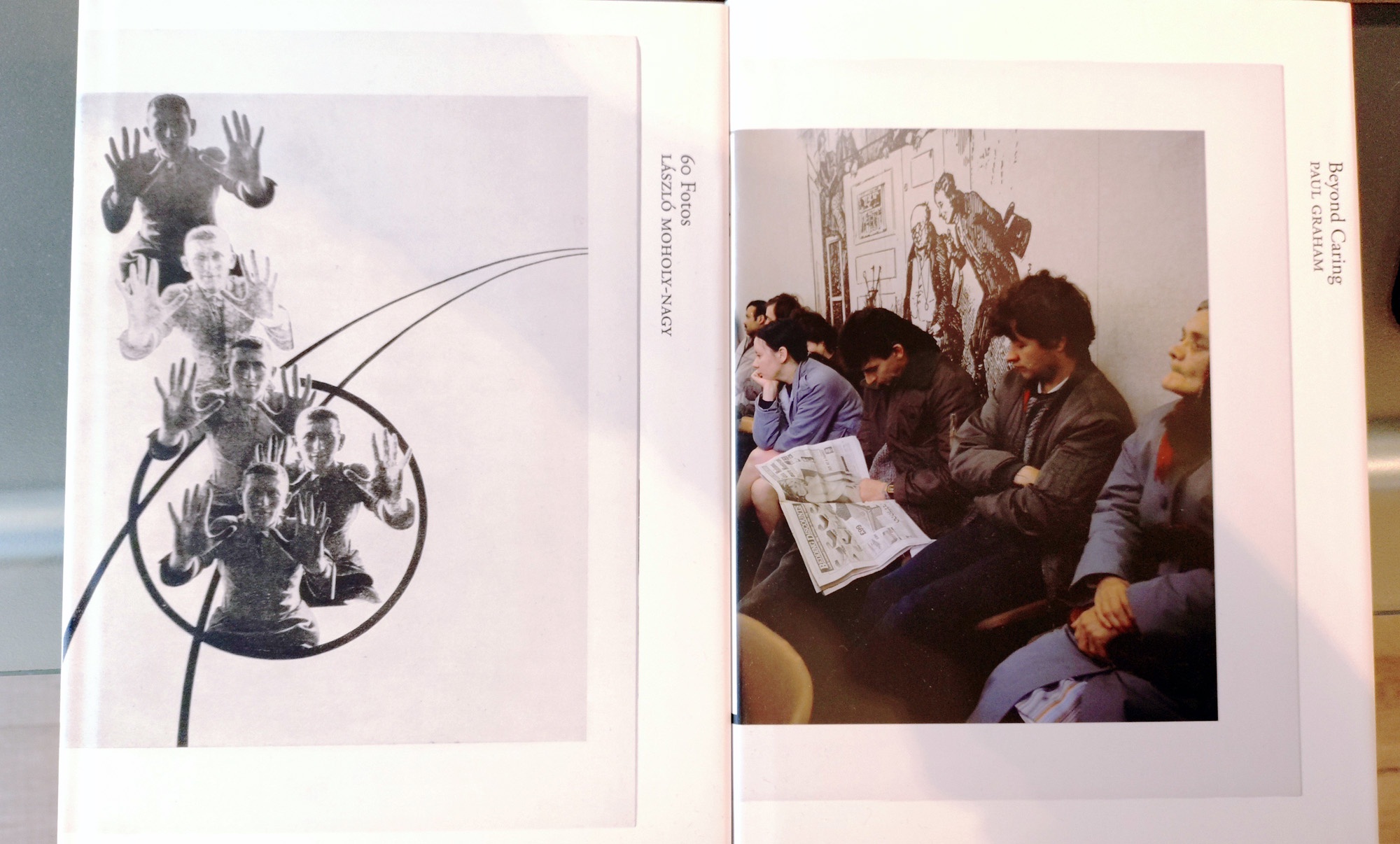
The quality is ok, and it's a two-finger-up-the-proverbial of people who are attempting to make $500 for the 'original' edition off Amazon. I personally wish there were more initiatives like this.
Last edited:
Well, yes, but his influence is strong because we ‘recognise’ something special in his photos. Or do you think his influence is strong solely because he was a pioneer?
No, I think he was very good - and a lot of other people thought so, too. But he also seemed to want to promote the way he took photos to everyone he met. His influence wasn't solely through people looking at his photos but also from him speaking with them. Helen Levitt is a prime example.
Finally, someone said it!But he also seemed to want to promote the way he took photos to everyone he met.

warden
Member
No actually, I blame the entire format or concept….
Very well put, and I couldn’t agree more. The photobook system as it exists is broken and rewards risk averse publishers and profiteering middlemen more than the photographic artists or the people that want to enjoy their books. It’s completely backwards, and frustrating.
warden
Member
Maybe the real/perceived state of photography books has something to do with demand. Photography has always generally been a hard sell in any format relative to other artforms.
Yes, the demand is small and seems to get smaller over time. I wouldn’t want to be in the photo book publishing industry; even when you have a book that sells out quickly and then skyrockets in value on the used market you don’t know if a reprint is going to pay off or ruin you. I get that. I do feel bad though when I see books like Pentti Sammallahti’s Here Far Away (which Amazon tells me I purchased in 2013 for about $45) now on the market for $400 or more and it has been that way for a decade or more. Sure would be nice for a reprint to happen, which could be a win for everyone involved in the production of the book and its enjoyment by the public.
There must be someone out there brainstorming on how to breathe life into the huge untapped pool of great photo art content that has briefly surfaced at some point only to be forgotten or squirrelled away in some dusty collection.
How do we get the young people to form an opinion, build a path towards understanding what photographers have been up to for the past 100 years? 'All' photographers, not only the top two-three wealthy American or European ones who went for beers with John Szarkowski or the one ones who made it really big through a 'transversal' talent (e.g. cinematography). The Turkish, the Mongolian, the Indian photographers, the Irish ones, the Argentinian ones etc.
Checking a few images via google images only gets you so far.
A "photo book" Netflix perhaps? Publishers getting together, digitising their collection and making it available via a pay-per-view sort of model? It's not like browsing a real book in the comfort of your armchair, but could get awfully close for anyone with an 11 inch iPad and some money for a monthly subscription.
If the film industry, infamous for its wars and production studios insularity, can do it (e.g. The MUBI streaming platform) why not the art publishers? Maybe I'm just a socialist and a dreamer
How do we get the young people to form an opinion, build a path towards understanding what photographers have been up to for the past 100 years? 'All' photographers, not only the top two-three wealthy American or European ones who went for beers with John Szarkowski or the one ones who made it really big through a 'transversal' talent (e.g. cinematography). The Turkish, the Mongolian, the Indian photographers, the Irish ones, the Argentinian ones etc.
Checking a few images via google images only gets you so far.
A "photo book" Netflix perhaps? Publishers getting together, digitising their collection and making it available via a pay-per-view sort of model? It's not like browsing a real book in the comfort of your armchair, but could get awfully close for anyone with an 11 inch iPad and some money for a monthly subscription.
If the film industry, infamous for its wars and production studios insularity, can do it (e.g. The MUBI streaming platform) why not the art publishers? Maybe I'm just a socialist and a dreamer
Last edited:

Alan Edward Klein
Member
Very well put, and I couldn’t agree more. The photobook system as it exists is broken and rewards risk averse publishers and profiteering middlemen more than the photographic artists or the people that want to enjoy their books. It’s completely backwards, and frustrating.
How should it be done differently?

Alex Benjamin
Subscriber
But he also seemed to want to promote the way he took photos to everyone he met. His influence wasn't solely through people looking at his photos but also from him speaking with them.
Finally, someone said it!
All evidence points to the contrary. Cartier-Bresson was no Ansel Adams. If you read the interviews he gave, he clearly got bored, if not annoyed, at answering the same questions over and over again about "the decisive moment". What Cartier-Bresson had to say about himself and about photography actually amounts to very little.
And evidence also points to the fact that Cartier-Bresson was extremely respectful of other photographers' views on photography. Koudelka mentions this, as did others. He had his way of doing things, but never insisted on others doing it the same way. He also mentions this in interviews—he was well aware that his influence was strong and that he had started to be imitated—, and there is no reason to believe he was untruthful about it.
Did he talk about his views on photography with other photographers? Of course! What photographer doesn't? This is what photographers do when they meet each other. But that he may have talked about how he did things in no way means that he was "promoting" his way of doing things. And the extent to which they did talk about photography is impossible to tell. Maybe they talked more about family, about friendship, about traveling, about what was happening in the world, about a good Bordeaux he tasted last week, about Surrealism, or about Buddhism—and when on does read the few interviews he gave, one actually realizes that he did talk about Surrealism and about Buddhism as often, if not more often, then he talked about "the decisive moment" or the "yes, yes, yes".
Even more important than all this, people seem to forget that Cartier-Bresson did not have one way to take photos. We think this because we are always put in front of the same "desive moment" photographs and because we adhere to the Cartier-Bresson myths conveided through the dozen or so quotes he left—as if a few quotes are capable of summerizing the complexity and richness of a person's thought and vision. It's interesting to note that many times when members here have criticized, negatively or positively some Cartier-Bresson photos posted in this and other threads, often what they were actually saying was either "this is not a great photo because it does not conform to my expectation of what a great Cartier-Bresson photograph should look like" or "this is a great photo because I've manage to find in it things that conform to my idea of what a great Cartier-Bresson photo should look like."
During his active years, Cartier-Bresson traveled the world, going to places few photographers could visit, saw things few photographers had the chance to see, and took thousands of negatives. He was first and foremost curious about people, had an uncanny sense of place and context and how people fit in them, but, like all photographers, he experimented and tried different things (the few contact sheets we do have access to show this).
He took a lot of photos, and we tend to forget that most of these photos were done on assignment, and that they weren't meant for books or museum walls, but for magazines.
The extend to which his photographs were seen, and the number of different photographs that were seen, is difficult for us to imaginte today. It's fascinating to think that people who lived in these times and saw Cartier-Bresson photos in magazines had a different and much more extended experience with his photographs—with the wide range of his photography—then we do. Their expectations were different: when they looked at the photos from the USSR, they did not expect to see "Cartier-Bresson yes yes yes decisive moment formally perfect" photographs, they expected to see photographs about how people lived in the USSR. Same with the Gandhi funeral: they expected to see what happened that day. Because there was no other way back then of knowing what happened "that day", of knowing how people lived over there. Telling that was also the function of photographs, and Cartier-Bresson knew that very well. That's why he took the picture, and that's why he took it the way it had to be taken, not necessarily "his and the only way" a picture should be taken.
Did he end up with some he prefered because they better fitted with the formal artistic patterns he inherited from painting? Of course. We all have photos we prefer, and these are the ones we would publish or hang on museum wall (if we could do so). That doesn't mean we would disown or disavow all the others.
All this long-winded post (sorry, either too much coffee or not enough, not quite sure) to say we actually know very little about Cartier-Bresson, beyond a few haiku-like quotations that seem intended more to make us look intelligent than to actually say something about his person, about half a dozen easily debunkable myths (no, he did not only use a 50mm lens), and the same few "iconic" photos published book after book. I've mentioned this before: it's absolutely unfathomable to realize that no serious, critical biography has been written about a man who, alongside the likes of Atget, Walker Evans, Ansel Adams, Robert Frank and maybe a couple more, has so profoundly impacted the trade, art and craft of photography. Amazing to think that there are more books written about Vivian Maier's life than there are about Cartier-Bresson.
Most of it is of his own doing. He himself was a haiku. He did not like to talk about himself—a far cry from self-promotion. I do suspect he liked the myths. It allowed him to be discreet. Like a Leica.

warden
Member
There must be someone out there brainstorming on how to breathe life into the huge untapped pool of great photo art content that has briefly surfaced at some point only to be forgotten or squirrelled away in some dusty collection.
There must be an opening in there somewhere, especially for books that appear to have great value and some demand and yet are not being reprinted. Some of the friction must be coming from the knowledge that Amazon and retailers like them are going to take probably half of the retail price of the reprint. Perhaps removing them from the equation would be a good first step for a new model. (I recognize the value retailers provide for the first printing, but perhaps later printings could benefit from a different approach.)
sorry for the off topic @cliveh
Alex Benjamin
Subscriber
On the book side of things - to be fair, it's probably not entirely people's fault. I blame the sorry state of the photobook publishing industry. No actually, I blame the entire format or concept. It seems to me photobooks are, for the average photographer or enthusiast, an esoteric, expensive, short lived, niche product. It's a product you can't just go out and buy whenever and wherever you want, like a classic paperback from your favourite Hemingways or Steinbeck or Céline. You need to catch a release in the short window in which it's being printed and distributed, otherwise all you're left with is either 'no book, forget it' or a used collectible sold at incredibly inflated prices by some scalper. Of course - the reason why a 12$ paperback is continuously and widely available and a 70$ art book is not is clear to all of us. But there must be a better way!
This is spot on.
I would just add the annoying (I'm being kind) tradition publishers now have of having photographers sign their books—or "pre-sign", since they seem to be doing this even before the book is put on sale—, and thus have the price bump from 90$ new to 250$ new to 600$ used.
snusmumriken
Subscriber
But he also seemed to want to promote the way he took photos to everyone he met.
Is that really fair comment, though? Clearly he had worked out a personal way of doing things that got photos he liked and that gave the process integrity. Plenty of people envied his results, and many have sought to imitate by copying his methods. Very few have come anywhere close.Finally, someone said it!
But was HCB an evangelist for his approach? By all accounts he was a reluctant interviewee. In the interviews one can watch online, he was uncomfortable and evasive. It's clear that if people came to him for advice, he often gave it; but many thought that simply buying a Leica and prowling the streets would get them similar results. And plenty of serious photographers didn't follow his example in any respect.
PS - I see that while I write typing this, @Alex Benjamin replied to similar effect.
Alex Benjamin
Subscriber
Is that really fair comment, though? Clearly he had worked out a personal way of doing things that got photos he liked and that gave the process integrity. Plenty of people envied his results, and many have sought to imitate by copying his methods. Very few have come anywhere close.
But was HCB an evangelist for his approach? By all accounts he was a reluctant interviewee. In the interviews one can watch online, he was uncomfortable and evasive. It's clear that if people came to him for advice, he often gave it; but many thought that simply buying a Leica and prowling the streets would get them similar results. And plenty of serious photographers didn't follow his example in any respect.
PS - I see that while I write typing this, @Alex Benjamin replied to similar effect.
We are indeed on the same page.
And I do admire your ability to state in just the right amount of words what I need pages to say. I have to better control my coffee intake.
snusmumriken
Subscriber
Well, I probably started drinking my coffee 5 hours before youWe are indeed on the same page.
And I do admire your ability to state in just the right amount of words what I need pages to say. I have to better control my coffee intake.

All evidence points to the contrary. Cartier-Bresson was no Ansel Adams. If you read the interviews he gave, he clearly got bored, if not annoyed, at answering the same questions over and over again about "the decisive moment".
Probably true, since in many interviews he projects this "arrogant" tone. For example when asked three times which music he prefers and all three times replies single-world "Bach" leaving the interviewer embarrassed.
This is also true. I read the letters the young Sergio Larrain and HCB exchanged and he had the most respect of the young Chilean, even when he left Magnum due to artistic differences.And evidence also points to the fact that Cartier-Bresson was extremely respectful of other photographers' views on photography.
Did he talk about his views on photography with other photographers? Of course! What photographer doesn't?
This might very well be true and never bothered me.
Amazing to think that there are more books written about Vivian Maier's life than there are about Cartier-Bresson.
My theory is that HCB photography is not that "easy".
Well, I probably started drinking my coffee 5 hours before you
Coffee is amazing never fails to deliver

There must be someone out there brainstorming on how to breathe life into the huge untapped pool of great photo art content that has briefly surfaced at some point only to be forgotten or squirrelled away in some dusty collection.
How do we get the young people to form an opinion, build a path towards understanding what photographers have been up to for the past 100 years? 'All' photographers, not only the top two-three wealthy American or European ones who went for beers with John Szarkowski or the one ones who made it really big through a 'transversal' talent (e.g. cinematography). The Turkish, the Mongolian, the Indian photographers, the Irish ones, the Argentinian ones etc.
Checking a few images via google images only gets you so far.
A "photo book" Netflix perhaps? Publishers getting together, digitising their collection and making it available via a pay-per-view sort of model? It's not like browsing a real book in the comfort of your armchair, but could get awfully close for anyone with an 11 inch iPad and some money for a monthly subscription.
If the film industry, infamous for its wars and production studios insularity, can do it (e.g. The MUBI streaming platform) why not the art publishers? Maybe I'm just a socialist and a dreamer
Well each week in the online seminar we do with my photography teacher we tend to discover new photographers from all over the world totally unknown to the public, thanks to his endless hours of digging in the Internet and in his photo book collection to find them.
Then we spend time presenting their work and discussing them and comparing them.
You will be surprised by how many they are out there. Here are a few whose work we saw yesterday, which I bet not many know about:
DAVIS_MARGO_(1944), USA
HARBUTT_CHARLES_(1935-2015), USA
NIESZ_ANITA_(1925-2013), SWITZERLAND
SHARMIN_SHARIA_(1966-), Bangladesh
RYDET_ZOFIA_(1911-1977), Poland
HOEPKER_THOMAS_(1936-), Germany
warden
Member
Well each week in the online seminar we do with my photography teacher we tend to discover new photographers from all over the world totally unknown to the public, thanks to his endless hours of digging in the Internet and in his photo book collection to find them.
Then we spend time presenting their work and discussing them and comparing them.
You will be surprised by how many they are out there. Here are a few whose work we saw yesterday, which I bet not many know about:
DAVIS_MARGO_(1944), USA
HARBUTT_CHARLES_(1935-2015), USA
NIESZ_ANITA_(1925-2013), SWITZERLAND
SHARMIN_SHARIA_(1966-), Bangladesh
RYDET_ZOFIA_(1911-1977), Poland
HOEPKER_THOMAS_(1936-), Germany
I think that’s a good illustration of the challenge to the publishing industry and the photographic community at large. You know of those relatively unknown photographers because you are already so dedicated to photography that you would take an online class to study it. The challenge is how to reach people that are not quite that dedicated, but would benefit from being exposed to the artists. I don’t have an answer to that challenge, but believe the crux of the matter is money, as usual.
Very well put, and I couldn’t agree more. The photobook system as it exists is broken and rewards risk averse publishers and profiteering middlemen more than the photographic artists or the people that want to enjoy their books. It’s completely backwards, and frustrating.
I've been told by booksellers that photo books are a strong category, simply because they can't be bought or appreciated as E-books.

- Arthurwg
- Deleted
- Reason: unnecessary
All evidence points to the contrary. Cartier-Bresson was no Ansel Adams. If you read the interviews he gave, he clearly got bored, if not annoyed, at answering the same questions over and over again about "the decisive moment".
I wasn't talking about that. Who cares how brusque he was with interviewers.
Is that really fair comment, though?
It wasn't meant to be a slight.
warden
Member
I like this image. It’s from a time when most people were getting similar information from the newspapers and no two hats were alike.
| Photrio.com contains affiliate links to products. We may receive a commission for purchases made through these links. To read our full affiliate disclosure statement please click Here. |
PHOTRIO PARTNERS EQUALLY FUNDING OUR COMMUNITY:  |