
• Welcome to Photrio!
    Registration is fast and free. Join today to unlock search, see fewer ads, and access all forum features.
    Click here to sign up

Handling Rollei Infrared 120 film

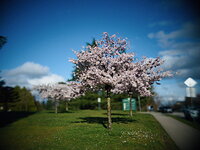
Blossom

D
Blossom

  • 1
  • 0
  • 10
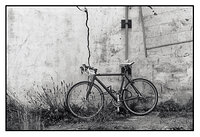
locked up bicycle

A
locked up bicycle

  • 3
  • 0
  • 42

Recent Classifieds

Forum statistics

Threads
202,925
Messages
2,847,642
Members
101,538
Latest member
jin sir
Recent bookmarks
0

Steve Bell

Member
Allowing Ads
Joined
Feb 23, 2005
Messages
18
Location
Aylesbury, U
Format
Multi Format
When I've previously used Kodak HIE film in 35mm, I've had to load and unload the cassette in total darkness. Rollei say thier film can be loaded in subdued lighting, my question is how subdued?

To be on the safe side, last night I loaded the first roll at night with the room light off, and just enough light comming through a partially open door to line up the film start line with the red dot in my Mamiya C220. Is this being too fussy, for instance could I use the boot of my car, out of direct sunlight, to unload and load more?
 
There is only one way to find out Steve; and post the result here please when you have.
My limited experience is that you need to be out of bright light, so seek the deepest shade available to you at the time.
The leader of 35mm film allows light to pipe into the cassette, that doesn't apply to 120 roll film.
 
I've just done a film / exposure test that suggests an ISO rating of 12 using the recommended 715 filter. However this film does seem to be much more contrasty than the old maco IR, anyone else have experience of this yet? I'm using Prescysol developer.
 
Not yet, Dave. Maybe I'll have to load some up this week. How do you do a film/exposure test?
 
colrehogan said:
Not yet, Dave. Maybe I'll have to load some up this week. How do you do a film/exposure test?

Very crudely is the answer; so don’t let Les read this. :wink:

I exposed a roll on a subject selected for a full range of contrasts, and tones in bright sunlight. My first exposure was made without a filter at 400 ISO, this equalled 1/250 at f11. The next exposures, with the recommended 715 filter fitted, was made at 1/500 at f11. I then used the remainder of the film by increasing each exposure by one stop using the speed setting, leaving the aperture at f11, so the last of the 12 exposures was made at f11 for 2 seconds.

After developing the film I selected the most promising 3 frames and printed them at grade 2. The one made at 1/8th was the best, this was 5 stops more than the unfiltered exposure and equalled ISO 12, which is the rating I shall use in the future.
 
Hi Dave,

I have shot a few rolls of the 120 Rollei IR now. To be honest so far I am not impressed with this film. I shoot a lot of the 120 HIE that is cut down from 70mm. I also have shot a lot of the old MACO aura film and I am not getting the IR effect I like with the Rollei film. I checked the data sheet and see it is not as sensative as the other films. IR sensativty drops off fast past 700 nm
pretty steeply. I probably have not given it enough testing yet, will try some again this week.

Jamie
 
I agree Jamie. I shot my first roll through the same 780 filter I use for the Maco IR, and the Rollei film was 3 stops slower. I need 16 seconds at f22 in bright sunlight to get a printable image as against 4 seconds with the maco. I am also finding the Rollei film has more contrast, but I can live with that.
 
Hi Dave,

I shot a new test today on the 120 Rollei IR film, this time I used a Orange filter and bracketed and a red filter and bracketed. Will see if a little more visable light passing through to the film helps exposure but still get the sudo IR look, wood effect etc. I will post back if I get it developed today. I will be developing in D76.

Jamie
 
In the old days of Kodak Infrared Film (not High Speed Infrared) the cassettes were loaded with film that had an opaque leader attached to the film. This had to be a very expensive way to package film, but it did avoid the fogging bands on the first few frames that you would get otherwise by daylight loading. It worked quite well. Incidentally, I tried using some infrared movie film back in the 50s, and I did not load it in the dark. The result was bands of fog across the film about every turn in the cassette for the for the first two or three layers. That makes me think that it is not light piping but rather that the felt lips on the cassette are admitting IR light and causing the fog.
 
I haven't had much luck with the 120 Rollei IR film either. I've been through 4 rolls and still haven't found the answer to getting that IR effect I want. If I was smart like Dave I would have done a test in the beginning, but I didn't. I just shot another roll today at f5.6 1/60 in bright sunlight (which was about 4 stops over) and it still isn't very good. I'll try a test next week like Dave did to see what I come up with.
 
You can load and unload this film in subdue roomlight without any problem due to the fact that it's not so sensitive also not in the IR area.
Above 750nm it's dropping indeed very fast.

The Rollei IR-400 has an anti halo layer so you the effect is different comparing with a HIE from Kodak.
Also the Rollei grain is much less.
For this film you need at least a 665nm filter to get any wood effect. 695nm or 715nm is also possible for getting real IR pictures. A red filter will not give you the wood effect. A 780nm filter is out of the spectral sensitivity for this film.

Some more info and examples of this film: Dead Link Removed

Best regards,

Robert
 
lesdix said:
It seems this film is no substitute for Kodak HIE, which is a pity.

Les

Les,
None of the IR films we've had recently, i.e. Maco, SFX, Konica were ever meant to be substitutes for Kodak HIE.
 
Dave Miller said:
After developing the film I selected the most promising 3 frames and printed them at grade 2. The one made at 1/8th was the best, this was 5 stops more than the unfiltered exposure and equalled ISO 12, which is the rating I shall use in the future.

Dave, in what soup did you develop it?

i used the 100 asa maco film which was there before
Example:
http://www.foto-art.nl/galleries/gallery2/photos/photo1.jpg

and developed it in id-11. this film i changed in the field under a tree with by back towards the sun, no problem at all. I now bought the 4x5 variant.

Willie Jan
 
Dave Miller said:
I agree Jamie. I shot my first roll through the same 780 filter I use for the Maco IR, and the Rollei film was 3 stops slower. I need 16 seconds at f22 in bright sunlight to get a printable image as against 4 seconds with the maco. I am also finding the Rollei film has more contrast, but I can live with that.

What do you mean with a 780 filter? A filter that passes only light above 780 nm wavelength? With that it wouldn't surprise me you need long exposures, as the film only works up to to about 730 nm.

I believe a B+W 092 filter (which is almost black) would be optimal, or maybe a B+W 091 which is deep red. A 093 would definitely be unsuitable, because it does not pass the light that the film is sensitive to.
 
I shot a roll of Rollei IR this past weekend and developed in Tmax dev. Although it didn't get the bloomy IR look, it definitely has a nice feel to it. If the film weren't so comparatively expensive, I'd definitely shoot more of it. Not for its IR properties, but because it has a nice sharpness that really pops.

As for handling, I can vouch 100% that it does fine with normal subdued lighting when changing film. It should also be noted that the film base is a bit thin and the paper backing is a bit thick.
 
Try a Kodak Wratten 89B filter, I have glass 89B made by Harrison and Harrison but should be equivalent to a Kodak gel, a speed of 6-12, and 15-30% reduced development from what you have been using with this film to get a printable negative and a traditional infrared effect (green leaves look pure white). This film seems to be more like Ilford SFX than Maco IR in terms of sensitivity to IR light, more expensive than SFX, and less infrared sensitive than Maco.
 
It is Agfa aerial film and as such it is a very good product. It is finished by Maco and sold under the Rollei brand. I think Maco charge a bit too much for it.

The former Maco IR film was made by Efke. It had more extended IR sensitivity, but the characteristic curve shape is not great. The Agfa film on the other hand has a very good curve.
 
Having very little experience with IR film except the Kodak HIE many years back. Would the Hoya R72 filter be in the right range?
As far as i remember IR film needs to be exposed shortly after loading and developed soon after exposure, is that still a fact?
Thanks..
 
Photrio.com contains affiliate links to products. We may receive a commission for purchases made through these links.
To read our full affiliate disclosure statement please click Here.

PHOTRIO PARTNERS EQUALLY FUNDING OUR COMMUNITY:


Ilford ADOX Freestyle Photographic Stearman Press Weldon Color Lab Blue Moon Camera & Machine
Top Bottom
