

• Welcome to Photrio!
    Registration is fast and free. Join today to unlock search, see fewer ads, and access all forum features.
    Click here to sign up

Handheld metering for different lenses

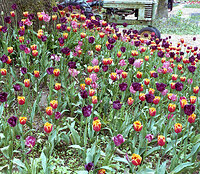
Tractor & Tulips

A
Tractor & Tulips

  • 0
  • 0
  • 10
Tree with Big Shadows

Tree with Big Shadows

  • 2
  • 0
  • 69

Forum statistics

Threads
203,456
Messages
2,855,025
Members
101,852
Latest member
keith1420
Recent bookmarks
0

dracblau

Member
Allowing Ads
Joined
Aug 13, 2008
Messages
46
Location
Southern Cal
Format
35mm
Hello Everyone,

I was wondering if there is a guide or rule of thumb for using a handheld light meter when using different size lenses on your camera.

I have an old Canon F1 whose light meter is not working, and realize that the light hitting the film plane will be drastically different depending on whether I use a 24mm lens as opposed to a 200mm lens.

Is there a table/graph/formula out there for calculating this?

Thanks,
DB
 
Generally, there's no need to recalculate exposure when changing lenses if the same f-stop and shutter speed are used.
 
Incident or reflected metering? If you are using an incident meter, then you should be fine. Just use the metered f-stop and shutter speed or equivalent.
 
Hello Everyone,

I was wondering if there is a guide or rule of thumb for using a handheld light meter when using different size lenses on your camera.

I have an old Canon F1 whose light meter is not working, and realize that the light hitting the film plane will be drastically different depending on whether I use a 24mm lens as opposed to a 200mm lens.

Is there a table/graph/formula out there for calculating this?

Thanks,
DB

The lensmakers have already done this for you, they divided the aperture size by the focal length and printed the ratio on the aperture ring :wink:

So, f8 will pass just about the same light for your 24mm as your 200mm. If you were a film maker and needed better than one-fourth of a stop accuracy, you would use lenses with "T-stops." Those are calibrated based on the the light they pass, rather than the ratio of aperture size to focal length.
 
Thanks for the replies.

Yes, apparently I am overthinking this. I am relieved to learn that there is nothing complicated that needs to be done.

Thanks again,
DB
 
The f-stops are the same for any lens. Still, a metering problem can occur when you change lenses with different focal lengths, because different focal lengths see different things – ex: a 24mm in landscape sees usually much more sky than a 200mm pointed on a detail of that same landscape. If you meter handheld, you should check the light-meter’s manual to see the metering angle. If the lens has an angle close to the light-meter’s one, than the latest works like an on-camera light-meter in average metering mode (not spot, nor center-weighted). This is why the handheld light-meters are mostly used for close-to-subject metering, with some interpretation by the zone system – ex: metering for zone 3 than underexposing 2 stops, or metering on the back of your hand for the zone your skin belongs to (roughly: Caucasian=z6, Asian=z5, African=z4) and making the exposure correction if needed, etc. Incident metering is also a reliable option.

Also, you should visually check the aperture blades of your lenses: if there are any traces of oil on these blades, the aperture might not work as it should (does not open or close fast enough between the moment you depress the shutter button and the moment the camera releases the shutter blades/curtain). If there is the case, your lenses need a deep cleaning.
 
I tend to agree with phenix.
A telelens has a much smaller scope than a wideangle thus you will probably measure differently.
I think you should have your camera fixed, it's much better to use a built-in cell...
 
No, it isn't better to use a built-in cell. It's just as good.

And use an incident light meter, and there's nothing to worry about.
 
Photrio.com contains affiliate links to products. We may receive a commission for purchases made through these links.
To read our full affiliate disclosure statement please click Here.

PHOTRIO PARTNERS EQUALLY FUNDING OUR COMMUNITY:


Ilford ADOX Freestyle Photographic Stearman Press Weldon Color Lab Blue Moon Camera & Machine
Top Bottom
