

• Welcome to Photrio!
    Registration is fast and free. Join today to unlock search, see fewer ads, and access all forum features.
    Click here to sign up

H2SO4 question

Rainy Day Trees

A
Rainy Day Trees

  • 4
  • 0
  • 49
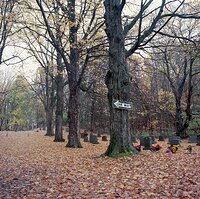
One Way

A
One Way

  • 1
  • 1
  • 47

Forum statistics

Threads
203,150
Messages
2,850,580
Members
101,698
Latest member
Weishampel
Recent bookmarks
0

AshenLight

Member
Allowing Ads
Joined
Dec 15, 2007
Messages
156
Location
Northeastern
Format
Multi Format
Hi all,

I have a lith developer recipe that calls for 4cc of concentrated sulfuric acid. I have fresh battery acid which, according the maufacturer, is 35.15%. Assuming that concentrated acid is 98% and my math is not totally wrong I've calculated that I should use 11.15cc of the 35.15% acid. Is this correct or am I totally off the rails here?

Thanks,

Ash
 
Be sure to allow for whatever dilutes the acid - probably water that you'll need to add to your brew anyway, but be sure on that. If it should happen to be something else, you may be in for an unpleasant surprise. Otherwise, sulphuric is sulphuric is sulphuric.

Playing with the numbers you gave, I came up with 11.37 CCs, allowing for the two percent off purity you stated, that becomes 11.1522 CCs.

Poor little Willy,
We'll not see him anymore,
For what he thought was H2O,
Was H2SO4.


The things one remembers -
 
Last edited by a moderator:
Hi Frank,

Thanks for the reply. The manufacturer says the acid is diluted with distilled water. Assuming it really is distilled or DI'ed water it should be okay, no?

Ash
 
Hi Frank,

Thanks for the reply. The manufacturer says the acid is diluted with distilled water. Assuming it really is distilled or DI'ed water it should be okay, no?

Ash

I would think so, as you're going to have to add some water to your cocktail anyway (water to make) so - sounds right.

It figures that your water component will be 7.24 CC in your acid that you'll have to subtract from the water to make.
 
If the rest is distilled water, it should be OK. And much safer to use too - or perhaps I should say "less unsafe". It's still nasty stuff to work with.

Concentrated H2SO4 should be 100%, but will be somewhere between 96% and 104% in most cases (yes, 104% is very possible). Since it' very hygroscopic (absorbs water from the air) fresh acid often starts off at more than 100%.

So considering that, I would simply use 3 times as much battery acid, 12cc in your case. That will be precise enough.
 
And, I hope that you are not adding the acid to an alkaline developer solution. That is really a no-no, especially if the alkali is carbonate. In that case the developer might add itself back at you, right in the face.

Wear safety goggles and a lab coat.

PE
 
And, I hope that you are not adding the acid to an alkaline developer solution. That is really a no-no, especially if the alkali is carbonate. In that case the developer might add itself back at you, right in the face.

Wear safety goggles and a lab coat.

PE

No kidding - that's almost as much fun as throwing a chunk of sodium in water!
 
As a teen, I had a stick of Sodium metal the size and shape of a 1/4 pound stick of butter. I cut off a big chunk and covered it with Kerosene in a jar with a perforated lid. A group of us "smuggled" it onto the brand new Mansfield bridge across the Monongahela river, upstream from downtown Pittsburgh, in the wee hours of the night and tossed it. It sank and bubbled and then...

Well, you fill in the blanks! :D I guess I can tell that story after about 60 years. The statute of limitations has run out.

We were about at the middle of the river here:

http://pghbridges.com/glassport/0594-4466/mansfield.htm

PE
 
Hi all,

I'm highly risk averse so nitrile gloves, a face shield and a lab apron are standard attire for me when I mix chemistry in the darkroom. In fact, I walked into the kitchen with all this stuff on the other night and knocked about 2.5 years off my dogs life when she saw me.

Ash
 
As a teen, I had a stick of Sodium metal the size and shape of a 1/4 pound stick of butter. I cut off a big chunk and covered it with Kerosene in a jar with a perforated lid. A group of us "smuggled" it onto the brand new Mansfield bridge across the Monongahela river, upstream from downtown Pittsburgh, in the wee hours of the night and tossed it. It sank and bubbled and then...

Well, you fill in the blanks! :D I guess I can tell that story after about 60 years. The statute of limitations has run out.

PE

Fill in the blanks, indeed!

As a science project in school many moons ago, I and three other crazies were to construct a lab apparatus to perform electrolysis - making hydrogen and oxygen from water, similar to the hydrogen generators people are making a putting on cars now.

4 extemely crazy boys, a lighter, some oxygen and some hydrogen. Consider that picture for a minute.

Suffice it to say the lab apparatus did not survive the experiment, and anyone with 10 ft of the table was soaked.
 
Is that how the arrow got broken Frank?

I made my Hydrogen ok, but the byproduct was Chlorine. I captured the Hydrogen and took it to school in a bottle. The teacher lit it and it popped just fine for her so she gave me an extra credit "A" for lab. :D

The Chlorine was another matter.......

PE
 
Hi all,

I'm highly risk averse so nitrile gloves, a face shield and a lab apron are standard attire for me when I mix chemistry in the darkroom. In fact, I walked into the kitchen with all this stuff on the other night and knocked about 2.5 years off my dogs life when she saw me.

Ash

I think you've already been warned but ...

Dilute your acid component as much as you can with other ingredients before adding anything/to anything that may be at the other end of the PH spectrum.

It's like dumping baking soda into vinegar except a helluve lot more violent and dangerous.
 
Is that how the arrow got broken Frank?

That one took me a minute - Living and working in Okieland now but was raised and went to school in SoCal - high school class of 1969. Still know a few out there but thankful I'm gone. The last time I was there 5 years ago, it took all the spanish I could remember to get a glass of iced tea.

Broken Arrow is just outside of Tulsa, and what might be called a bedroom community.

Friggin' comedians are everywhere <grin>
 
Ash:

When you come out of the darkroom, let us know who won.
 
As a teen, I had a stick of Sodium metal the size and shape of a 1/4 pound stick of butter. I cut off a big chunk and covered it with Kerosene in a jar with a perforated lid. A group of us "smuggled" it onto the brand new Mansfield bridge across the Monongahela river, upstream from downtown Pittsburgh, in the wee hours of the night and tossed it. It sank and bubbled and then...

Well, you fill in the blanks! :D I guess I can tell that story after about 60 years. The statute of limitations has run out.

We were about at the middle of the river here:

http://pghbridges.com/glassport/0594-4466/mansfield.htm

PE

Your Government did it before you did!
[YOUTUBE]HY7mTCMvpEM[/YOUTUBE]
 
I'm highly risk averse so nitrile gloves, a face
shield and a lab apron are standard attire for
me when I mix chemistry in the darkroom.

A safer suggested replacement for H2SO4 is
NaHSO4, sodium bisulfate. By weight, pure
H2SO4 times 2.82. Dan
 
A safer suggested replacement for H2SO4 is
NaHSO4, sodium bisulfate. By weight, pure
H2SO4 times 2.82. Dan

Times 1.22 if you are using it for the sulfate ion, times 2.44 if you are adding hydrogen ions. 1.41 or 2.82 respectively if your bisulfate is monohydrated.

But that substitution only works if the final solution is highly alkaline.
 
That substitution only really works well if you know the final pH and have a way to measure it and you know how to do this sort of thing without undue dilution.

PE
 
Times 1.22 if you are using it for the sulfate ion, times 2.44
if you are adding hydrogen ions. 1.41 or 2.82 respectively if
your bisulfate is monohydrated.

But that substitution only works if the final solution
is highly alkaline.

Likely 2.82 is correct: From a Patrick Dignan listing of darkroom
chemicals, 2.82. Very acidic. Can be considered in solution as
sulfuric acid + sodium sulfate. Alkaline?

I've a supply from Photographer's Formulary. The label does
not specify any degree of hydration; likely the anhydrous.
Just checked and found it to be granular and loose. Dan
 
Sulfuric acid is a binary acid, with very different dissociation constants for the two hydrogens. So H2SO4 is a strong acid, NaHSO4 a weak acid, and NA2SO4 is an alkali. For this reason it is often used for buffering.

So unless you know exactly what you are doing and can work out the maths, I do not recommend substituting one for the other.
 
... snip
So unless you know exactly what you are doing and can work out the maths, I do not recommend substituting one for the other.

Wise advice, Ole - to do otherwise may result in a video worthy of 'YouTube' with some rather horrendous results if one's eyes aren't well shielded.
 
Thinking back to the OP, the developer formula required concentrated Sulfuric Acid. This, being added to alkali, is a very dangerous proposition any way you look at it. I personally would distrust the formula. I have never run across a developer formula that could not be adjusted by using dilute acid. Putting acid into base is something best done in very dilute form.

Also Na2SO4 is classified as a neutral salt. Sodium Bisulfate (NaHSO4) is classified as a strong acid. A 0.1 Molar solution will have a pH of about 1.5. You see, it disassociates in solution into Sodium Sulfate (Na2SO4), a neutral salt, and Sulfuric Acid. So, I would be cautious about Ole's comments above as to classification, but I agree that I do not recommend doing this unless you know what you are about to do.

PE
 
PE is of course right - sometimes I should check data before I post.

But on the other hand, in more or less neutral environments Sodium bisulfite dissasociates into Na+, H3O+, SO4-- and HSO4-. Sulfuric acid dissasociates into H3O+ and HSO4-, and very very little SO4--.

No, I don't have the disassociation constants readily available here. I just remember from basic chemistry that you can't use sulfuric acid as a source of SO4-- ions without adding alkali to force the second step of the disassociation. I tried, and almost flunked. :wink:
 
Photrio.com contains affiliate links to products. We may receive a commission for purchases made through these links.
To read our full affiliate disclosure statement please click Here.

PHOTRIO PARTNERS EQUALLY FUNDING OUR COMMUNITY:


Ilford ADOX Freestyle Photographic Stearman Press Weldon Color Lab Blue Moon Camera & Machine
Top Bottom