
• Welcome to Photrio!
    Registration is fast and free. Join today to unlock search, see fewer ads, and access all forum features.
    Click here to sign up

gray card is useless?

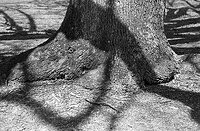
Tree with Big Shadows

Tree with Big Shadows

  • 2
  • 0
  • 58
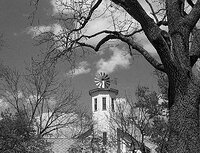
Everal Barn

A
Everal Barn

  • 2
  • 1
  • 60

Forum statistics

Threads
203,455
Messages
2,855,001
Members
101,851
Latest member
Si_Voltage
Recent bookmarks
0
Dude...you guys are, like, wack or something. He should just shoot digital...dude. C'mon bro...get with the times.

Hmm...grain of truth...but I would say: Do what you can, but shoot nonetheless. That said, film is not all that difficult to shoot, despite the complexifications that are often introduced here.

The pinhole guys must be laughing.
 
Dude...you guys are, like, wack or something. He should just shoot digital...dude. C'mon bro...get with the times.

I find a gray or an incident light meter even more helpful when I am forced to shoot digital, film is more forgiving.
 
Dude...you guys are, like, wack or something. He should just shoot digital...dude. C'mon bro...get with the times.

I am wack for sure.

But what makes you think I don't also shoot digital? Check out my gallery.

Problem is I like to know WHY things are the way they are, instead of setting my camera to jpg, matrix metering, bracketing on, and buy an 8GB card to shoot 6 frames per picture in the hope something will come out right.

By that token, people that have vintage cars should send them to the scrapyard, nobody should collect stamps, Salgado should appear on Shutterbug holding a Mark III, and as soon as Blu-Ray came out, we should have thrown our CDs in the bin, all of them, and only bought Blu-Ray CDs and so forth.
 
I agree, Rob. And thinking over our poor soul who started this, without knowing how he is equipped and what he shoots, could we agree that he should go back to basics, skip the grey cards and the spot meters, and just work on using his built-in meter and improve his negatives by recording his development time & temp, making proper contacts sheets, finding his film speed, etc?

Oh, and since he's shooting roll film, maybe he should bracket. That will also tell him about his camera meter's calibration.

I think the poor soul who started this has come to some intelligent conclusions a damn site quicker than many who have been doing it for a lot longer...
 
I think the poor soul who started this has come to some intelligent conclusions a damn site quicker than many who have been doing it for a lot longer...

Especially thanks to APUG and heated discussions...

It's good for everybody to discuss things.

I, poor soul, was at an amateur's meeting a few weeks ago, and I had a question about lenses.

So they point me towards the "prime lens expert" ("He does a lot of portraits, you should really ask him").

So I ask about nikon 85mm f/1.8 vs 85mm f/1.4, and he goes "no comparison, my friend, no comparison. Plus the f/1.4 gives me more DOF at the same aperture!" :rolleyes:

Thanks to each and every one who contributed.
 
...
 
Last edited by a moderator:
So I ask about nikon 85mm f/1.8 vs 85mm f/1.4, and he goes "no comparison, my friend, no comparison. Plus the f/1.4 gives me more DOF at the same aperture!" :rolleyes:

Not quite as strange as it might seem. Some people buy three identical new lenses, test them, keep the best and send the other two back (I have heard it rumoured). The reason being that quality control is not always what it might be and some identical lenses are not as identical as they should be. And then 1.4 may be a much higher quality lens than a 1.8. Infact it probably is because otherwise why bother. Combine a lens which has been properly aligned and put together with superior design and glass against a poorly assembled with cheaper glass lense, and yes, it is quite possible that 1.4 could give better dof compared to a 1.8 of same focal length and used aperture.

p.s. my money is on the foto club member not knowing what he's talking about since the differences would be minimal unless one of the lenses was real dog. :D
 
*joke alert* - re: the digital suggestion
 
Last edited by a moderator:
I just meter what I am basing the exposure on remembering that the meter is telling me the exposure that will result in middle grey, or therabouts, and then adjust the exposure to place the subject in the zone I want. After metering about, I might determine that the "correct exposure" doesn't cover the range I am photographing (ie the highlight might blow, or I wont be exposing into the shadows like I want). I will further adjust exposure for the range I need for an adjusted development and printing, to get the photograph I envision.

This is as succinct an explanation of how the Zone System is used in practice as you're likely to see. I don't know if J is a Zone guy or not and that doesn't really matter. If what you're trying to do is learn and use the Zone System, the grey car really only has a role in your testing procedures.
 
This is as succinct an explanation of how the Zone System is used in practice as you're likely to see. I don't know if J is a Zone guy or not and that doesn't really matter. If what you're trying to do is learn and use the Zone System, the grey car really only has a role in your testing procedures.

I are a zoner, but a practical one.
 
Maybe I am the only one that also used it in printing. You included it in the first shot of a roll of film then adjust your color printing to get a good match. This would help dial in the filter pack rather quickly, at least it did for me.

Useful in both color and b&w.
IMHO
 
It depends. Most grey cards are made to reflect 18% light only, but their colour might not be really grey, esp. not in any lighting situation.

Doesn't matter in bw photography, but for white balance you should ask the manual wether the grey card is suitable.


Gerd

I to have had issues with gray cards getting me less than perfect WB results, typically though the problem is that it is "too" correct. The cards always tend to take me colder than where I want things.

Most cards I've seen also have a white side, gray side normally for exposure, white side normally for WB.

White side can be used for exposure just call it a high zone 7 or zone 8.

Any good gray card will have no color bias and/or a pridictable WB skew, i.e. warmer bias.
 
Photrio.com contains affiliate links to products. We may receive a commission for purchases made through these links.
To read our full affiliate disclosure statement please click Here.

PHOTRIO PARTNERS EQUALLY FUNDING OUR COMMUNITY:


Ilford ADOX Freestyle Photographic Stearman Press Weldon Color Lab Blue Moon Camera & Machine
Top Bottom
