

• Welcome to Photrio!
    Registration is fast and free. Join today to unlock search, see fewer ads, and access all forum features.
    Click here to sign up

Grainy Kodak BW400CN (C-41)

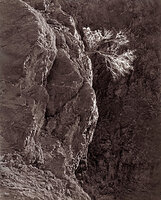
Bush on Canyon Wall

A
Bush on Canyon Wall

  • 2
  • 1
  • 20
double portrait

A
double portrait

  • 1
  • 0
  • 48

Forum statistics

Threads
203,260
Messages
2,852,026
Members
101,749
Latest member
frieMo
Recent bookmarks
0

Naples

Member
Allowing Ads
Joined
Nov 5, 2007
Messages
199
Location
Naples, Florida
Format
35mm
Sorry I don’t have scans to upload, but basically, I took photos of my daughters’ indoor piano recital using Kodak BW400CN (C-41) film. I used a Nikon N80 with a Nikkor 85mm f/1.8D AF set on a tripod perhaps some 30 feet (estimated) from the stage; manual mode; spot metering on my daughters’ faces; no flash.

For past identical recitals I have used Kodak’s TMY-2 and Tri-X without any problem. This time, though, with BW400CN, the prints (commercially developed and printed) came out remarkably sharp but very grainy.

Any advice on what could have caused this? This film is supposed to have rather fine grain, so did I underexpose? Could it have been the development or printing? Or is this film not suited for this, as I have been told?

Thanks.
 
It could be poor film processing, if the Bleach and fix aren't replenished properly then the residual silver left in the film gives grain.

Ian
 
How did you rate it? If you rate it at 400 then you will have a fairly flat result with poor shadow detail and when you try to adjust for that in the print or scan, you'll see lots of grain. It's really not a 400 speed film in my opinion... rate it at 200-320. If you want to test it, just bracket at +0.5, +1 etc. I betcha you'll like +0.5 to +1.

Do you negs look thin?
 
Last edited by a moderator:
Thanks, Ian and Keith.

The developer/printer was a small pro shop here in Naples (FL) that doesn't look to be too busy, so perhaps as Ian said they don't replenish properly. However they do develop and print my Kodak color C-41 films (Portra, Ektar) just fine.

As for rating, it was box speed - 400. I don't know what you mean by "thin", but the negs look orange and "light", which is why I think perhaps underexposure caused this?
 
Yes, if they look light (or what we normally call "thin") then you likely underexposed. It's a bit harder to judge a masked chromogenic film though, it won't appear as thick as a normal b&w neg no matter what you do.

If you rate this film at 400 and meter normally (i.e. average meter) then you will almost certainly have underexposed negs. Consider it to be no faster than 200-320, somewhere in there should suit you. It handles highlights fairly well so don't fear overexposure.
 
Thanks, Keith.

I think I'll give Kodak BW400CN another try at my daughters' upcoming piano recital in June and try rating it at 200-320. What's nice about these recitals is they're always in the same room at the Steinway gallery, on the same stage, with the same lighting, so they're a good way to compare films.

Any recommended specific rating - 200, 250, 320?

Your comment that "If you rate this film at 400 and meter normally (i.e. average meter) then you will almost certainly have underexposed negs" makes me feel better about my metering. That's exactly what I did. Rated at 400 and spot metered manually. That method has worked before using TMY-2 and Tri-X, but not this last time with BW400CN.
 
From Ilford's fact sheet for XP2 which is similar:-

XP2 SUPER can be rated at up to
EI 800/30. For finer grain, when speed is less
important, rate the film at EI 200/24, although for
finest grain it can be rated as low as EI 50/18 if
required.
The practical implications of this wide exposure
range are very important. XP2 SUPER can be
exposed at a setting to suit the job. The benefit of
variable speed also provides security against
inadvertent over- or underexposure.
It should be noted that the exposure index (EI)
recommended for XP2 SUPER is based on a
practical evaluation of film speed and is not based
on foot speed, as is the ISO standard.
CHOOSING THE RIGHT FILM SPEED FOR
THE JOB
Best overall quality EI 400/27
Finer grain (with easy printing) EI 200/24
Finest grain (but with denser negatives) EI 50/18
Note
No matter which film speed is chosen, standard
C41 processing is recommended.

I shoot a fair bit of XP2 and this bears out my experience. If its underexposed, it tends to be grainy. I also have my film developed by a minilab and scanned, and I suspect that negs that are somewhat underexposed get automatically corrected for the best contrast which brings out the grain.
 
What's the recital lighting like? Is it flat? If it's flat then a chromogenic film is not your best option and you'd probably get more pleasing results with trix x, hp5+, etc.

If it has directional stage lighting then this film might work well for you. Just bear in mind that there are *deep* shadows in standard concert lighting. If it were me, guessing your lighting, I'd say 250 or so. 200 would not be a gross error, and neither would 320. But 400, nope!

Whether you prefer to change the rating, add exposure compensation, or adjust your meter habit is up to you- on some camera bodies, one thing is easier than the other.
 
It's a small auditorium with perhaps 6 rows of seats, 16 seats across, and a small stage with wood floors, a black Steinway grand piano, and red curtains in the background. There is lighting that shines upon the piano player, at an angle that doesn't shade the face. It's not overly light but not dark like a bar either.
 
Thanks for Ilford's XP2 fact sheet, Mr. Rusty. It's right in line with the discussion here.
 
Did the lab scan the negatives to make the prints? If so, they may be running software with automatic levelling and sharpening settings. These can produce a grainy (often more noise than real grain) appearance to the prints. The machines on these labs are programmed to work with colour negatives. Feeding them with monochrome and not using the right software settings can lead to gritty or even extreme contrast qualities.
 
I rate both Kodak BC400 CN and Ilford XP2 at 200 and scan the negatives. Grain is virtually non existent with this work flow with both films.

If you have large grain with either film it is most likely underexposed by two stops or more, assuming fresh film.

Sandy King
 
Kodak's fact sheet does not say anything about reduced sensitivity for artificial lighting, but that is definitely a consideration. Most films lose speed in artificial lighting.

http://www.kodak.com/global/en/professional/support/techPubs/f4036/f4036.pdf

Do a test in similar lighting conditions, and expose in 1/3 stop increments from 100 to 400 (100, 125, 160, 200, 250, 320, 400), then process and see what works best.

- Thomas
 
Photrio.com contains affiliate links to products. We may receive a commission for purchases made through these links.
To read our full affiliate disclosure statement please click Here.

PHOTRIO PARTNERS EQUALLY FUNDING OUR COMMUNITY:


Ilford ADOX Freestyle Photographic Stearman Press Weldon Color Lab Blue Moon Camera & Machine
Top Bottom
