
• Welcome to Photrio!
    Registration is fast and free. Join today to unlock search, see fewer ads, and access all forum features.
    Click here to sign up

Grain, spots and marks after "digital revolution"

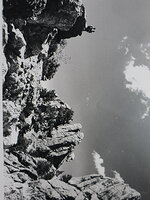
IMG_1779.JPG

H
IMG_1779.JPG

  • 0
  • 0
  • 0
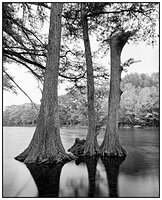
Frio River

A
Frio River

  • 0
  • 0
  • 0

Recent Classifieds

Forum statistics

Threads
203,577
Messages
2,856,630
Members
101,908
Latest member
lokiloki
Recent bookmarks
1

Marco Gilardetti

Member
Allowing Ads
Joined
Jun 7, 2005
Messages
801
Location
Torino, Italy
Format
Large Format
Please, do not take this thread as a provocation, as I'm very serious. I don't want to start a debate, I just wonder if anyone is sharing my same thoughts.

Not very long ago, I would have given much to have the grain disappear. I hated even the lesser spots and went through the most painful trick or retouch to hide them.

Today, I find myself looking with peaceful affection at an evident grain, or even to (very small and well hidden, of course) spots or scratches. If my photograph is intended as a gift to a friend, I usually POINT at its defects (which I realized are almost undetectable to the avarage) and explain how they are a trace of a manual, analog process, and thus the proof of a traditional and patient hand made work.

Anyone else started to love the grain, perhaps, or I'm just hopeless?
 
I agree about the grain, I was never fond of it when using the 135-format but these days I've picked up the HP5 and just enjoy the combo for all its qualities. Still, I retousch the spots and the scratches that may appear on the print...
 
i like to let this be as they are. i don't retouch these days ( i used to use an adams retouching desk ) and i don't mind dust and scratches either. it doesn't have much to do with digital, but more to do with wabi-sabi + enjoying the extra level of texture in the print.
 
I love the look of film which for me has to do with grain; however, i also spot when necessary to hide dust.
 
I am no fan of grain for my own work. However, there are many members on APUG that very much like Rodinal which along with its other characteristics is grain enhancement. I would guess that to some of them the enhancement of grain is an effect that they are very interested in achieving.

So, at least in that regard, you are far from being hopeless.
 
Grain is okay, but I retouch spots and sometimes other things. Retouching is also hand work.
 
There are software add-ons to photoshop that allow the operator to emulate grain in digital prints. So you can reproduce that TriX in rodinol look. I do not remember the specific name of the software, but Dave Beckerman, a pixelographer in NYC has used it from time to time and discussed it in his blog last year. I don't know to what extent he uses it in his prints.
 
Jim Chinn said:
There are software add-ons to photoshop that allow the operator to emulate grain in digital prints.
As someone else already pointed out cleverly, it's pathetic how the digital stuff is constantly running after traditional photography, in the desperate attempt to achieve the same feel and look ;-)
 
When I'm having mashed potatoes, having tiny bits of unmashed potatoes is my reassuring that I'm eating real vegetables, not powdered ones. Same thing with grain &c, it's the little defect that proves the authenticity.
 
Marco Gilardetti said:
As someone else already pointed out cleverly, it's pathetic how the digital stuff is constantly running after traditional photography, in the desperate attempt to achieve the same feel and look ;-)
Amen, brother, Amen.
 
"As someone else already pointed out cleverly, it's pathetic how the digital stuff is constantly running after traditional photography, in the desperate attempt to achieve the same feel and look ;-)"


Well, you've said you don't want to start a debate, but this is a pretty silly thing to say. Why is it pathetic? There are many people who enjoy or prefer or are forced to use digital photography (photojournalists, for example, in the world of modern journalism). One of the major complaints about digital photography is that it is unable to produce the "look" of a film-based print. Why would serious photographers in the digital realm not want to work towards achieving that look?

scott
 
I think in all this talk about grain, there is one technique often overlooked. I use Rodinal - a LOT, and I am of the opinion (bash me if you will) that Rodinal does NOT increase or enhance grain - it is a clean-working developer that simply presents grain as it IS in the film, without mushing or moderating the silver itself or the spaces between. (Note 1)

I *love* having grain as an option. At times it is of aesthetic value, at times it is not. I have not subscribed to the "Can't be any slight suggestion of grain, or the photograph is automatically a failure" crowd - not since I first encountered Farber's beautiful!! Nude work where he pushed the living daylights out of Agfachrome 1000 (two and three stops) with the express purpose of making *very* grainy images.

So - to the technique. Some time ago, while searching the "Used Filter" bin of a large photography store, I came across two 40.5mm Softening filters. 40.5mm is the size that fits my Rodenstock enlarging lenses - so I bought both, for the sum of US$ 1.50 each. Truthfully, for no other reason than they fit the lenses.
These things can best be described as "grain removers". With them, apparent grain, and minor imperfections seemingly disappear. I have to be careful not to have either on the enlarger lens while focusing , because I will not be able to see grain in the Grain Focuser - it just will not be there!
My favorite combination is AgfaPan 400 in Rodinal (I can hear the gasps from the anti-grain crowd now). If I do not want to see grain in the final print, which happens most of the time in portraiture, I'll simply use one or both Softeners after focusing.

Ha! There Is a reason why they thread those enlarging lenses for filters!!

Note 1: Oversimplified I know. I don't want to provide fuel for the nit-picking crowd, so I'm trying to keep it really, really "general".
 
Ed Sukach said:
I have to be careful not to have either on the enlarger lens while focusing , because I will not be able to see grain in the Grain Focuser - it just will not be there!

Ed-

Sorry to head things off topic for a moment, but don't you get a little focus shift doing this? I'm just curious...I thought that adding a filter with any real thickness after the enlarging lens would shift the focus (by about half of the thickness of the filter). I may have the wrong end of the stick here...but I do know that threading a filter onto the back of a large format taking lens will shift the focus (which is why you should focus such images with the filter in place).

Thanks in advance for any information you choose to share on this.

Dave
 
Claire Senft said:
However, there are many members on APUG that very much like Rodinal which along with its other characteristics is grain enhancement.

Indeed. As a true Rodinal lover (surprise :D) I use it because the grain is beautiful with Rodinal. Especially Tri-X, HP5, Delta 100 and FP4 have nice grain i Rodinal. I love it. I am a grainophile (cool word btw...).

But dust and scratches are still being avoided whenever possible (besides when I want it to be there).

Morten
 
Last edited by a moderator:
Mongo said:
Sorry to head things off topic for a moment, but don't you get a little focus shift doing this? I'm just curious...I thought that adding a filter with any real thickness after the enlarging lens would shift the focus (by about half of the thickness of the filter). I may have the wrong end of the stick here...but I do know that threading a filter onto the back of a large format taking lens will shift the focus (which is why you should focus such images with the filter in place)

Hmm... I once tried placing a Quartz Optical Flat - 2" (? or so) thick, with a high refractive index, in FRONT of a Hassleblad taking lens .. and there was *NO* shift in focus that I could see. In Back?? ... Hmmm... considering the ray trace .. the rays are diverging at greater angles ... so refraction COULD ... I think WOULD, cause a shift in focal length - and plane of focus. I suppose the same would happen in a projection (enlarging) lens, but probably the depth of focus would be sufficient to maintain the "circle of confusion". At any rate, it is hard to tell - critical focusing is very difficult without the grain itself.

Reminds me of a time where a few engineer/ sailors were trying to learn the use of a sextant indoors at a place where I worked, and everything they did resulted in a position 30 miles north of where they were, as determined by map. Took a little bit of math, but I was able to determine that the window between them and the sun was about one inch thick.

BTW ... what was the topic? I read "grain" ... possibly, now, I have a built-in personal anti- "digital vs. film" filter.
 
On this side-issue: behind-the-lens filters shift the point of focus by differing amounts depending on the angle the ray makes to the plane of the filter - so that there is no longer a true point of focus and there will be an apparent focus shift as the lens is stopped down. The effect is imperceptible with thin filters. Perhaps the best known example of it is when a thick beamsplitter is used between the lens and the film, as in Bolex H-16 reflex movie cameras.

Best,
Helen
 
Photrio.com contains affiliate links to products. We may receive a commission for purchases made through these links.
To read our full affiliate disclosure statement please click Here.

PHOTRIO PARTNERS EQUALLY FUNDING OUR COMMUNITY:


Ilford ADOX Freestyle Photographic Stearman Press Weldon Color Lab Blue Moon Camera & Machine
Top Bottom