• Welcome to Photrio!
    Registration is fast and free. Join today to unlock search, see fewer ads, and access all forum features.
    Click here to sign up

Grain as much as possible ...

a sidebar

H
a sidebar

  • Tel
  • Feb 3, 2026
  • 0
  • 0
  • 23
On The Mound

A
On The Mound

  • 1
  • 3
  • 52

Forum statistics

Threads
202,141
Messages
2,835,691
Members
101,132
Latest member
MaxieQB
Recent bookmarks
0

jjprat

Member
Allowing Ads
Joined
Jan 23, 2006
Messages
13
Location
Barcelona (S
Format
35mm
Hi all again!!!

How can I get as much as grain as possible? Some special combination film/developer/time/temp/agitation?

Thank you very much,

jxprat
 

Leigh Youdale

Member
Allowing Ads
Joined
Oct 9, 2007
Messages
231
Location
Sydney, Aust
Format
Medium Format
Try Delta 3200, expose at box speed, develop in Rodinal and over-agitate. See how you like it!
Others may have gotten good grain with pushing Tri-X too.
 

ruilourosa

Member
Allowing Ads
Joined
Apr 13, 2003
Messages
797
Location
Portugal
Format
Multi Format
hello


one good way is to use paper developer like dektol 1+3 or d-72 1+1 or multigrade 1+3, temperature 22ºc and around 5 minutes for tmz @1600, you won´t get reasonable shadow detail so increasing contrast on the printing stage can help to make the grain look more visible and sharper, contrast will be a bit on the high side, but you have to deal with these things.

another way is to use the only developer formulated especifically to do this: FX-16 by Geoffrey Crawley

it takes glicyn, so i did not use it often, it goes bad relativelly fast, but the results are better, less mushyness and more aparent sculptoric quality, it is a FX-2 derivation.


another good way is to enlarge..., use a fast film with good old rodinal and instead os using a normal lens use a wide angle and enlarge in the enlarger the smaller portion in the neg., it´s the easyest way... but you also lose some resolution

good work

cumprimentos de portugal
 

Mark Fisher

Member
Allowing Ads
Joined
Dec 13, 2003
Messages
1,691
Location
Chicago
Format
Medium Format
Add good for standard BW printing. If you really want grain, learn to lith print and use Slavich or the insanely grainly Fomabrom VC (Arista.edu). I just posted a Slavich example. There are a bunch in the galleries and flickr
 

removed account4

Subscriber
Allowing Ads
Joined
Jun 21, 2003
Messages
29,832
Format
Hybrid
one of the best ways to get grain
is to use a wider lens than you would normally use
in any situation, and enlarge ( i use a half frame and 110 camera for this).
you could also shoot at a higher iso and process accordingly.
there are people that suggest processing your film in dektol or other print developers
will give "huge golfball type grain" this has never been my experience
( i have been processing my film in a print developer for 11 years )
 

Chris Lange

Member
Allowing Ads
Joined
Aug 17, 2009
Messages
770
Location
NY
Format
Multi Format
Before, it was easy...

Fuji Neopan 1600 @ 1600 in Rodinal 1+25 or 1+50.

Now that Neopan 1600 is gone, Tri-X @ 1600 in Rodinal 1+25.
 

Mainecoonmaniac

Member
Allowing Ads
Joined
Dec 10, 2009
Messages
6,297
Format
Multi Format
I think also increasing the wet time of your film can also increase the grain.
 
Joined
Jan 21, 2003
Messages
15,716
Location
Switzerland
Format
Multi Format
Like John I've processed film in Ansco 130, and it doesn't give grain any bigger than with say Rodinal or HC-110.

The suggestion of cropping is great, but limits how big you can make the pictures in your enlarger.

The suggestion of using Delta 3200 or TMax 3200 is good too, especially if you process in something like Rodinal 1+25, shoot at 3200 and agitate a lot when you process. It yields a beautiful negative that prints with glorious grain.

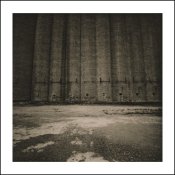
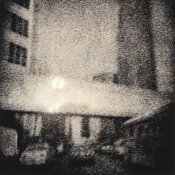
Or like Mark Fisher suggests, to lith print yields some interesting results too. Two lith prints from a grain free and ultra smooth medium format pinhole negative attached to show the effect. This gives you the option to both have super grainy prints and smooth ones too, if you wish.
 

Attachments

  • the_other_landscape_004.jpg
    the_other_landscape_004.jpg
    174.7 KB · Views: 183
  • rush_variant-112.jpg
    rush_variant-112.jpg
    250.1 KB · Views: 206
OP
OP
jjprat

jjprat

Member
Allowing Ads
Joined
Jan 23, 2006
Messages
13
Location
Barcelona (S
Format
35mm
Like John I've processed film in Ansco 130, and it doesn't give grain any bigger than with say Rodinal or HC-110.

The suggestion of cropping is great, but limits how big you can make the pictures in your enlarger.

The suggestion of using Delta 3200 or TMax 3200 is good too, especially if you process in something like Rodinal 1+25, shoot at 3200 and agitate a lot when you process. It yields a beautiful negative that prints with glorious grain.

Or like Mark Fisher suggests, to lith print yields some interesting results too. Two lith prints from a grain free and ultra smooth medium format pinhole negative attached to show the effect. This gives you the option to both have super grainy prints and smooth ones too, if you wish.

Thomas,

that looks good for me, specialy the second image. That's what I'm looking for!!! But, how did you get it? Ok, lith printing (I know what is it) but which developer? Which film? Which paper (lith) developer? ...

Thanks to everybody for your help,

jxprat
 
Joined
Jan 21, 2003
Messages
15,716
Location
Switzerland
Format
Multi Format
Thomas,

that looks good for me, specialy the second image. That's what I'm looking for!!! But, how did you get it? Ok, lith printing (I know what is it) but which developer? Which film? Which paper (lith) developer? ...

Thanks to everybody for your help,

jxprat

Hi,

The picture on the left is Fotokemika Varycon.
The right hand side picture is Foma Fomabrom Variant 112, processed in Fotospeed LD20 or Arista Lith (powder or liquid). I use negatives of very high contrast.
Usually I use 100ml Part A to 1,400ml water, 100ml Part B to 1,400ml water, mix those together. Add 800ml old brown for a total gallon of liquid. Then I season it with two sheets of 8x10 paper with the lights on until they are completely black.
Developer at 75 degrees Fahrenheit or about 24 degrees Celsius.

The film used doesn't matter, because it doesn't really impart much of its character to the print. It could be Acros and it could be Delta 3200, and it wouldn't really matter. Just expose and develop it to high contrast.

The print has been toned in both Kodak Sepia II warm and rapid selenium toner.

Good luck,

- Thomas

 

Gerald C Koch

Member
Allowing Ads
Joined
Jul 12, 2010
Messages
8,131
Location
Southern USA
Format
Multi Format
Tri-X developed in Dektol.
 
OP
OP
jjprat

jjprat

Member
Allowing Ads
Joined
Jan 23, 2006
Messages
13
Location
Barcelona (S
Format
35mm
Hi,

The picture on the left is Fotokemika Varycon.
The right hand side picture is Foma Fomabrom Variant 112, processed in Fotospeed LD20 or Arista Lith (powder or liquid). I use negatives of very high contrast.
Usually I use 100ml Part A to 1,400ml water, 100ml Part B to 1,400ml water, mix those together. Add 800ml old brown for a total gallon of liquid. Then I season it with two sheets of 8x10 paper with the lights on until they are completely black.
Developer at 75 degrees Fahrenheit or about 24 degrees Celsius.

The film used doesn't matter, because it doesn't really impart much of its character to the print. It could be Acros and it could be Delta 3200, and it wouldn't really matter. Just expose and develop it to high contrast.

The print has been toned in both Kodak Sepia II warm and rapid selenium toner.

Good luck,

- Thomas
Perfect!!!

Thank you very much!!!
 

Nicholas Lindan

Advertiser
Advertiser
Joined
Sep 2, 2006
Messages
4,316
Location
Cleveland, Ohio
Format
Multi Format
Grain texture screens are another way to go. Either make them by 10x enlarging a grainy smooth (no image) negative onto lith film or buy them. For even larger grain you can make a second generation enlargement - that results in 100x grain.

Although normally contacted with the paper, it is possible to lay the screen in contact with the negative for larger grain.
 
Last edited by a moderator:

Gerald C Koch

Member
Allowing Ads
Joined
Jul 12, 2010
Messages
8,131
Location
Southern USA
Format
Multi Format
another way is to use the only developer formulated especifically to do this: FX-16 by Geoffrey Crawley

it takes glicyn, so i did not use it often, it goes bad relativelly fast, but the results are better, less mushyness and more aparent sculptoric quality,

cumprimentos de portugal

The problem with FX-16 is that it requires a dye pinacryptol yellow which is very hard to obtain.
 

Mark Fisher

Member
Allowing Ads
Joined
Dec 13, 2003
Messages
1,691
Location
Chicago
Format
Medium Format
Just a warning.....Fomabrom is by far the grainest paper for lith printing. It is also the most difficult to control. My best success with it is to presoak it in water before putting in lith developer and constantly and gently agitate. Thomas's advice is spot on.
 

Crashbox

Member
Allowing Ads
Joined
Mar 6, 2011
Messages
69
Location
Lynden, Wars
Format
Multi Format
I remember reading some years ago that Kodak SD-19a was outstanding at producing very large grain. I saw one photo taken with it and the grain was huge! The formula for SD-19a was just D-19 with some hydrazine dihydrochloride added along with some 6-nitrobenzimidazole nitrate (aka Anti-Fog No. 2). I think the latter chemical may have been renamed 5-nitrobenzimidazole not too long ago...

The hydrazine dihydrochloride may not be too easy to obtain unless you work for NASA ;-)
 

Paterson

Member
Allowing Ads
Joined
Mar 13, 2011
Messages
7
Format
35mm RF
Tri x in HC110 at the shortest development time, I think the temp is around 78 degrees F
 

tjaded

Member
Allowing Ads
Joined
Oct 15, 2006
Messages
1,020
Location
San Francisc
Format
Multi Format
I think the most grain I have ever seen was a student that developed Delta 3200 in paper developer (as assigned) but agitated for the ENTIRE time, like he was making a martini!
 

2F/2F

Member
Allowing Ads
Joined
Apr 29, 2008
Messages
8,031
Location
Los Angeles,
Format
Multi Format
Use a grainy film. I'd try Delta 3200 for a huge wash of grain (actually an ISO 1000 film, so bear that in mind when re-rating it) or HP5 for a sharper grain that appears to be a part of the objects in the frame, as opposed to a wash of grain over the image. Overexpose the heck out of your film – at least three stops, and the more the better, until the point where you lose too much contrast. Process for a long time in a developer with a low concentration of silver solvent. You can get long times by diluting developer. You can also get low concentrations of silver solvent by dilution, and/or the use of Rodinal. You can also use hot developer, temperature changes, and/or excessive agitation to purposefully mess up your emulsion. Print high contrast prints to accentuate sharp grain to its fullest. Print low contrast prints for the washed over look. You can also lith print if you don't mind the hues and tonality you get.

IME HP5 is much grainier than new Tri-X; the Tri-X is amazingly soft-grained now, despite its reputation for grain. It's been pretty hard for me to screw it up purpose, so I use those two films I mentioned instead. I can get excessive grain from HP5 simly by using HC-110 dilution H as opposed to dilution B.
 
Last edited by a moderator:

Stephen Frizza

Member
Allowing Ads
Joined
Mar 2, 2007
Messages
1,464
Format
Medium Format
Kodak D-19 does extraordinary things to film at warm temperature. i love playing with high speed films and D-19.
 

nworth

Member
Allowing Ads
Joined
Aug 27, 2005
Messages
2,228
Location
Los Alamos,
Format
Multi Format
There are three things to consider about grain - its size, its shape, and its appearance. The first, size, is almost entirely a function of the film, and you can't do much about it. Almost all films today are quite fine grained - have small grain. The very high speed films are grainier, but still much less so than in earlier days. Gainer may have had the best advice for getting large grain - shoot 35mm, stand back, and enlarge a lot. The shape of the grain is a function of both the film and the developer. TMax P3200 has little golf balls; with FP-4 it's more like daggers. High sulfite developers often produce filamentary clumps. I have no real advice here. It's largely a matter of experience with various film-developer combinations. Appearance is partly a matter of the film but is very much affected by the developer. Fine grain developers like D-76 and D-23 tend to soften the edges of the grain and make it less apparent. Rodinal leaves the grain very sharp. Highly dilute developers seem to leave things more sharp than concentrated developers. The advice above on films and developers is good. I would probably go for either Delta 3200 of Tri-X developed in Rodinal.
 

lxdude

Member
Joined
Apr 8, 2009
Messages
7,094
Location
Redlands, So
Format
Multi Format
Using an enlarger with a point light source will maximize accentuation of grain when enlarging.
 
Photrio.com contains affiliate links to products. We may receive a commission for purchases made through these links.
To read our full affiliate disclosure statement please click Here.

PHOTRIO PARTNERS EQUALLY FUNDING OUR COMMUNITY:


Ilford ADOX Freestyle Photographic Stearman Press Weldon Color Lab Blue Moon Camera & Machine
Top Bottom