• Welcome to Photrio!
    Registration is fast and free. Join today to unlock search, see fewer ads, and access all forum features.
    Click here to sign up

Good quality didicam as light meter?

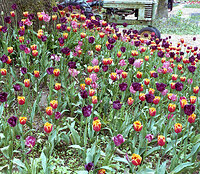
Tractor & Tulips

A
Tractor & Tulips

  • 0
  • 0
  • 22
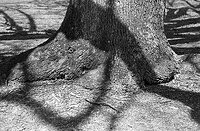
Tree with Big Shadows

Tree with Big Shadows

  • 3
  • 0
  • 80

Forum statistics

Threads
203,456
Messages
2,855,040
Members
101,852
Latest member
keith1420
Recent bookmarks
2

gregmacc

Member
Allowing Ads
Joined
Mar 1, 2009
Messages
141
Location
Adelaide, Au
Format
35mm
I'm looking at metering alternatives for when using my Hasselblad CM500. It occurred to me that I might already have what I need ... My Canon G3 ... It's metering readings match those of my Pentax ME Super (which is accurate enough for my style of shooting) and it has the added advantage of spot metering and digital capture if wanted/required. And it's not much bigger or heavier than the dedicated meters such as the Gossen Lunar Pro SBC that I have been considering. Any thoughts?
Cheers
 
I use a Nikon Coolpix 5000 as a meter sometimes. I simply guess the exposure then take a test shot with the digicam, evaluate the image on the LCD make adjustment if neccesary.
 
Thanks for the reply Chan ... Yep ... that would work good enough ... I'm just interested to know if people find that for general shooting, extrapolation of the digicam exposure values is close enough (I'm using B&W neg film).
 
yes/no. Some digital cameras either understate or overstate their shown "iso" sensitivity.
 
Thanks Bob ... Yes ... Apparently the G3's base ISO of 50 is closer to 80 ... but set to 400 ISO (to match the HP5 in the 'Blad) I figure it's close enough. But you're spot on ... individual digicams vary a lot.
 
I have a digimon (Canon G9) but never have used it as a stand-in meter — that's a task for the Sekonic when I need accuracy.
I'm aware of some others on APUG that use e.g. a Nikon D200 to determine exposures for pinhole (which is less critical exposure-wise with C41 film).
 
it works

when using my Nikon D60, especially as the only "meter" available

usually I have some other film body to meter with
 
I use my D40 as a light meter all the time. Problem is the ISO only goes down to 200 so some mental arithmetic is needed.
I have a dream that some day I will be rich and own a dedicated light meter.

r

Mats
 
Digicam exposure metering is NOT an adequate substitute for a handheld meter. They are calibrated for the chip in the digicam. I have seen this first-hand when shooting product shots with a digi and comparing it against my handheld flash meter, which I know from experience is accurate with my film shooting. Set the camera and the handheld meter to ISO 100. Take the exposure reading from the flash meter, set the camera accordingly, chimp, and voila - 1+ stops underexposed. I've seen this phenomenon not only with my old Olympus E-1, but a variation on the theme also happens with my Canon 5D. I was also in a portraiture class where most folks were shooting digital - we all used the same hand-held light meter, but five of the eight of us had to set something different (plus or minus) from the handheld meter reading to get an appropriate exposure on our cameras. This is a dirty little secret of digital photography - ISO 100 is not necessarily ISO 100. If you want to use something other than an in-camera meter for metering, get a handheld meter from a reputable manufacturer like Sekonic or Minolta. Get one that can be calibrated. Do some exposure tests, record your results, then calibrate your handheld meter to your process. It's not difficult, just a bit tedious.

 
Digicam exposure metering is NOT an adequate substitute for a handheld meter. They are calibrated for the chip in the digicam.....

You are of course right about this, but as long as the error vis a vis the film is consistent you can easlily compensate for that. My D40 overexposes about 2/3 a stop but does this consistently so I know how to compensate. Just like using a non-calibrated meter.

Greetings from one who some day hope to own his own Sekonic l-508.

r

Mats
 
I actually do not use the built in CW,Matrix or Spot meter in a digital camera as the meter. I use the imaging sensor in the digital camera as the meter. It happens that at ISO100 the sensor in my camera is very close otherwise I can simply use a compensation factor.
What I do is to set the digital camera on manual mode. Make an estimate setting and take a shot. Review the image and make neccessary adjustment then take another shot. After I get a good shot with the digital, transfer the reading over to the film camera. I always use the digital camera at ISO100 then make the neccessary compensation if the film in use isn't ISO100.
 
If you put that camera in CW mode and let it determine the exposure, do you get significantly different results?
If not, no need to first guess and then see whether your guess panned out on the LCD screen.
If so, you should get a better camera. :wink:
 
Photrio.com contains affiliate links to products. We may receive a commission for purchases made through these links.
To read our full affiliate disclosure statement please click Here.

PHOTRIO PARTNERS EQUALLY FUNDING OUR COMMUNITY:


Ilford ADOX Freestyle Photographic Stearman Press Weldon Color Lab Blue Moon Camera & Machine
Top Bottom